Whether Spuds MacKenzie Caused a Bull Terrier Boom
Spuds MacKenzie made the Bull Terrier instantly recognizable to millions of Americans, but a famous advertising dog and a lasting breed boom are not quite the same thing. The campaign brought the breed into living rooms and popular culture; working out whether it also caused a sustained surge in ownership means separating attention, registrations, and the realities of choosing a dog.
How Spuds MacKenzie Put the Bull Terrier in the Spotlight
The dog behind the party-animal image
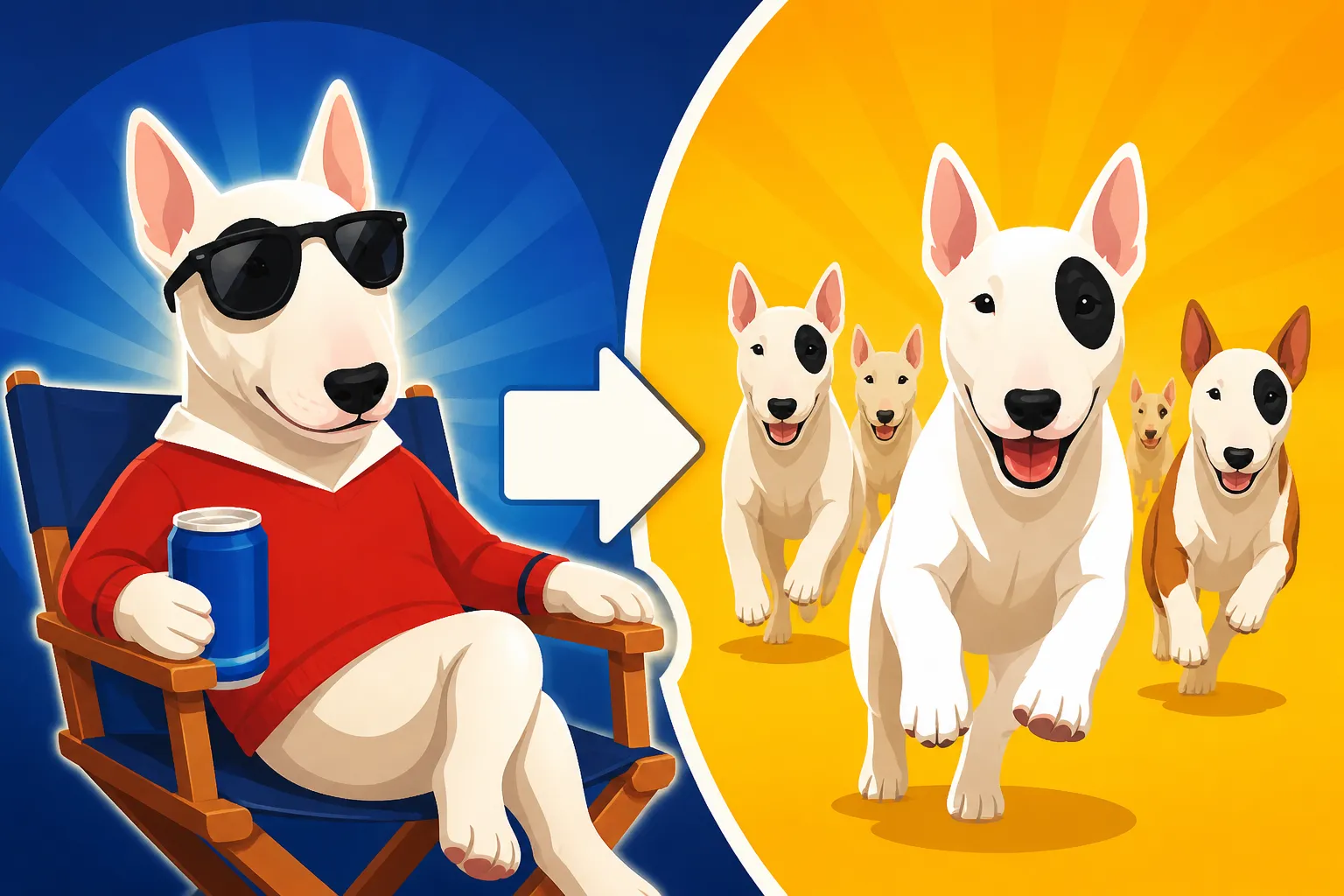
Spuds MacKenzie appeared in Bud Light advertising as a laid-back, fun-loving party animal. The character’s white coat, upright ears, and distinctive egg-shaped head made the Bull Terrier hard to mistake for another breed. In a period when TV commercials could become major pop-culture events, that recognizable silhouette helped Spuds stand out.
There was a twist behind the character: the dog playing Spuds was a female Bull Terrier named Honey Tree Evil Eye, often called Evie. The advertising persona was male, but the dog was not. That fact surprises people who remember the commercials, and it is covered in Whether the Spuds MacKenzie Bull Terrier Was Female.
Spuds was not presented as a careful portrait of everyday dog ownership. The character was a humanlike mascot, surrounded by people and party scenes, rather than a dog shown needing training, exercise, veterinary care, and patient supervision. That distinction matters when assessing the campaign’s effect: audiences were responding to a memorable character, not necessarily learning what living with a Bull Terrier involved.
Why the campaign made such a strong impression
The campaign gave the breed unusually broad exposure. A Bull Terrier could appear in a single commercial and be remembered long afterward, while many breeds remained familiar mainly to dog enthusiasts. Spuds became a brand character, but the look of the dog was inseparable from the character’s appeal.
The campaign also reached people who might never have sought out information about Bull Terriers. Someone could recognize Spuds without knowing the breed’s name, history, or temperament. That kind of visibility can spark curiosity: viewers may ask what breed the dog is, notice Bull Terriers in public, or start imagining one as a pet.
Still, visibility is only the first step in a possible popularity surge. A commercial can make a breed fashionable without persuading many households to buy or adopt one. And even if interest rises, it may be temporary. To judge whether Spuds caused a boom, it helps to distinguish cultural attention from evidence of lasting growth.
Did Spuds Cause a Bull Terrier Boom
A burst of attention is not proof of a lasting boom
It is reasonable to say Spuds MacKenzie helped make Bull Terriers more visible in America. It is harder to claim the campaign alone caused a measurable, sustained boom in ownership. A famous mascot may influence public interest, but interest is difficult to measure, and interest does not automatically turn into registrations, responsible breeding, or long-term homes.
A dramatic spike in recognition can also feel like a spike in ownership, even when the two are different. People may begin noticing Bull Terriers because they have just seen one repeatedly on television. That change in attention can make the breed seem suddenly common without showing that the number of dogs actually increased at the same pace.
The distinction is especially important because breed popularity has several possible measures. Registration numbers, breeder inquiries, rescue demand, and casual public recognition do not tell the same story. A campaign could increase one without creating a broad or durable change in all the others.
| What might have increased | What it tells us | What it cannot prove by itself |
|---|---|---|
| Public recognition | More people knew the Bull Terrier’s appearance | That more households owned one |
| Interest in the breed | More people asked about Bull Terriers | That those inquiries led to suitable homes |
| Media appearances and merchandise | The character had cultural reach | That the breed became popular for the long term |
| Registrations or breeder demand | A possible change in acquisition | That advertising alone caused it |
Popularity usually has more than one cause
A breed’s fortunes rarely depend on a single advertisement. Television, celebrity, films, social trends, breeder availability, and the breed’s existing reputation can all shape demand. Spuds may have been an important part of the conversation, but it would be too simple to treat the campaign as the one cause of every new Bull Terrier someone saw.
There is also a difference between a short-lived fad and a durable rise. A fad can bring inquiries from people attracted to a dog’s image, while durable popularity usually depends on whether families understand the breed and find it a good fit. Bull Terriers are energetic, strong, and often wonderfully clownish, but they require consistent management and training. An advertising character cannot convey all of that.
The broader history of the breed’s public image helps put Spuds in context. Spuds, Bullseye and the Bull Terriers America Remembers looks at other famous Bull Terriers, while Whether Spuds MacKenzie Caused a Bull Terrier Boom is the specific question this guide addresses. If you are comparing eras, Whether Spuds MacKenzie Caused a Bull Terrier Boom should not be treated as a substitute for evidence about registration trends or ownership.
What the Spuds Effect Could Mean for the Breed
More recognition can bring both opportunity and risk
Fame can help a breed by making people curious enough to learn about it. A recognizable mascot may encourage someone to read about Bull Terrier history, meet dogs in person, or speak with a knowledgeable breeder or rescue group. If that attention leads to informed decisions, it can connect appropriate homes with dogs that need them.
But a cute or funny image can also create unrealistic expectations. Spuds was an advertising character, not a demonstration of how a Bull Terrier behaves at home. A viewer drawn to the dog’s comic confidence might not realize that a real Bull Terrier needs more than admiration: it needs daily activity, boundaries, social experience, and an owner prepared for an enthusiastic, physical companion.
Fad interest can be hard on dogs when people choose quickly and plan poorly. A family may be captivated by a distinctive look but underestimate the time, training, space, or expense involved. Before bringing one home, prospective owners should consider the breed’s actual temperament and care needs, not just the character they remember from a commercial. What People Get Wrong About the Bull Terrier is a useful companion read for separating common impressions from everyday reality.
Celebrity can shape memory long after a campaign ends
Even when a marketing campaign is no longer running, its imagery can stick. People may continue to associate Bull Terriers with Spuds decades later, or recognize the breed because of a familiar advertisement rather than through direct experience. That lasting recognition is a real cultural effect, even if it does not establish a long-term ownership boom.
That memory can also narrow the way people think about the breed. A mascot gives the public one vivid example, but no single dog can represent every Bull Terrier. Individual dogs differ in temperament, training, and social comfort. A lighthearted character may be part of the breed’s public story, but it should not replace careful introductions and realistic expectations.
For a fuller picture of how the breed has been represented in popular culture, compare Spuds with Which Bull Terrier Played Spuds MacKenzie, Which Bull Terrier Plays Target's Bullseye, and Which Films Feature a Bull Terrier. Those examples show how famous dogs can keep a breed in the public eye without necessarily proving that every appearance produced a measurable change in ownership.
What Prospective Owners Should Take From the Story
Use the mascot as a starting point, not a buying guide
If Spuds is what first made you curious about Bull Terriers, that curiosity can be a useful beginning. The next step is to meet the breed as it is, rather than as an advertising character. Talk with responsible breeders, rescue organizations, veterinarians, and experienced owners. Ask about exercise, training, health screening, and the dog’s likely fit with your household.
It is also worth thinking through the ordinary parts of ownership. Where will the dog rest? How will you manage training and social experiences? Who will care for the dog when work or travel makes your routine complicated? A Bull Terrier’s public image may be playful, but daily life includes quiet routines, boundaries, and expenses as well as amusing moments.
Planning for supplies is part of that preparation, too. Some owners use retailers such as Chewy to research food, sturdy toys, and basic care items before bringing a dog home; the important thing is to choose products for the individual dog’s needs, rather than assuming one popular item suits every Bull Terrier. If you are still deciding whether the breed fits your household, What a Bull Terrier Is Really Like is a useful temperament-focused read.
Keep breed popularity separate from breed suitability
Whether Spuds caused a boom is an interesting question about advertising and culture. It is not, on its own, a reason to choose a Bull Terrier. A breed can become famous without being right for every household, and a dog can be an excellent companion without ever appearing in a commercial.
For prospective owners, the more useful question is whether the breed fits your time, experience, and home. Bull Terriers can be affectionate and entertaining, but they are also powerful dogs with individual needs. Some families thrive with that combination; others find a different breed or an adult rescue dog a better match. A careful decision should account for the dog in front of you, not just the image that first caught your attention.
If you already have a Bull Terrier, the campaign’s legacy can be a conversation starter. People may recognize the breed or bring up Spuds when they meet your dog. You can enjoy that recognition while offering a more complete picture: what your own dog is like, what care involves, and why a real Bull Terrier is more than a memorable character.
Disclaimer
This article is for general informational purposes only and does not constitute professional advice. Laws, prices and regulations vary by location and change over time. Consult a qualified professional for guidance on your specific situation.