What Hereditary Nephritis Does to a Bull Terrier
It's incredibly difficult when your beloved Bull Terrier, full of life and mischief, starts showing subtle signs of something being seriously wrong beneath that tough exterior. One of the most heartbreaking and insidious conditions that can strike our quirky companions is Hereditary Nephritis, a genetic kidney disease that often shows no mercy. This guide will walk you through exactly what Hereditary Nephritis is, how it systematically damages your Bull Terrier's kidneys, and what an owner needs to know to understand and manage this challenging diagnosis.
Understanding Hereditary Nephritis in Bull Terriers
When we talk about Hereditary Nephritis (HN) in Bull Terriers, we're discussing a specific, inherited form of kidney disease that targets the very core filtering units of the kidneys. Unlike other types of kidney issues that might arise later in life from infection or injury, HN is present from birth, a silent threat waiting to manifest. It’s a cruel twist of genetics for a breed already prone to unique health challenges, adding another layer of worry for devoted owners.
What Exactly is Hereditary Nephritis?
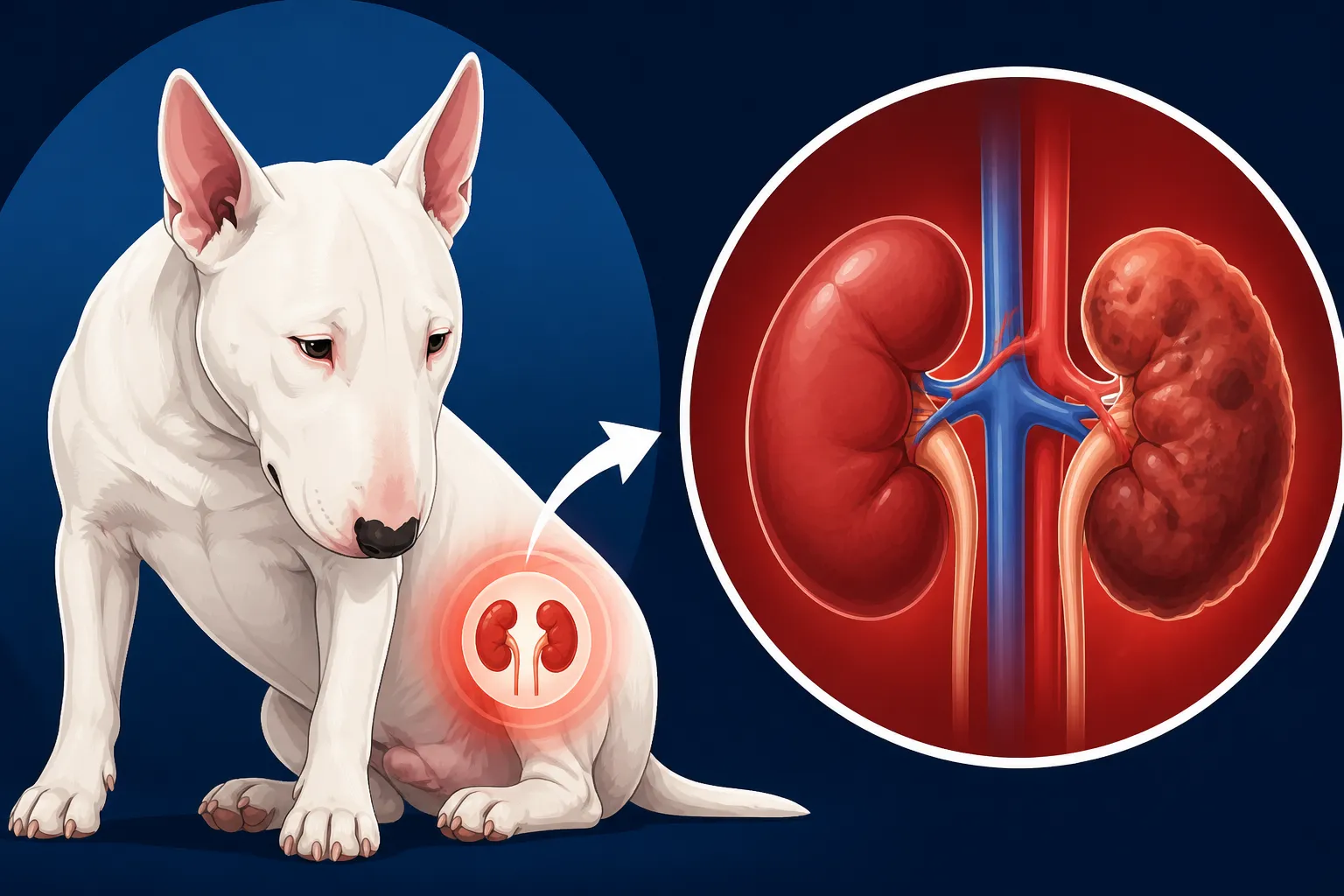
Hereditary Nephritis is, at its heart, a progressive kidney disease characterized by abnormalities in the glomeruli. These are tiny, intricate filters within the kidneys responsible for sifting waste products from the blood while retaining essential proteins. In a Bull Terrier with HN, these filters are structurally flawed. Imagine a coffee filter that slowly starts to fray and develop holes; instead of holding the coffee grounds (the waste) and letting the liquid (filtered blood) pass through, it begins to let valuable coffee (proteins) escape into the mug. This leakage of protein is a hallmark of the disease and a key indicator that something is amiss.
Over time, this continuous damage and protein loss lead to scarring and inflammation, gradually destroying the kidney's ability to function. It's not an acute failure that happens overnight but a slow, relentless decline. For Bull Terrier owners, understanding what Hereditary Nephritis does to a Bull Terrier specifically means bracing for a long-term battle against a condition that chips away at their dog's health, often culminating in severe kidney failure.
Why Bull Terriers Are Susceptible to This Condition
The susceptibility of Bull Terriers to Hereditary Nephritis is rooted deep in their genetics. It's an inherited condition, meaning it's passed down from parents to offspring. While other breeds can experience kidney issues, the Bull Terrier (and especially the Miniature Bull Terrier) carries a specific genetic mutation that makes them particularly vulnerable to this specific form of nephritis. This isn't just a random occurrence; it's a known genetic fault within the breed.
Breeders committed to the health of their lines strive to test their dogs to prevent passing on this devastating gene, but historical breeding practices often unknowingly perpetuated it. Unfortunately, without careful genetic screening, a puppy can inherit the genes responsible for HN, even if its parents seem healthy. This makes responsible breeding and rigorous health testing paramount for the future of the breed, helping to reduce the incidence of this heartbreaking condition.
The Genetic Basis of Hereditary Nephritis
The specific genetic cause behind Hereditary Nephritis in Bull Terriers has been identified as a mutation in the COL4A1 and COL4A2 genes, which are crucial for producing collagen IV. This particular type of collagen is a major component of the basement membrane in the kidney's glomeruli – essentially the scaffolding that supports those vital filtering units. When these genes are mutated, the collagen IV is faulty, leading to a weak and leaky glomerular basement membrane. This directly explains how Hereditary Nephritis is inherited in Bull Terriers.
Understanding this genetic basis is incredibly powerful because it means a DNA test is available. This test can identify whether a Bull Terrier is clear, a carrier, or affected by the gene responsible for HN. For breeders, this knowledge is invaluable in making informed decisions to avoid producing affected puppies. For owners, it offers a definitive diagnostic tool to confirm HN, distinguishing it from other potential kidney ailments and allowing for more targeted management strategies. This also highlights why it’s so important to ask about a puppy’s parents' health clearances, including specific genetic tests for conditions like HN.
How Hereditary Nephritis Impacts Kidney Function
The kidneys are powerhouse organs, performing a dizzying array of tasks from filtering waste and balancing fluids to producing hormones that regulate blood pressure and red blood cell production. When a disease like Hereditary Nephritis begins to attack these vital organs, the repercussions spread far beyond just waste removal, affecting nearly every system in the body.
The Role of the Glomeruli in Healthy Kidneys
To truly grasp the impact of Hereditary Nephritis, it helps to understand what the kidneys are supposed to do. Deep within each kidney are millions of tiny filtering units called nephrons. Each nephron contains a glomerulus, which is a knot of tiny blood vessels. Think of it as the brain of the filtering system. Blood flows into the glomerulus under pressure, and the semi-permeable membrane acts like a super-fine sieve, allowing small waste molecules, excess water, and electrolytes to pass through into a tubule, while keeping larger, crucial components like proteins and blood cells in the bloodstream.
In a healthy Bull Terrier, this system works flawlessly, maintaining the delicate balance of their internal environment. The filtered fluid then travels through a series of tubules where essential substances are reabsorbed back into the blood, and additional waste is secreted into the forming urine. It's an elegant, efficient system designed to protect the body from toxins and maintain homeostasis.
The Damage Caused by Hereditary Nephritis
The problem with Hereditary Nephritis is that this vital glomerular filter is fundamentally flawed from day one. The collagen IV defects mean the glomerular basement membrane, the very structure that acts as the sieve, is weak and porous. Instead of selectively holding back large protein molecules, it allows them to leak out into the urine. This is why a persistently high urine protein-to-creatinine (UPC) ratio is such a critical indicator, telling a Bull Terrier owner that protein is escaping where it shouldn't.
As protein leaks, the body tries to compensate, but the constant leakage damages the surrounding kidney tissue, leading to inflammation and fibrosis (scarring). This scarring isn't just cosmetic; it means functional kidney tissue is being replaced by non-functional scar tissue. This process is progressive and irreversible. Over months and years, more and more nephrons are destroyed, reducing the overall filtering capacity of the kidneys until they can no longer keep up with the demands of the body. This relentless destruction is precisely how Hereditary Nephritis damages a Bull Terrier's kidneys, leading to their eventual failure.
The Cascade Effect on Overall Health
The kidneys' decline due to HN doesn't happen in isolation. As their function deteriorates, a cascade of other health problems begins. The most immediate effect is the build-up of toxins in the blood that the kidneys can no longer filter, leading to a condition called uremia. This makes the dog feel unwell, causing nausea, loss of appetite, and lethargy. Furthermore, the constant loss of protein through the urine, particularly albumin, can lead to low protein levels in the blood (hypoalbuminemia), which can cause fluid to accumulate in the abdomen (ascites) or legs (edema).
Beyond filtering, kidneys also produce hormones. They help regulate blood pressure and stimulate red blood cell production. With HN, Bull Terriers can develop high blood pressure (hypertension) and anemia (low red blood cell count), exacerbating their overall weakness and making them feel colder. These interconnected issues highlight why managing Hereditary Nephritis isn't just about the kidneys; it's about supporting the entire physiological system that depends on them, requiring a comprehensive and proactive approach from you and your vet. Pet insurance providers like Healthy Paws often highlight the importance of early diagnosis and continuous care for such chronic conditions.
Spotting the Early Warning Signs
One of the greatest challenges with Hereditary Nephritis, and kidney disease in general, is that dogs are masters at hiding illness. By the time obvious symptoms appear, a significant portion of kidney function may already be lost. This is why vigilance and understanding the subtle early warning signs are absolutely crucial for Bull Terrier owners.
Subtle Changes in Thirst and Urination
The very first signs of kidney trouble often revolve around a dog's water intake and urination habits. You might notice your Bull Terrier seems to be drinking more water than usual, perhaps emptying their water bowl more quickly or asking for refills more often. This increased thirst (polydipsia) is the kidneys' desperate attempt to flush out toxins that they can no longer concentrate effectively. More drinking naturally leads to more frequent urination (polyuria).
You might observe your dog needing to go out more often, having accidents indoors if they're typically house-trained, or producing larger volumes of urine during their walks. The urine might also appear lighter in color because it's more dilute. These changes can be subtle at first and easily dismissed, especially if your routine is busy. But if you notice your Bull Terrier is drinking more than it used to, it's a definite red flag that warrants a veterinary check-up, especially considering how serious kidney issues can be for the breed. Don't wait for dramatic changes; consistent observation is key.
Changes in Appetite and Weight
As kidney function declines and toxins build up in the bloodstream, your Bull Terrier will start to feel generally unwell. One of the most common early indicators is a change in appetite. They might become pickier with their food, turn their nose up at meals they once loved, or simply eat less than usual. This reduced appetite can eventually lead to unexplained weight loss, even if you haven't changed their diet or exercise routine.
Sometimes, the nausea associated with uremia can also lead to vomiting, particularly after eating. If your energetic Bull Terrier, who usually clears their bowl with gusto, suddenly acts indifferent to food or begins to lose weight without an obvious reason, it's a significant cause for concern. These are crucial signs a Bull Terrier's kidneys are failing, and prompt veterinary attention is vital. Early intervention can make a significant difference in managing the progression of the disease and improving their quality of life.
Behavioral Shifts and Energy Levels
Beyond physical changes, kidney disease can also manifest as shifts in behavior and energy levels. Your typically playful, boisterous Bull Terrier might become noticeably more subdued, lethargic, or less interested in their usual activities like walks or playtime. They might sleep more, seem less enthusiastic about greeting you, or generally appear duller. This is often due to the toxins making them feel tired and unwell, as well as potential anemia.
You might also notice a change in their coat quality, becoming duller or less vibrant, or bad breath (halitosis) which is another common symptom as toxins build up in the body. Some dogs might even appear disoriented or restless as the disease progresses. While any of these signs on their own could be attributed to a myriad of minor issues, when seen together, especially with increased thirst and urination, they paint a concerning picture of a systemic problem like Hereditary Nephritis. Being attuned to these subtle shifts in your Bull Terrier’s normal demeanor can be life-saving.
Diagnosing Hereditary Nephritis in Bull Terriers
Getting an accurate and early diagnosis of Hereditary Nephritis is paramount because it allows for proactive management, even though there's no cure. The diagnostic process involves a combination of routine screening, specific tests, and sometimes more invasive procedures to confirm the presence and extent of the kidney damage.
The Importance of Regular Urine Protein Creatinine UPC Ratios
For Bull Terriers, the Urine Protein to Creatinine (UPC) ratio is an absolute cornerstone of early detection and ongoing monitoring for Hereditary Nephritis. This simple urine test measures the amount of protein in the urine relative to creatinine, a waste product. A healthy dog should have very little protein in its urine. If the kidneys' glomeruli are leaking, as they do in HN, the UPC ratio will be elevated, indicating proteinuria.
What a UPC Ratio tells a Bull Terrier owner is whether protein is being lost through the kidneys. Even if your Bull Terrier seems perfectly healthy, an elevated UPC can be the first concrete sign of trouble, long before clinical symptoms appear. Regular screening, especially the yearly urine test every Bull Terrier owner should book, is crucial. For Bull Terriers, starting this screening young is recommended, typically around 12-18 months of age, and continuing it annually throughout their lives. Persistent proteinuria is a strong indicator of HN, and monitoring its levels helps track disease progression.
Blood Tests and Imaging to Confirm Diagnosis
While the UPC ratio is an early warning system, other diagnostic tools are essential to get a full picture of kidney health. Blood tests, specifically a chemistry panel, measure kidney values like Blood Urea Nitrogen (BUN) and creatinine, which are waste products that build up in the blood when kidneys aren't filtering properly. However, these values often don't become elevated until two-thirds or more of kidney function is lost, which is why UPC is more useful for early detection. The blood panel also assesses electrolyte levels and red blood cell count, revealing issues like anemia or imbalances that commonly arise with kidney disease.
Imaging, such as an abdominal ultrasound, allows your veterinarian to visualize the kidneys. They can assess their size, shape, and internal architecture, looking for abnormalities like scarring, cysts, or changes in density that might be indicative of chronic kidney disease. While ultrasound cannot definitively diagnose HN, it can rule out other causes of kidney issues, like polycystic kidney disease in a Bull Terrier, and provide crucial information about the overall health of the kidneys. Sometimes, a veterinary internal medicine specialist or a radiologist will be consulted to interpret these images fully.
When a Kidney Biopsy Is Considered
For a definitive diagnosis of Hereditary Nephritis, especially in cases where the UPC ratio is high but other tests are inconclusive, a kidney biopsy might be recommended. This involves taking a small tissue sample from the kidney and sending it to a specialized veterinary pathologist for microscopic examination. The pathologist can then identify the characteristic structural abnormalities in the glomeruli that are specific to HN.
A kidney biopsy is a more invasive procedure, requiring general anesthesia and carrying some risks. Therefore, it's not always performed, especially if the genetic DNA test for Bull Terrier nephritis exists and provides a clear answer, or if the clinical picture, including persistent proteinuria and breed susceptibility, strongly points to HN. However, a biopsy can provide invaluable information, not just for confirming HN but also for assessing the extent of damage and ruling out other rare kidney diseases that might have different treatment protocols. The decision to pursue a biopsy is typically made in consultation with a veterinary internal medicine specialist, weighing the diagnostic benefits against the risks for your individual Bull Terrier.
The Relentless Progression of Hereditary Nephritis
Understanding that Hereditary Nephritis is a progressive disease is crucial for Bull Terrier owners. It means the condition will, unfortunately, worsen over time, and the focus of care shifts from preventing to managing the inevitable decline. While this reality can be daunting, knowing what to expect can help you make informed decisions and provide the best possible support for your beloved companion.
Stages of Kidney Disease and Their Implications
Veterinarians often use a staging system developed by the International Renal Interest Society (IRIS) to categorize the severity of kidney disease, which helps guide treatment plans. This system considers blood creatinine levels and the UPC ratio.
- IRIS Stage 1: Often characterized by normal blood kidney values but evidence of kidney disease, such as persistent proteinuria (high UPC ratio). At this stage, your Bull Terrier might show no outward symptoms, highlighting why annual UPC screening is vital. The Age Hereditary Nephritis Shows in a Bull Terrier can vary, but proteinuria can often be detected in young adults.
- IRIS Stage 2: Mild kidney insufficiency, with slightly elevated blood creatinine but usually still no overt clinical signs. Proteinuria may be more pronounced.
- IRIS Stage 3: Moderate kidney failure, with noticeable elevation in blood creatinine. At this stage, your Bull Terrier will likely start showing clinical signs like increased thirst, decreased appetite, and some lethargy.
- IRIS Stage 4: Severe, end-stage kidney failure. Blood creatinine is significantly high, and clinical signs are profound and debilitating, including severe lethargy, vomiting, significant weight loss, and muscle wasting.
Each stage carries different implications for management, prognosis, and your Bull Terrier's quality of life. The progression isn't always linear, and some dogs may stabilize for periods with appropriate treatment, but the underlying damage continues.
Common Complications as the Disease Advances
As Hereditary Nephritis advances, various complications can arise, making your Bull Terrier feel increasingly unwell. One of the most common is systemic hypertension, or high blood pressure, which further damages the kidneys and can also affect other organs like the eyes, heart, and brain. Regular blood pressure monitoring becomes an essential part of ongoing care.
Anemia is another frequent issue. Damaged kidneys produce less erythropoietin, a hormone that stimulates red blood cell production, leading to a low red blood cell count. This causes weakness, fatigue, and can make your Bull Terrier feel cold. Furthermore, electrolyte imbalances, particularly with phosphorus and potassium, can occur, requiring dietary adjustments and sometimes medication. Dogs may also develop bone density issues (renal secondary hyperparathyroidism) due to abnormal calcium and phosphorus metabolism. All these complications add to the overall burden on your dog’s body and require vigilant management. Pet insurance, like that offered by Healthy Paws, can be incredibly helpful in offsetting the significant costs associated with managing these complex and ongoing health issues.
The Heartbreaking Reality of End-Stage Renal Failure
The unfortunate reality of Hereditary Nephritis is that it is a terminal disease. As the kidneys progress to end-stage renal failure (IRIS Stage 4), they can no longer adequately perform their vital functions. At this point, toxins accumulate to critical levels, and the complications become severe and difficult to manage. Your Bull Terrier will likely experience persistent nausea, vomiting, profound lethargy, severe weight loss, muscle wasting, and a greatly diminished quality of life.
The focus of care shifts entirely to comfort and palliation. This might involve subcutaneous fluids at home to help with hydration and toxin flushing, anti-nausea medications, appetite stimulants, and pain management if needed. This is when the question of how long a Bull Terrier lives after a nephritis diagnosis becomes heartbreakingly relevant. While some dogs might live for a few years with early diagnosis and diligent management, the end stages of HN are challenging for both the dog and the owner, demanding immense emotional strength to make difficult decisions about their beloved companion's comfort and well-being.
Living With and Managing Hereditary Nephritis
Receiving a diagnosis of Hereditary Nephritis can be devastating, but it’s not an immediate death sentence. While there is no cure, aggressive and proactive management can significantly slow the progression of the disease and maintain your Bull Terrier's quality of life for as long as possible. This involves a multi-faceted approach focusing on diet, medication, and supportive care.
Dietary Management for Kidney Health
Diet plays an absolutely critical role in managing kidney disease in Bull Terriers. The goal of a kidney-friendly diet is to reduce the workload on the kidneys and minimize the accumulation of waste products that make your dog feel unwell. This means a diet that is typically:
- Lower in protein: While protein is essential, excessive protein intake can produce more nitrogenous waste that damaged kidneys struggle to filter. The key is high-quality, easily digestible protein in controlled amounts, not necessarily extremely low protein, especially in earlier stages.
- Restricted in phosphorus: Phosphorus levels tend to rise as kidney function declines, contributing to complications like bone disease and further kidney damage. Kidney diets are specifically formulated to have reduced phosphorus.
- Supplemented with Omega-3 fatty acids: These fatty acids (EPA and DHA) have anti-inflammatory properties and can help protect kidney tissue.
- Alkalinizing: These diets often help maintain a balanced pH in the body, which can be disrupted by kidney disease.
Commercially available prescription renal diets, such as those from brands like Purina Pro Plan Veterinary Diets (e.g., NF Kidney Function formulas) or Royal Canin Veterinary Diet (e.g., Renal Support formulas), are specifically formulated to meet these requirements. Your veterinarian will advise which diet a Bull Terrier with kidney disease needs and when to transition them to it, often gradually to avoid digestive upset. Homemade diets are also an option but must be carefully balanced by a veterinary nutritionist to ensure they meet all nutritional needs without exacerbating kidney issues.
Medication and Supportive Therapies
Alongside dietary changes, several medications and supportive therapies are vital in managing Hereditary Nephritis and its complications:
- ACE Inhibitors (e.g., Enalapril, Benazepril): These medications are often prescribed early in the disease to help reduce protein leakage from the kidneys and manage high blood pressure. They help protect the remaining kidney function by reducing pressure within the glomeruli.
- Phosphate Binders: If blood phosphorus levels become too high, phosphate binders can be added to food. These bind with phosphorus in the digestive tract, preventing its absorption into the bloodstream.
- Anti-Hypertensives: If high blood pressure is present and not adequately controlled by ACE inhibitors, other medications like amlodipine might be added to protect against further organ damage.
- Anti-Nausea Medications: As toxins build up, Bull Terriers can experience nausea and vomiting. Medications like maropitant (Cerenia) can help alleviate these symptoms, improving appetite and comfort.
- Appetite Stimulants: If your Bull Terrier is still reluctant to eat, appetite stimulants may be used to encourage food intake and prevent weight loss.
- Fluid Therapy: In more advanced stages, or during periods of crisis, subcutaneous (under the skin) fluid administration can help flush toxins from the body and maintain hydration. This is often taught to owners for at-home use.
- Supplements: Depending on individual needs, supplements like B vitamins (which are often lost in urine with increased thirst), potassium, or specific kidney support supplements may be recommended by your vet.
Regular veterinary check-ups are essential to monitor your Bull Terrier's progress, adjust medications, and track kidney values. These check-ups should include blood work and UPC ratios at intervals determined by the stage of their disease. While the initial costs can be high, having pet insurance like Healthy Paws can significantly ease the financial burden of these ongoing treatments and specialist consultations.
Providing Comfort and Quality of Life
Beyond medical and dietary management, focusing on your Bull Terrier's overall comfort and quality of life is paramount. This means making sure they have constant access to fresh water, managing their environment to keep them comfortable (e.g., avoiding extreme heat or cold if they are anemic), and providing gentle exercise and mental stimulation that matches their energy levels.
Regular grooming can help keep their coat healthy and make them feel better, especially if their appetite is poor. Most importantly, continue to shower them with love, attention, and positive experiences. Remember, your Bull Terrier cherishes time with you. Adjusting routines, being patient with accidents, and celebrating every good day become part of the journey. While Hereditary Nephritis is a serious illness, with dedication and a comprehensive approach, you can help your Bull Terrier live comfortably and happily for as long as possible, reminding them daily how much they are cherished.
Disclaimer
This article is intended for informational purposes only and does not constitute veterinary advice. Always consult with a qualified veterinarian for any health concerns or before making any decisions about your Bull Terrier's health or treatment plan.