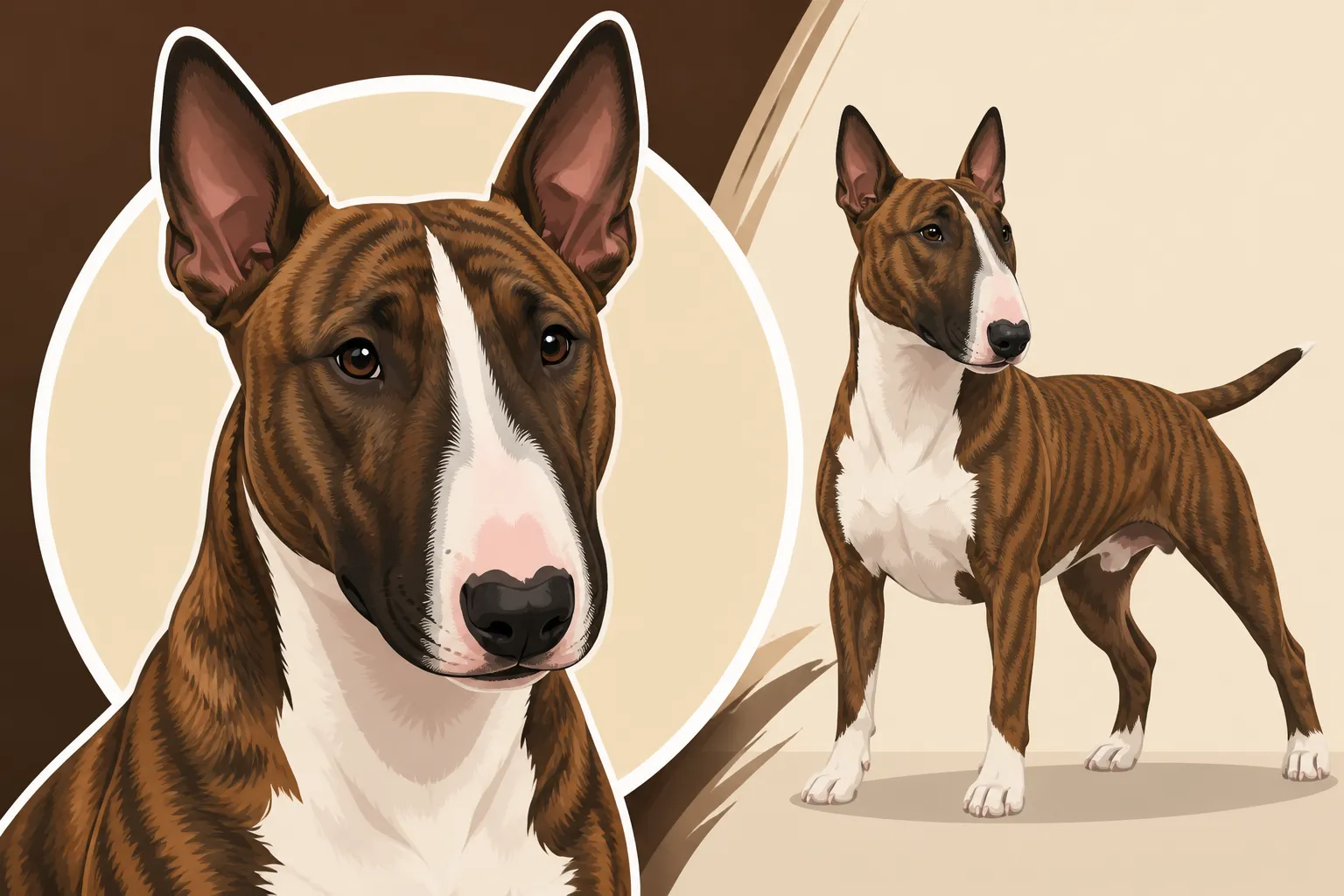
What a Brindle Bull Terrier Looks Like
A brindle Bull Terrier can look almost solid dark from across the park, then reveal warm reddish stripes when the light catches its coat. That contrast, combined with the breed’s egg-shaped head and muscular build, makes the pattern easy to recognize but sometimes hard to describe. This guide explains what brindle looks like, how it varies, and what not to assume from coat color alone.
What a brindle Bull Terrier looks like
The base color and dark stripes
Brindle is a coat pattern, not a single flat color. A brindle Bull Terrier has a lighter ground color—often red, fawn, or tan—with darker stripes layered over it. Those stripes are commonly black or very dark brown. Depending on how closely they are spaced and how broad they are, the dog may look lightly striped, strongly patterned, or nearly dark overall.
The pattern is not usually a set of tidy, evenly spaced lines. Stripes can be narrow or thick, curved or broken, and more noticeable on some parts of the body than others. One dog may have a warm red-brown appearance with clear dark bands, while another may look mostly black until you see its coat in bright daylight. Both can be described as brindle.
Brindle is one of the colors seen in the breed’s colored category. If you are comparing it with red, fawn, tricolor, or white Bull Terriers, Which Colors a Bull Terrier Comes In provides a broader look at the range. Color labels can vary a little between breeders and kennel-club descriptions, so photos and the dog’s actual coat are often more useful than a short label on its own.
White markings and pattern variation
Some brindle Bull Terriers have white markings alongside the brindle pattern. White may appear on the chest, feet, lower legs, muzzle, or neck. A dog with substantial brindle coloring and smaller white areas may be described informally as brindle and white. The exact balance varies from dog to dog.
The important visual question is which color is most prominent. On a colored Bull Terrier, the brindle should remain the dominant impression rather than the dog appearing mostly white with a few colored patches. A small white blaze or white toes do not make the dog a different type of Bull Terrier; they are simply part of that individual’s markings.
| Feature | What you may see on a brindle Bull Terrier |
|---|---|
| Ground color | Red, fawn, tan, or another warm-looking shade |
| Stripes | Dark brown or black bands that may be fine, broad, or irregular |
| Overall impression | Lightly striped, strongly brindled, or very dark at a distance |
| White markings | Possible on the chest, feet, legs, muzzle, or neck |
| Coat texture | Short, flat, and close to the body |
Photos can make brindle look different from how it appears in person. A phone camera may flatten the contrast, while strong sunlight can bring out the lighter ground color. Indoor lighting, shadows, and a dog’s position can also make stripes seem less distinct. If you are trying to identify a particular dog, look at several clear photos rather than relying on one image taken in dim light.
How brindle looks on a Bull Terrier’s build
The head and expression
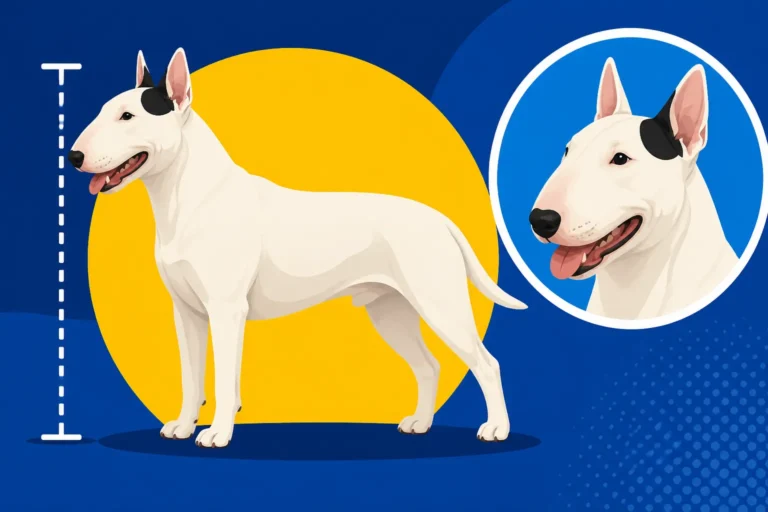
Brindle describes the coat, but it does not change the Bull Terrier’s characteristic outline. The breed’s head is long and distinctive, with a gently curving profile often called a downface. That shape can make the dog’s face look different from the more familiar square-muzzled outline of many other breeds. For a closer explanation of the profile, see What a Bull Terrier's Downface Is.
The small, triangular-looking eyes are another feature people often notice. On a brindle dog, dark facial markings may make the eyes seem especially prominent, but the eye shape comes from the breed’s structure, not the coat pattern. Why a Bull Terrier's Eye Is Triangular explains that feature in more detail.
Because the coat is short and close-fitting, the pattern follows the contours of the head and body rather than hiding them under long hair. You can usually see the dog’s neck, shoulders, chest, and muscular legs clearly. In side view, the contrast between dark stripes and lighter ground color may be easiest to spot along the body and ribs.
The short coat and muscular outline
A Bull Terrier’s coat is generally short, flat, and firm to the touch. There is no long fringe or heavy coat to obscure its shape, so brindle markings stay visible across the dog’s torso and limbs. A smooth, glossy appearance can make the pattern look especially crisp, while loose hair or dull lighting may soften the contrast.
The breed is solidly built, but dogs vary in size and proportions. A brindle pattern does not tell you whether a dog is a standard or miniature Bull Terrier, nor does it indicate its weight or height. If you are comparing adult dogs, How Much a Bull Terrier Weighs is more useful than trying to estimate size from coat color or photographs.
Brindle also does not determine a dog’s personality, energy level, or trainability. Two dogs with nearly identical coats can have very different temperaments and needs. A prospective owner should pay attention to the individual dog’s health history, behavior, upbringing, and daily-care requirements rather than treating a color pattern as a personality clue.
Brindle compared with other colors and breeds
Telling brindle apart from other Bull Terrier colors
A red Bull Terrier may have a fairly even warm coat, while a brindle dog has darker stripes over a lighter ground color. Fawn can look pale or golden, and tricolor typically combines more than one distinct color area rather than presenting as a striped pattern. In poor lighting, though, a heavily brindled dog can be mistaken for a solid dark dog, and a subtle brindle may be hard to see in a photograph.
White Bull Terriers can have colored markings, but a mostly white coat with a colored patch is visually different from a colored dog whose ground color and stripes cover most of the body. When breeders describe a puppy’s color, ask what the coat looks like in natural light and request photos that show the full body. A close-up of the face alone may not reveal whether the body is lightly or heavily brindled.
The word “brindle” can also be used alongside other color terms to describe a dog more precisely. For example, a dog may have a brindle body and white feet or chest. If the description is unclear, ask the breeder or rescue organization to explain which areas are brindle and which are white instead of assuming the label tells the whole story.
Distinguishing a Bull Terrier from similar-looking dogs
Brindle appears in many breeds, so coat pattern alone cannot identify a Bull Terrier. A brindle Staffordshire Bull Terrier, for example, can also have a short coat and a muscular frame. The head shape, body proportions, size, and overall breed characteristics help distinguish them. How a Bull Terrier Differs From a Staffordshire Bull Terrier compares the two breeds beyond coat color.
This matters when you are browsing adoption listings or encountering a dog whose history is unknown. A shelter may use a best-guess breed description based on appearance, and a brindle pattern is not proof of pedigree. If the dog’s background is important to you, ask what records are available and understand that appearance alone cannot confirm a breed mix or ancestry.
Color is not a reliable shortcut for predicting health, either. Brindle does not automatically mean a dog is healthier, more robust, or less likely to develop breed-related conditions. Ask about health screening and veterinary records. The coat pattern is a visual characteristic—not a substitute for information about the dog’s parents, medical history, or care.
Identifying and caring for a brindle coat
What to look for in photos or when meeting a dog
When judging whether a Bull Terrier is brindle, look for both parts of the pattern: a lighter ground color and darker stripes. Check the shoulders, sides, back, and legs in natural daylight. The stripes may be easiest to see where the coat catches the light, so viewing the dog from more than one angle can help.
For a puppy, use more than one photo if possible. A single image can misrepresent the coat because of flash, shadows, editing, or a camera’s color balance. Ask whether the puppy’s markings are visible on its sides and back, and whether the breeder’s description includes any white areas. A short video in ordinary daylight may show the pattern more clearly than a heavily filtered portrait.
Keep the question in perspective: a precise color description is useful, but it should not outweigh practical considerations. If you are choosing a puppy, ask about health testing, temperament, socialization, and the parents’ history as well as coat color. If you are adopting an adult, spend time learning how that particular dog behaves in a home and around the situations that matter to you.
Coat care and skin checks
Brindle Bull Terriers do not need special grooming just because of their coloring. Their short coat can usually be maintained with regular brushing to remove loose hair and keep the skin and coat in view. Brushing also gives you a chance to notice a new bald patch, irritated area, scab, or lump before it has been hidden by shedding or overlooked during everyday handling.
Color can affect how visible some skin changes are, but it does not make the dog immune to skin trouble. Check the body routinely, including the belly, paws, ears, and areas where a collar or harness sits. If you notice persistent itching, redness, sores, or hair loss, seek veterinary guidance rather than trying to diagnose the cause from the coat color.
If you shop for a basic brush or dog-safe skin-care item at Chewy, read the product directions and choose something appropriate for a short-coated dog. For a suspected skin problem, a retailer listing is not a diagnosis; ask your veterinarian before using medicated shampoos or applying human skincare products. Chewy may also be one place to compare ordinary grooming supplies, but ingredient labels and veterinary advice matter more than packaging claims. If you need sun protection for exposed skin, ask your vet what is safe for your dog before ordering sunscreen through Chewy or elsewhere.
Finally, avoid reading too much into a brindle coat. It does not tell you whether a dog is purebred, predict its temperament, or replace health records. It simply describes a striking pattern: dark stripes over a lighter base, set against the unmistakable outline of a Bull Terrier.
Disclaimer
This article is for general informational purposes only and does not constitute professional advice. Laws, prices and regulations vary by location and change over time. Consult a qualified professional for guidance on your specific situation.