Whether a Bull Terrier Should Have Forty Two Teeth
An adult Bull Terrier normally has 42 permanent teeth, just like other adult dogs. That number can look like a simple breed fact until a puppy is losing teeth, an adult has a gap, or a bad breath problem makes you wonder what is normal. This guide explains the expected tooth count, common exceptions, and how to care for your dog’s mouth.
How many teeth should a Bull Terrier have
Adult Bull Terriers usually have 42 permanent teeth
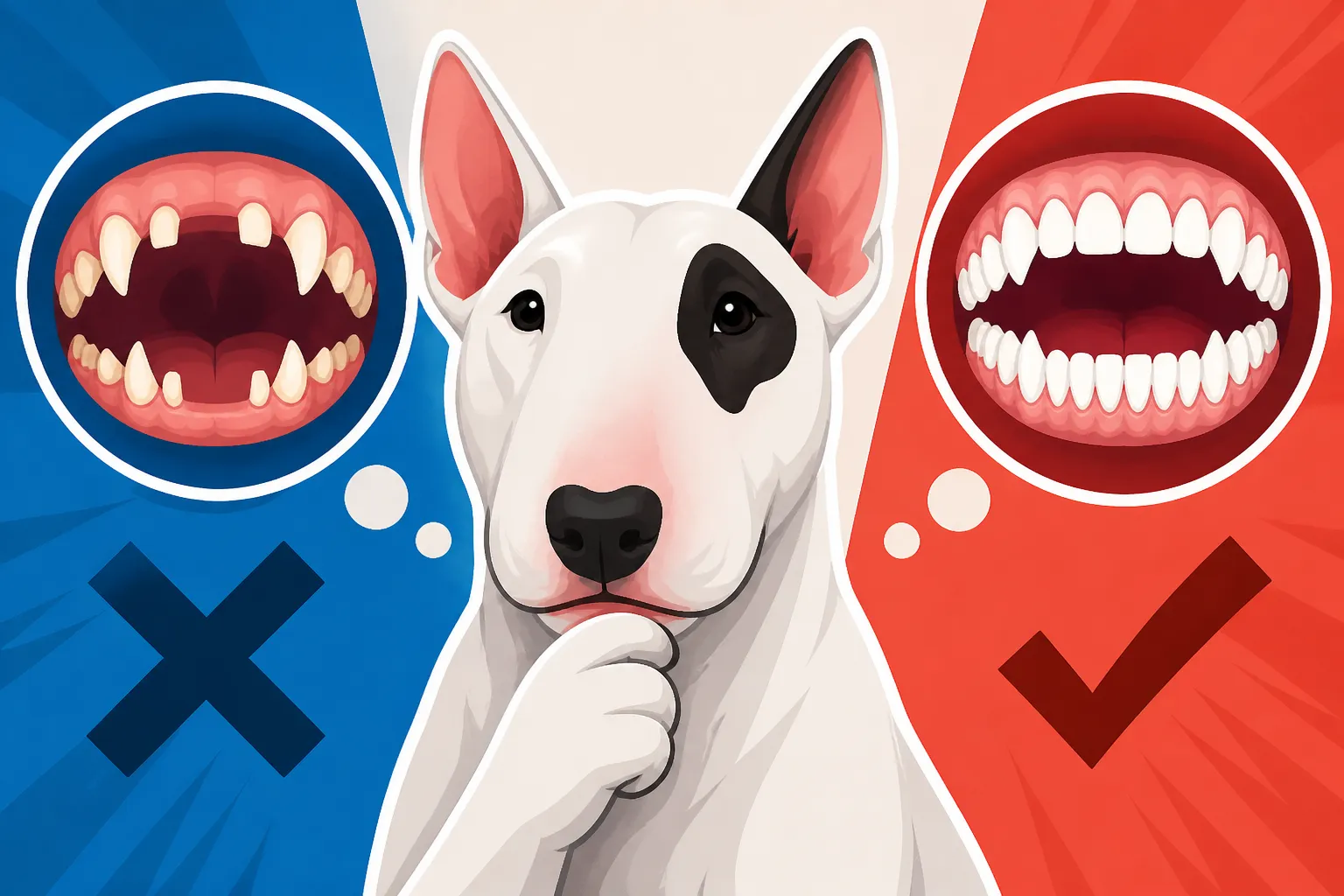
A healthy adult dog typically has 42 permanent teeth: 20 in the upper jaw and 22 in the lower jaw. That count includes incisors at the front, pointed canine teeth, premolars along the sides, and molars toward the back. Bull Terriers are not expected to have a different number simply because of their breed.
A dog’s teeth do more than make a dramatic grin. The incisors help pick up and nibble food, the canines grip, and the back teeth cut and crush. You may not be able to count every molar just by lifting your dog’s lips, and you shouldn’t force the mouth open to check. If your Bull Terrier is relaxed, you can gently lift the lips and look at the visible teeth and gums without prying.
The number 42 is a normal reference point, not a guarantee that every adult dog will have exactly that many teeth. A tooth may be absent, damaged, or hidden, and some dogs develop extra teeth. If you’re unsure about a gap or a crowded-looking area, a vet can examine the mouth and, when needed, use dental X-rays to see what’s below the gumline.
Bull Terriers should have a comfortable, functional bite
Tooth count is only one part of oral health. The teeth also need to meet in a way that allows your dog to close its mouth comfortably and chew. Breed descriptions commonly refer to a scissors bite, in which the upper incisors sit just over the lower incisors.
A mismatch in the bite can make some teeth wear against each other or irritate soft tissue. A dog with a visible bite difference may still eat normally, but eating comfortably doesn’t always prove that every tooth is healthy. A vet can assess whether the bite is causing injury or requires follow-up.
Also, don’t assume a tooth-count difference is harmless just because your Bull Terrier is eating. Dogs may adapt to discomfort or chew more on one side. A change in chewing, reluctance to take a hard treat, dropping food, or suddenly avoiding mouth handling is worth noting and discussing at a veterinary appointment.
Bull Terrier puppy teeth and the change to adult teeth
Puppies start with 28 temporary teeth
Bull Terrier puppies don’t begin life with 42 teeth. Like other puppies, they develop 28 temporary, or deciduous, teeth. These small, sharp teeth usually start appearing when a puppy is still very young. During teething, they are gradually replaced by permanent teeth as the jaw grows.
This stage can be confusing because a puppy may swallow a loose baby tooth while eating or playing. That can happen, and owners don’t necessarily find every tooth on the floor. You might notice a tiny tooth on a blanket, a little blood on a chew toy, or a brief increase in chewing. Those signs can occur during normal teething, but they shouldn’t be treated as proof that everything in the mouth is fine if your puppy seems painful or cannot eat comfortably.
By around six to seven months, many puppies have most or all of their adult teeth, though the timing can vary. If you’d like a broader overview of puppy development, When a Bull Terrier Puppy Moves to Adult Food covers another important transition that happens during the same growing period.
Retained baby teeth can crowd the mouth
Sometimes a permanent tooth starts to come in while its baby tooth is still present. The two teeth may sit close together, leaving a crowded space where food and plaque can collect. This is called a retained deciduous tooth. It is especially noticeable when a puppy appears to have two canine teeth in the same place, one small and one larger.
A retained baby tooth isn’t something to pull at home. The roots may be delicate, and trying to remove a tooth yourself can hurt your puppy or damage the developing permanent tooth. Ask your vet to check the mouth during routine puppy visits, especially if you notice a baby tooth that remains beside its adult replacement.
It can help to take a clear photo if your puppy won’t sit still for a close look. A photo won’t replace an exam, but it gives you a way to show what you saw and whether the area changes. If the gum is swollen, bleeding, or painful, call the clinic rather than waiting for the next routine check.
Why an adult Bull Terrier may not have exactly 42 visible teeth
Missing teeth and extra teeth need an examination
An adult Bull Terrier may appear to have fewer than 42 teeth for several reasons. A tooth might never have developed, it may have been lost through injury or disease, or it could be present below the gumline rather than visible. Teeth can also be hard to see at the back of the mouth, especially when your dog is uncomfortable with handling.
Some dogs develop extra teeth, known as supernumerary teeth. Extra teeth can cause crowding or make cleaning more difficult, but the number alone doesn’t tell you whether treatment is needed. Your vet will look at the position of the teeth, the condition of the gums, and whether the bite or chewing is affected.
A brief look at home can help you notice changes, but it cannot tell you what is happening under the gumline. If a tooth seems missing, loose, cracked, unusually positioned, or newly discolored, arrange a veterinary assessment. Dental X-rays may be recommended to clarify what a visual exam can’t show.
| What you notice | What it might mean | A sensible next step |
|---|---|---|
| A gap where a tooth should be | A missing tooth, a tooth below the gumline, or a tooth that was lost | Ask your vet to examine the area |
| Two teeth close together in a puppy | A retained baby tooth or crowding | Mention it at a puppy visit |
| A chipped or broken tooth | Trauma or chewing damage | Contact your vet, especially if the tooth is painful |
| Red, swollen, or bleeding gums | Irritation or dental disease | Arrange a veterinary check |
| Sudden chewing changes or dropped food | Mouth pain or another oral problem | Seek advice rather than waiting for it to pass |
A tooth count does not rule out dental disease
A Bull Terrier can have all 42 teeth and still have dental problems. Plaque and tartar can build up around the gumline, while inflammation can develop in the gums. Bad breath, red gums, visible buildup, or bleeding are not simply signs that a dog has “dog breath.” They can point to a problem that needs professional attention.
Watch for changes in your dog’s normal habits. Your Bull Terrier may chew on one side, hesitate before picking up a toy, stop accepting a favorite chew, drool more than usual, or pull away when you touch the muzzle. Some dogs become irritable when their mouths hurt, while others hide discomfort so well that the change is easy to miss.
A veterinary dental exam is the right way to assess suspected disease. Home brushing can support daily care, but it cannot remove hardened tartar or replace an exam. For a closer look at routine oral care, see Whether a Bull Terrier Needs Its Teeth Brushed and How Often a Bull Terrier Needs a Dental.
How to care for your Bull Terrier’s teeth
Build a gentle brushing routine
Regular brushing is one of the most practical ways to help limit plaque. Use a toothbrush designed for dogs and dog-safe toothpaste. Human toothpaste isn’t a suitable substitute, so check the label before using any product. If you’re shopping for supplies, retailers such as Chewy may carry dog toothbrushes and toothpaste; choose products made for pets and follow your vet’s guidance.
Start slowly, particularly if your Bull Terrier dislikes having its muzzle handled. Let your dog sniff the toothbrush, reward calm behavior, and begin by touching the outer lips rather than trying to brush every tooth on the first day. Once your dog is comfortable, lift a lip and gently brush a few teeth at a time, focusing on the outer surfaces near the gumline.
Short, calm sessions are often more successful than trying to complete a perfect full-mouth brushing while your dog is wriggling away. If brushing causes distress, pause and ask your veterinary team to demonstrate a gradual approach. A pet retailer such as Chewy can be a convenient place to compare basic toothbrush shapes, but the most important thing is choosing a tool your dog will tolerate and that you can use safely.
Choose chews and dental products thoughtfully
Dental chews and other oral-care products can be useful additions, but they do not replace brushing or veterinary care. Choose an item appropriate for your dog’s size and chewing style, and supervise chewing. A very hard object can damage a tooth, while a piece that breaks into chunks may create a choking risk or be swallowed.
Your Bull Terrier’s powerful jaws make it especially important to pay attention to the material and the way your dog uses it. If your dog tries to swallow a chew whole, breaks it into large pieces, or guards it intensely, stop using that item and ask your vet for alternatives. Product labels can help you understand intended use, but your veterinarian can help you decide whether a particular option suits your dog’s teeth and habits.
Chewy and other pet-supply retailers may offer a range of dental chews, but availability is not a measure of suitability. If your dog has dental disease, a fractured tooth, a sensitive mouth, or a history of swallowing objects, ask the vet before introducing a new chew. For more on safe chewing choices, see Which Chews Are Safe for a Bull Terrier.
Make mouth checks part of routine care
A calm weekly look can help you spot changes early. Choose a time when your Bull Terrier is relaxed, lift the lips gently, and look for obvious redness, swelling, broken teeth, unusual buildup, or a change in the way the teeth meet. You do not need to force the jaw open or reach far into the mouth. If your dog resists, stop and try another time—or leave the examination to a professional.
Keep a note of anything that changes, such as worsening breath, a new gap, or a shift in chewing. Photos taken in similar lighting can help you compare the appearance over time, but don’t delay a veterinary visit if you see pain, bleeding, swelling, or a broken tooth. A vet can assess the full mouth and recommend whether cleaning, imaging, or other treatment is appropriate.
Dental care works best as a partnership: gentle home habits, suitable products, and regular veterinary checks. If you are unsure whether your Bull Terrier’s mouth looks normal, it’s reasonable to ask at the next appointment rather than trying to interpret tooth count on your own. The standard number is 42 for an adult dog, but comfort, tooth position, and gum health matter just as much.
Disclaimer
This article is for general informational purposes only and does not constitute professional advice. Laws, prices and regulations vary by location and change over time. Consult a qualified professional for guidance on your specific situation.