Why a Bull Terrier’s Eye Is the Smallest of Any Breed
A Bull Terrier’s narrow, triangular eye can look surprisingly tiny beneath its long, egg-shaped head, especially in photos. The shape is a distinctive feature of the breed, but “the smallest eyes of any breed” is better understood as a common description than a precise, universally measured ranking. This guide explains what makes the eye look small, what is normal, and which changes deserve a veterinary check.
Why a Bull Terrier’s eye looks so small
The shape of the eye opening matters
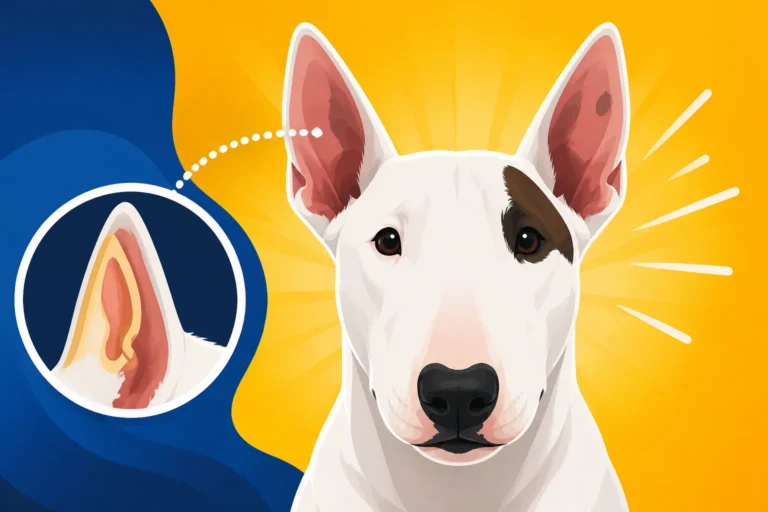
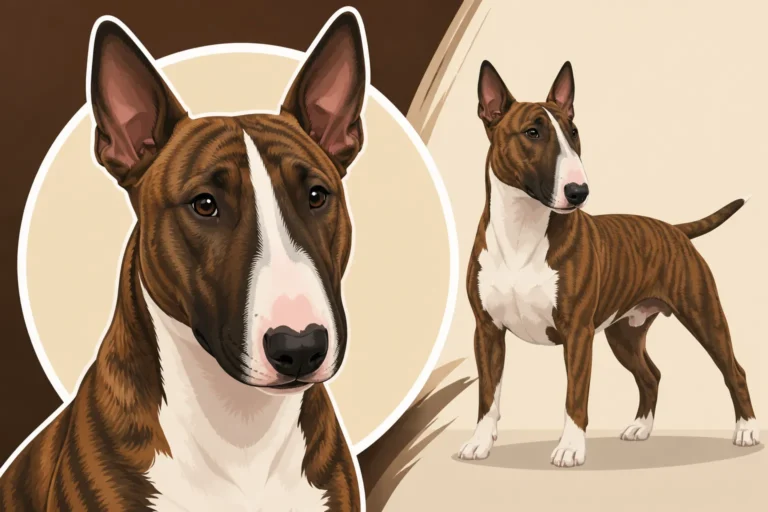
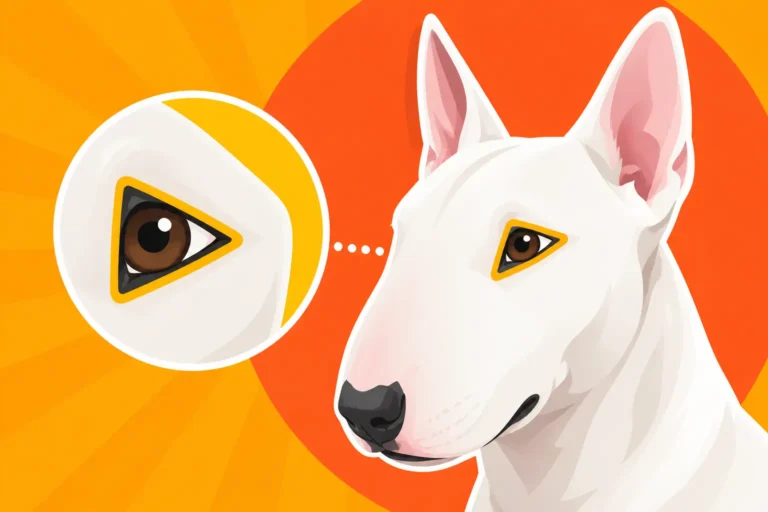
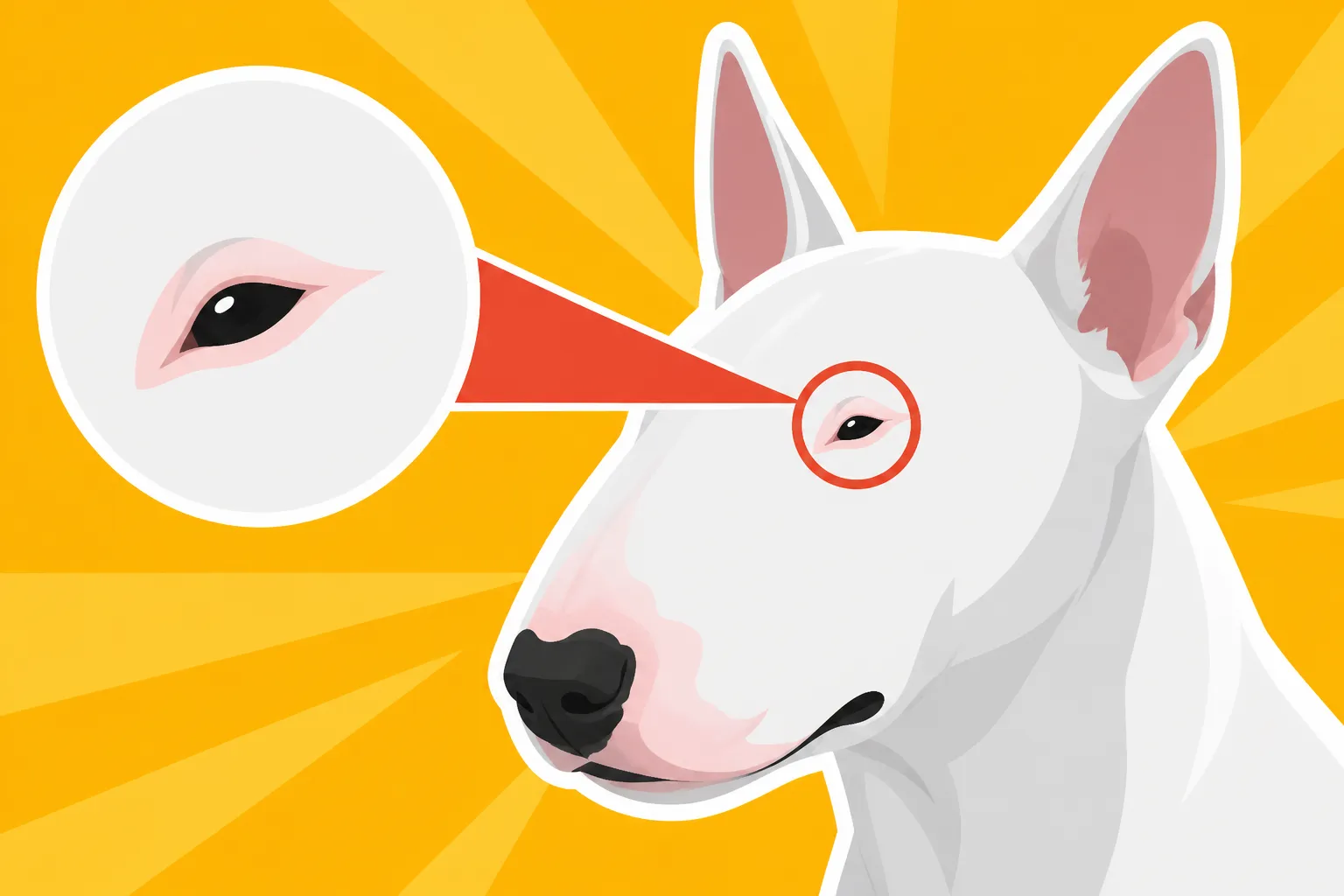
When people say Bull Terriers have very small eyes, they are usually describing the visible opening between the eyelids, not claiming the eyeball itself is uniquely tiny. The breed’s eyes are characteristically small, dark, and set obliquely, giving the opening a triangular appearance. The eyelids partly define what you see, so the visible eye can appear especially compact compared with the broad face around it.
That contrast is part of the effect. A Bull Terrier’s long head has a gently curving profile, and its eyes sit relatively high and close to the sides of the head. Against that much facial real estate, even a normally sized eye can look minute. A close-up photo, an upward glance, or a relaxed expression may make the eyes seem even narrower.
The eye’s shape is not a defect by itself. A healthy Bull Terrier should be able to blink, close the eyelids, and look around comfortably. The breed’s distinctive eye is also described in Why the Bull Terrier Is the Only Breed With a Triangular Eye, which explains how this feature fits the breed’s recognizable appearance.
Is it really the smallest eye of any breed
There is no simple, reliable way to declare one breed’s eyes the smallest of all dogs. “Smallest” could mean the size of the eyeball, the amount of eye visible between the lids, or the eye’s proportion to the dog’s head. Those are different measurements, and a dramatic-looking breed feature does not automatically establish a cross-breed record.
It is more accurate to say that Bull Terriers are known for small, triangular-looking eyes. The breed standard describes their characteristic appearance, but that is not the same as a scientific comparison proving they have the smallest eyes among every breed. Individual dogs also vary: one Bull Terrier may have a more pronounced triangular opening than another while still looking entirely typical.
If you are choosing a puppy, don’t use eye size alone as a health test or quality marker. Instead, look for eyes that appear clear and comfortable, and ask the breeder about relevant health screening and the puppy’s veterinary checks. What a Bull Terrier Breeder Should Have Tested covers broader health questions to raise before bringing a puppy home.
How the eye works with the Bull Terrier’s head
The eye opening is not the same as vision
A small-looking eye opening does not, on its own, mean a dog sees poorly. Vision depends on the eye and its internal structures, as well as the brain and the visual pathways connecting them. The shape of the eyelids and the amount of eye visible from the front tell you little about how clearly the dog can see.
Bull Terriers use their eyes to follow movement, find food, navigate familiar rooms, and respond to people. A dog that comfortably tracks a toy, notices a person approaching, and moves around its home without repeated collisions is showing useful everyday visual behavior. That does not rule out every eye condition, but it is more meaningful than judging vision from the eye’s size alone.
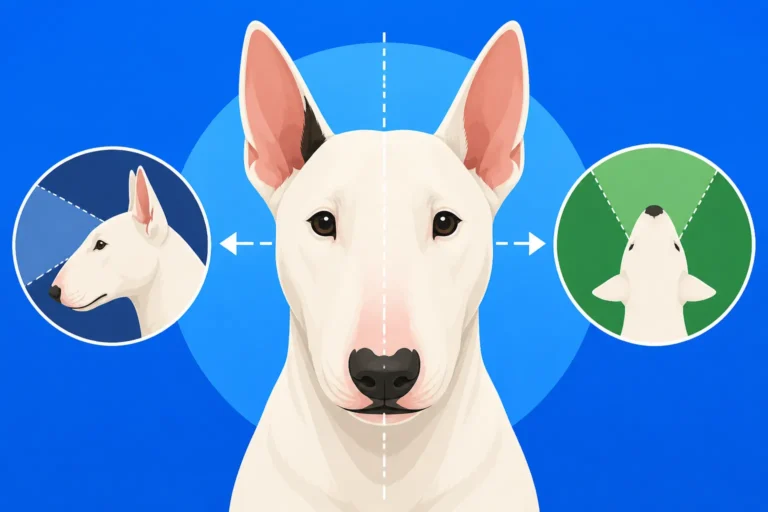
The breed’s head shape can affect how the eyes look from different angles. Seen straight on, the eyes may seem narrow; in profile, their placement and the curve of the head can make them appear more recessed. If you want to understand how the head’s contours contribute to the breed’s expression, Where the Bull Terrier's Egg Shaped Head Came From offers related breed context.
Why a small visible eye is not automatically a problem
A healthy eye should look clear, with no persistent redness, thick discharge, cloudiness, or obvious swelling. Your dog should be able to open and close the eyelids normally. Some dogs have a naturally narrow-looking eye opening; that appearance is different from squinting because an eye hurts.
A dog in discomfort may hold one eye partly closed, blink repeatedly, rub its face, or avoid bright light. Those behaviors deserve attention even if the eye has always looked small. Likewise, a sudden change in how much of the eye is visible is different from a stable, breed-typical shape.
Try comparing both eyes in similar light and from the same angle. A small difference in appearance can be normal, but a new or increasing difference—particularly with redness, tearing, or rubbing—should not be dismissed as “just the breed.” Signs a Bull Terrier's Eye Is Irritated can help you recognize changes that warrant a closer look.
Eye care and warning signs for Bull Terrier owners
Simple checks you can do at home
A calm, regular look is more useful than repeatedly handling your dog’s face. In a well-lit room, notice whether both eyes look clear and whether your dog opens them comfortably. Check for crusting at the corners, unusual wetness, redness, or a change in the appearance of the pupils. You do not need to pull the eyelids apart or touch the eyeball.
If your Bull Terrier gets a small bit of ordinary dirt near the eye, gently wipe the surrounding fur with a clean, damp cloth. Use a fresh area of cloth for each eye, and stop if your dog seems painful or resists. Don’t use human eye drops, leftover pet medication, or a home remedy unless a veterinarian has specifically told you to; products that seem harmless can be unsuitable for a particular eye problem.
For routine supplies, follow your veterinary clinic’s advice about what to keep at home. If the clinic recommends a particular non-medicated item, you might find it through the clinic, a local pet shop, or a retailer such as Chewy. The important part is matching the item to the vet’s instructions, rather than buying a product simply because it is marketed for irritated eyes.
When to call a veterinarian
Arrange veterinary advice promptly if your dog suddenly squints, holds an eye closed, paws or rubs at it repeatedly, or develops noticeable redness, swelling, cloudiness, or discharge. An eye injury, a rapidly changing pupil, or apparent loss of vision needs urgent attention. Eye problems can be uncomfortable, and waiting to see whether a painful-looking eye settles may allow the underlying issue to worsen.
A veterinary examination can distinguish surface irritation from problems involving the eyelids, cornea, lens, or other structures. Your vet may use a light and magnification, apply a diagnostic stain, or recommend further tests depending on what they find. Don’t try to diagnose a condition based on eye shape alone: the same outward sign can have more than one cause.
If treatment is prescribed, ask how and when to give it, whether the dog should avoid rubbing its face, and what changes mean you should call back. Some owners pick up clinic-approved supplies from their veterinary practice or a pet retailer such as Chewy, but medication should be used only as prescribed for that dog. Primary Lens Luxation in a Bull Terrier explains one eye condition owners may encounter in breed-health discussions; it is not something you can confirm by looking at eye size.
Understanding normal variation without missing a problem
What to observe as your dog grows older
A puppy’s expression changes as its head develops, and adult Bull Terriers can differ in how prominent their eyes appear. Lighting, camera angle, facial markings, and whether the dog is alert or relaxed can also change the impression. A photograph is useful for noticing a trend, but a single image is not a diagnosis.
It can help to take occasional clear photos of both eyes in ordinary daylight, without flash. If you later notice a persistent change, those images may give your veterinarian a helpful comparison. Keep the focus on changes—such as new cloudiness or one eye looking different—rather than trying to make the eye look a particular way.
Older dogs may also develop eye or vision changes that are unrelated to the breed’s distinctive eye shape. If your dog starts hesitating at steps, bumping into familiar objects, or struggling to find a toy, book an examination rather than assuming it is simply aging. How a Bull Terrier's Eye Is So Small is not a diagnosis, and an eye that looks typical can still need professional attention if its behavior changes.
How to talk about appearance with a breeder or vet
When discussing a puppy or adult dog, describe what you are seeing in practical terms: “one eye is watering,” “both eyes look clear,” or “he has started squinting.” That is more useful than saying the eyes seem too small, because small-looking eyes are a familiar part of the breed’s appearance and do not necessarily signal illness.
If you are evaluating a breeder, ask about the puppy’s general veterinary care and the health history of the parents. Don’t assume that a striking appearance proves the dog is healthier or more typical. A responsible discussion considers temperament, structure, health records, and the needs of the individual dog—not just one feature of its face.
For an adult dog, bring up any persistent concern at a routine appointment, especially if it is new or affects daily life. If the eye is painful, suddenly cloudy, injured, or held shut, don’t wait for a scheduled wellness visit. The key distinction is simple: a small triangular appearance that has always been there may be normal; discomfort or a sudden change is not something to explain away as breed type. For a broader routine-care checklist, see How Often a Bull Terrier Needs a Wellness Exam.
Disclaimer
This article is for general informational purposes only and does not constitute professional advice. Laws, prices and regulations vary by location and change over time. Consult a qualified professional for guidance on your specific situation.