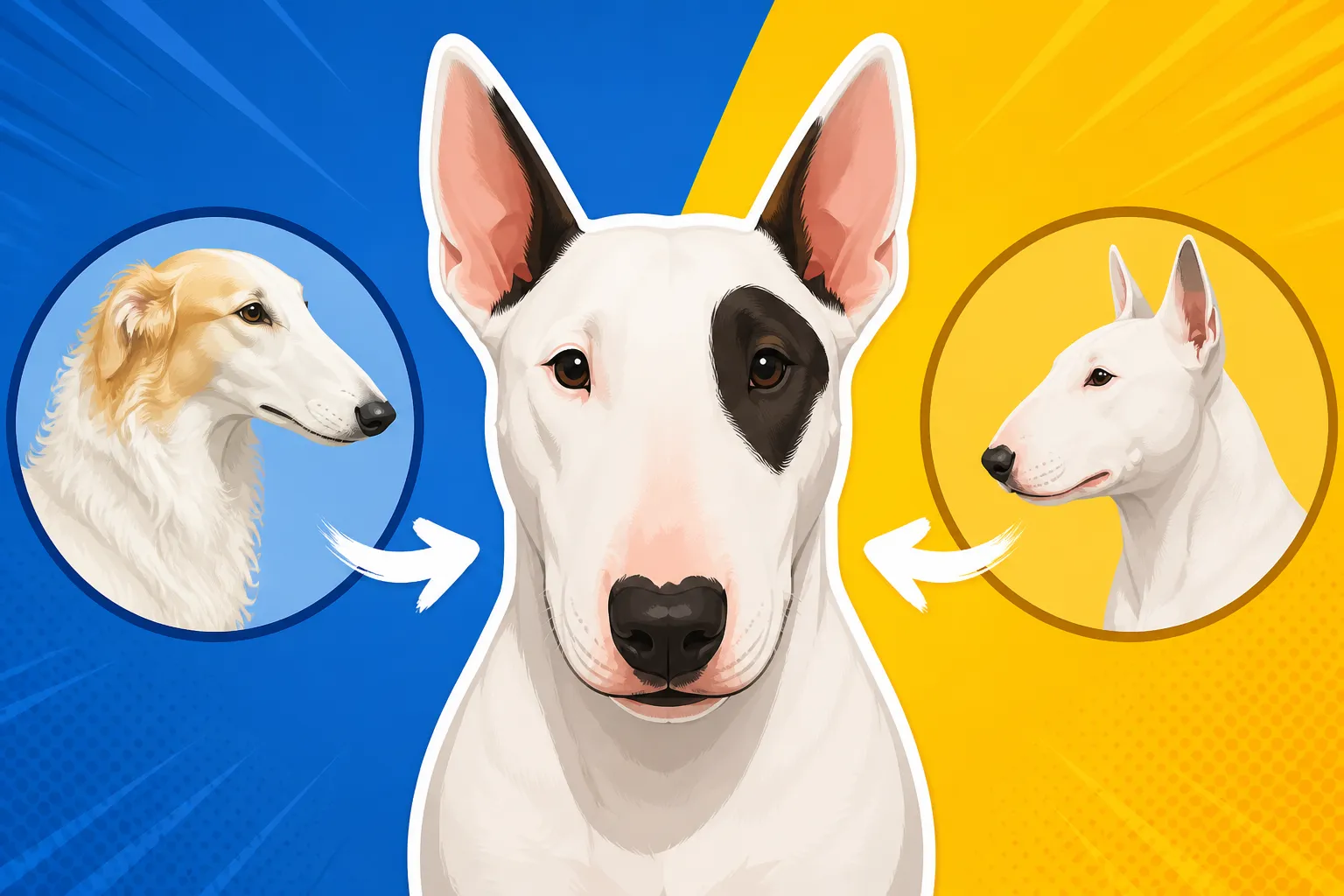
Whether a Borzoi Went Into the Bull Terrier
There’s a unique grace to the Bull Terrier, isn't there? That long, egg-shaped head and those distinctive lines often spark curiosity and lead to fascinating questions about their ancestry. Many wonder if such an elegant yet powerful dog could have sighthound blood flowing through its veins, with the Borzoi sometimes suggested as a contributor. This guide will explore the historical records and breed development to get to the bottom of whether this Russian wolfhound played a role in shaping our beloved Bull Terrier.
The Original Blueprint: James Hinks and the Bull and Terrier
When you look at a Bull Terrier, it's hard to deny its distinctiveness. That "egg head," the deep chest, the powerful build – it's a true original. But where did that look come from? The story of the Bull Terrier is one of deliberate creation, primarily by James Hinks in Birmingham, England, around the 1860s. He wasn't just throwing random dogs together; he had a clear vision for a dog that combined strength, agility, and a refined appearance.
Tracing the Early Ancestry of the Bull Terrier
To understand the Bull Terrier's roots, we have to go back to the "Bull and Terrier" type dogs. These were robust, tenacious dogs, often used for fighting or vermin control, a far cry from the elegant Borzoi. Hinks’ genius was in taking this rough-and-ready type and transforming it. His primary ingredients were the Old English Bulldog, the now-extinct English White Terrier, and a dash of Dalmatian. The Old English Bulldog brought the immense power and courage, while the English White Terrier (a refined, all-white terrier itself) contributed elegance and a more streamlined form. The Dalmatian infusion is believed to have lent the smooth, clean lines, endurance, and perhaps even some of the distinctive white coat. You can dive deeper into the specific breeds by reading Which Breeds Went Into the Bull Terrier. It's a fascinating journey to see how these diverse dogs converged into the Bull Terrier we know today.
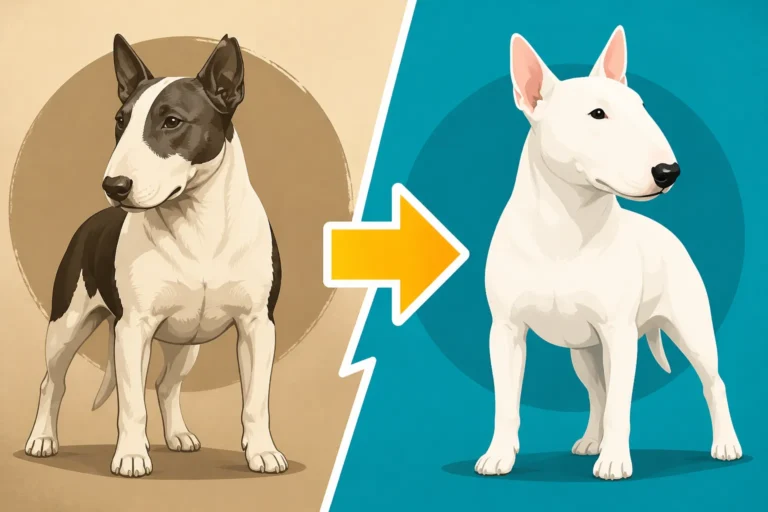
Hinks’ goal was to create a "White Cavalier"—a gentleman's companion, elegant and refined, yet still possessing the strength and gameness of its ancestors. The idea was a dog that could win without a scratch, known for its pristine white coat and fearless demeanor. This wasn't about introducing exotic, long-legged sighthounds, but about refining existing stock to meet a very specific aesthetic and temperamental ideal. The lineage was meticulously documented by breeders of the era, and there's no widespread historical account of Borzoi being part of this foundational mix.
Why Specific Breeds Were Chosen
Hinks wasn't simply creating a pretty face; he was breeding for a complete package. He wanted a dog that was powerful and courageous, capable of defending its owner, but also beautiful and distinctive enough to stand out as a companion animal in Victorian society. The Old English Bulldog offered unmatched tenacity and physical robustness, while the English White Terrier brought the desired aristocratic appearance and agility. The Dalmatian, with its athletic build and striking white coat (sometimes spotted), was integrated to improve stamina, add refinement to the head and body, and contribute to the clean white aesthetic Hinks cherished.
The traits chosen were very specific: a strong bite, powerful musculature, and a certain alertness, combined with a striking, clean appearance. A Borzoi, while undoubtedly elegant and athletic, possessed a very different set of characteristics developed for coursing large game over vast distances. Their extremely fine bone structure, profound chest, and specific prey drive for fast-moving targets didn't align with the blend of strength, compact power, and companionability Hinks was aiming for. The Bull Terrier was meant to be a robust, all-around companion, not a specialized hunter of wolves. For owners looking to understand the core characteristics that define their Bull Terrier, considering their foundational history is incredibly important, whether they're looking for toys or food on platforms like Chewy or researching breed standards.
The Myth of the Borzoi Influence: Examining the "Long Face" Theory
It's easy to see why someone might look at a Bull Terrier and wonder about sighthound influence, especially with that strikingly long head. The breed's head shape is truly one-of-a-kind, often leading to speculation about how it could have developed. However, historical accounts and breed development show a clear path that doesn't involve the Borzoi.
The Distinctive "Downface" and Roman Finish
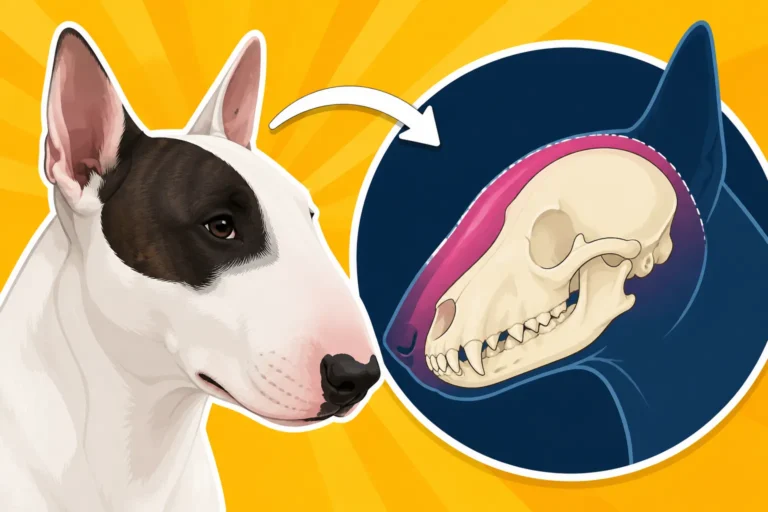
The Bull Terrier's most famous feature is its "downface" or "Roman finish"—a continuous, egg-shaped curve from the top of the skull to the tip of the nose, with no stop (the indentation between the eyes). This distinctive profile is a hallmark of the breed, giving it an undeniable elegance and strength. This feature, however, was not present in the very earliest Bull Terriers but was developed through selective breeding over several generations, well after Hinks’ initial work. It was a gradual refinement by dedicated breeders who sought to exaggerate the unique head shape.
The goal was to create a perfectly convex profile, smooth and powerful. Breeders painstakingly selected dogs that exhibited even a hint of this desirable curve, breeding them together to enhance the trait. It’s a testament to focused breeding, not to an outcross to a completely different breed like the Borzoi, which has a distinct head shape of its own, characterized by a long, narrow skull, but with a slight stop and a more pointed muzzle. The evolution of this unique head is a fascinating topic, and you can learn more about it in Where the Bull Terrier's Egg Shaped Head Came From.
Historical Records vs. Speculation
When we look at historical records and the meticulous breeding practices of early Bull Terrier fanciers, there's no evidence supporting the introduction of the Borzoi. Breeders like James Hinks and those who followed were very intentional about their crosses. They sought specific traits from specific breeds. If a sighthound as distinct as a Borzoi had been used, it would have been a significant event, likely documented and discussed within the breeding community.
Breed history is often filled with anecdotes and myths, but for a breed as well-documented as the Bull Terrier, the core lineage is quite clear. The development of the distinct "downface" occurred through careful selection within the established Bull Terrier lines, building on the structural components inherited from its Bull and Terrier ancestors, refined by the English White Terrier and Dalmatian. The emphasis was always on developing a specific type, improving on what was already present rather than introducing entirely new genetic material from a radically different breed type like a Borzoi. Owners seeking to understand their dog's heritage can find many resources, from breed books to historical analyses, often available through retailers like Chewy.
Visual Similarities vs. Genetic Reality
It’s easy for the eye to be drawn to superficial similarities between different breeds, especially when one breed has such a distinctive appearance. The Bull Terrier's elegant profile and athletic build might momentarily evoke images of sighthounds, but a closer look reveals fundamental differences.
Why the Comparison to Sighthounds Arises
The comparison to sighthounds, including the Borzoi, often arises because of the Bull Terrier's generally sleek appearance, deep chest, and the undeniable length of its skull. Sighthounds are known for their speed, long legs, and aerodynamic bodies, often with long, narrow heads designed for vision and pursuit. While the Bull Terrier certainly has an athletic build and an undeniable grace when it moves, especially during a classic "zoomie" session, its underlying structure and purpose are quite different.
A Borzoi, for example, is built for incredible bursts of speed to chase down wolves and other large game over vast distances. Its skeleton is lighter, its muscles are designed for propulsion, and its gait is expansive. The Bull Terrier, on the other hand, is a dog of powerful, compact strength. Its musculature is dense, its bone structure is heavy, and its gait is more purposeful and ground-covering than soaring. While both breeds exhibit a certain elegance, their physiological blueprints are tailored for entirely different tasks. It's a classic case of seeing a long head and making an intuitive, but ultimately incorrect, leap to a sighthound connection.
Modern Genetic Understanding of Bull Terrier Lineage
Modern genetic studies often confirm what historical breeding records indicate. While direct, comprehensive genetic mapping specifically to exclude every potential historical outcross might not be publicly available for every breed, the general understanding of the Bull Terrier's genetic makeup points strongly to its established foundation breeds: the Old English Bulldog, English White Terrier, and Dalmatian. These studies typically don't reveal significant sighthound DNA that would suggest a Borzoi influence.
Genetic analysis can distinguish between a breed's core ancestry and later, more limited infusions for specific traits (like color). The Bull Terrier's lineage is consistent with a blend of terrier and bulldog types, with the Dalmatian contributing to its unique blend of elegance and stamina. The development of the distinctive head shape is attributed to intensive selection within this established genetic pool, not to the introduction of a sighthound with a fundamentally different cranial structure. It's a testament to the power of selective breeding to achieve extreme phenotypic traits without needing to reach for an entirely disparate breed. For a comprehensive overview of the breed's origins, exploring What an 1870s Bull Terrier Looked Like can provide further context.
The Impact of Introducing New Genes for Specific Traits
Breed development is rarely a static process. Even after a foundational type is established, breeders sometimes introduce new genes for specific purposes, such as enhancing certain physical characteristics or reintroducing lost traits. This happened with the Bull Terrier, but the goals of these additions were far removed from incorporating sighthound features.
The Role of the Dalmatian in the Bull Terrier's Development
The Dalmatian's influence on the Bull Terrier is one of the most widely accepted and historically supported infusions. James Hinks specifically used Dalmatians to refine the Bull Terrier's appearance. The Dalmatian contributed several key traits: an elegant, athletic build, a pristine white coat, and potentially the distinct upright ear set that became a hallmark of the modern Bull Terrier. This addition helped move the Bull Terrier away from the heavier, more coarse "Bull and Terrier" type towards the more refined and graceful "White Cavalier" ideal Hinks envisioned.
The Dalmatian connection also brought an improvement in temperament, adding a certain vivacity and endurance. It was a strategic cross designed to enhance the existing qualities and direct the breed towards a more aesthetically pleasing and companionable form, without sacrificing its underlying courage and robustness. It helped shape the Bull Terrier into an active, intelligent dog that retains its unique silhouette. You can find out more about this specific influence in Whether a Dalmatian Is in the Bull Terrier.
Bringing Color Back: Other Breeds and Their Influence
Initially, James Hinks aimed for an all-white Bull Terrier, hence the "White Cavalier" moniker. However, over time, some breeders felt that restricting the breed to only white dogs was limiting and potentially contributing to health issues like deafness. This led to a movement to reintroduce color into the Bull Terrier lines. This wasn't done by bringing in sighthounds, but rather by selectively breeding with other colored terrier types, often breeds with known Bull Terrier ancestry or a similar general build.
Breeds like the Staffordshire Bull Terrier were likely used to reintroduce the brindle, red, black, and tricolor patterns seen in modern Bull Terriers. These crosses were specifically aimed at diversifying coat color and expanding the gene pool, not at altering the fundamental body type or head shape. The introduction of color was a hard-fought battle in the early 20th century, with colored Bull Terriers initially being shown in separate classes before finally gaining full acceptance. This evolution highlights that when outcrosses were made, they were for very specific, documented reasons that align with the breeds’ known history, and not to introduce traits associated with sighthounds. Understanding this history helps us appreciate the complexity of breed development and why some breeds evolve the way they do. If you're looking for specialized training equipment or breed-specific care items for a colored Bull Terrier, resources like Chewy can often cater to a wide range of needs.
The Bull Terrier's ancestry is a compelling story of deliberate breeding, refinement, and a clear vision. While its distinctive "downface" and elegant athleticism might lead some to wonder about a sighthound connection, specifically with the Borzoi, historical records and the documented efforts of early breeders point to a different reality. James Hinks and his successors meticulously crafted the Bull Terrier from the Old English Bulldog, English White Terrier, and Dalmatian, carefully selecting for traits that would create a unique, powerful, and refined companion. The remarkable head shape evolved through generations of selective breeding within these established lines, rather than through an outcross to a radically different breed like the Borzoi.
The development of the Bull Terrier, from its foundational "Bull and Terrier" type to the modern "White Cavalier" and eventually to its colored varieties, is a testament to focused genetic refinement. Every addition, such as the Dalmatian for elegance and the later introduction of colored terriers for coat diversity, was intentional and well-documented. So, next time you admire that truly unique Bull Terrier, rest assured that its distinctive charm comes from a robust terrier and bulldog heritage, honed by dedicated breeders, without the whisper of a Borzoi in its family tree.
Disclaimer
This article is for general informational purposes only and does not constitute professional advice. Laws, prices and regulations vary by location and change over time. Consult a qualified professional for guidance on your specific situation.