How a Bull Terrier Injures Its Tail
If you're a Bull Terrier owner, you've probably witnessed their boundless enthusiasm firsthand. While it's one of their most charming traits, it can also lead to some surprisingly common and frustrating injuries, especially to that wiggly, whip-like tail. This guide will dive deep into why Bull Terrier tails are prone to injury, what kinds of damage they sustain, how to spot the signs, and, most importantly, how to protect your beloved "egghead" from painful tail woes.
Why the Bull Terrier's Tail Is a Target for Trouble
Bull Terriers are known for their unique appearance and robust build, but beneath that short, sleek coat, their tails can be surprisingly vulnerable. It's a combination of their anatomy, their exuberant personality, and the environment they live in that makes tail injuries a recurring concern for many owners.
The Anatomy of a Bull Terrier Tail
Unlike some breeds with thick, heavily furred tails that offer a bit of padding, the Bull Terrier's tail is generally quite lean with short, sparse hair. It tapers from a thicker base to a fine point, almost like a carrot. This lack of natural cushioning means there's not much to protect the delicate bones and sensitive skin underneath. The caudal vertebrae that make up the tail are relatively exposed, especially towards the tip.
Imagine your Bull Terrier's tail as a flexible, bony appendage covered in just a thin layer of skin and muscle. When it comes into contact with hard surfaces, there's very little give, making it susceptible to impact trauma. Furthermore, the skin on the tail can be quite taut, and when it experiences repeated impact, it can split or abrade more easily than skin on other parts of the body. This inherent lack of robust natural protection means that even seemingly minor bumps can become significant problems.
The Bull Terrier's Enthusiastic Nature
Let's be honest, Bull Terriers don't do anything by halves! Their enthusiasm is infectious, whether they're greeting you after a long day or charging full-speed across the yard. This high-energy, often clumsy, and utterly joyful approach to life is a huge factor in tail injuries. We all know the "happy tail" wag – a full-body expression of pure delight that can turn their tail into a powerful, unguided missile.
When a Bull Terrier gets excited, that tail can whip back and forth with incredible force, slamming against walls, furniture, crate bars, or anything else in its path. It's not uncommon for them to injure their tails simply by wagging too hard against a doorframe or the leg of a table. This isn't just a gentle tap; it's a powerful thud that can lead to repeated trauma. Beyond the happy wag, some Bull Terriers can develop behavioral issues like obsessive tail chasing, which, while sometimes a neurological problem, can also lead to self-inflicted wounds if not managed. Addressing behaviors like this is crucial, and you might find insights in articles like Redirecting a Bull Terrier That Has Started Spinning. Their zest for life, while endearing, means we as owners need to be extra vigilant about their tail safety.
Common Ways a Bull Terrier's Tail Gets Injured
Bull Terrier tails seem to have a magnet for trouble. From repetitive trauma to unfortunate accidents, understanding the common injury types can help you anticipate and prevent them.
The Infamous "Happy Tail" Syndrome
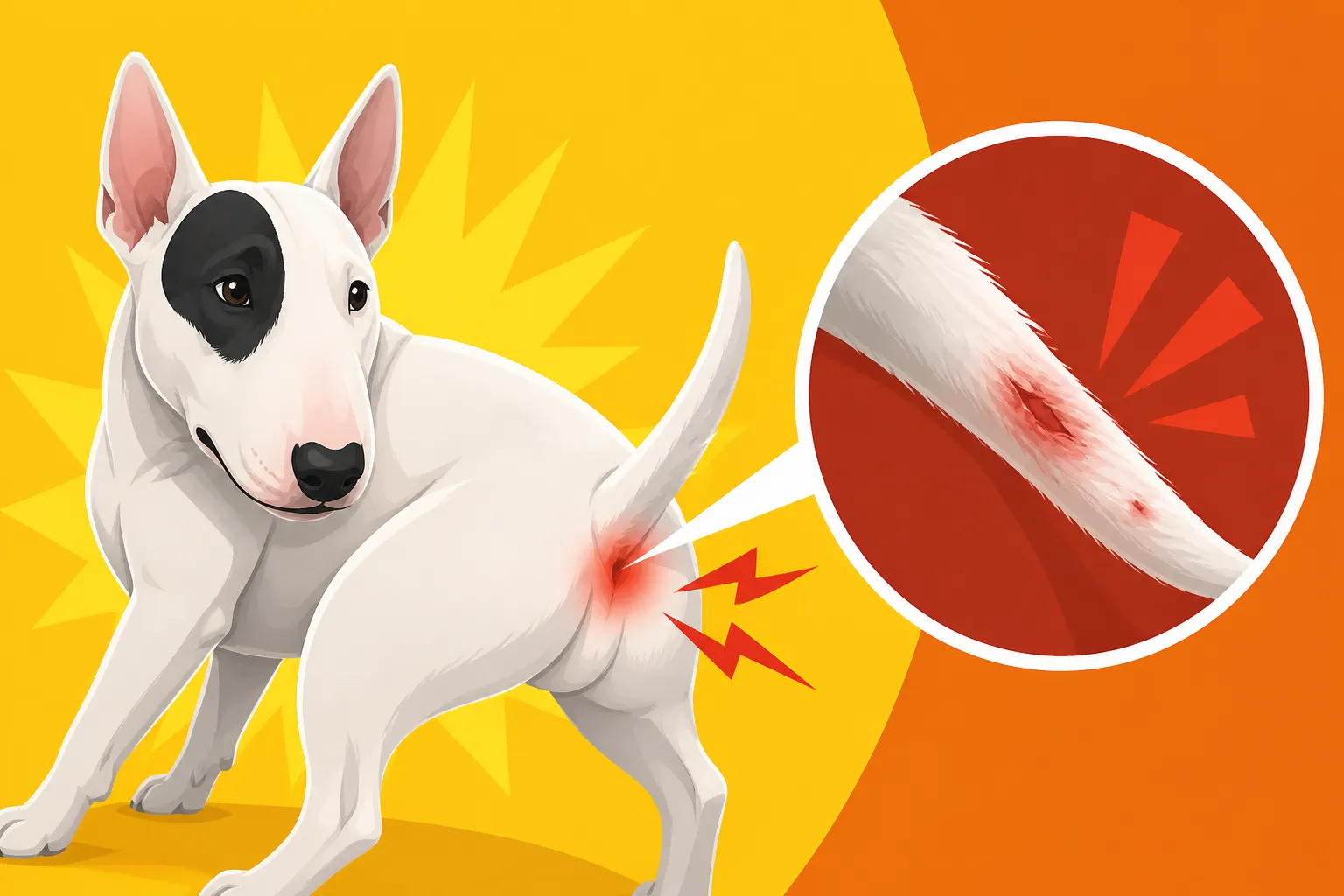
Ah, "happy tail" syndrome – a term that sounds endearing but is anything but. This is perhaps the most common, and certainly the messiest, tail injury in Bull Terriers. It occurs when your dog's strong, enthusiastic tail repeatedly strikes a hard surface, leading to a wound, usually near the tip. Because the tail is constantly moving, even after an initial injury, the wound struggles to heal. Each wag re-opens the cut, often spraying blood around your home like a Jackson Pollock painting.
Imagine your Bull Terrier is overjoyed to see you. Their tail starts thumping against the wall next to the couch, then maybe the coffee table. Over time, or even in one particularly energetic session, the skin at the tip becomes bruised, breaks, and then a small cut appears. Because the tail remains in constant motion, particularly when the dog is excited (hence "happy tail"), the wound is prevented from scabbing over and healing. It's a vicious cycle of re-injury and mess. Owners often find blood spots on walls, floors, and furniture, feeling a mix of concern for their dog and frustration with the cleanup. In severe cases, the skin can be degloved, or the bone can become exposed. For more on what happens specifically to the tail tip, you can check out Why a Bull Terrier's Tail Tip Splits.
Abrasions, Lacerations, and Fractures
Beyond the repetitive trauma of happy tail, Bull Terriers face a myriad of other tail injury risks.
- Abrasions: These are essentially scrapes or "road rash" that can occur if a Bull Terrier slides on a rough surface, gets caught under something, or even rubs its tail raw against a sharp edge. A common scenario might involve them squeezing through a tight spot in the yard or a piece of furniture, and their tail, being the last part through, gets scraped.
- Lacerations: These are deeper cuts. Picture a door slamming shut on a tail that was just passing through, or a piece of glass in the yard, or even getting caught on a sharp object during an excited zoomie. Their lack of substantial fur means these cuts can be quite deep and bleed profusely.
- Fractures: While less common than skin injuries, a Bull Terrier's tail bones can certainly fracture. This can happen if the tail gets stepped on, caught in a car door, or suffers a direct, forceful impact. A severe fall or even an altercation with another dog could lead to a tail fracture. You might notice your dog holding its tail at an odd angle, a sudden inability to wag, or intense pain if you try to touch it. While less common, these injuries are serious and require immediate veterinary attention.
Other Less Common Issues
While happy tail, abrasions, lacerations, and fractures are the big hitters, there are a few other less common but equally concerning ways a Bull Terrier can injure its tail.
- Infections: Even a tiny cut or abrasion can become infected, especially on a tail that’s frequently exposed to dirt and moisture. A Bull Terrier might also lick or chew at a wound, introducing bacteria and making the infection worse. An infected tail can become swollen, painful, and emit a foul odor. Regularly inspecting your Bull Terrier’s ears, eyes, and tail is a good habit for catching issues early; Ears, Eyes and Tail: the Parts of a Bull Terrier to Check has more on this.
- Burns or Frostbite: Though rare, extreme temperatures can affect a Bull Terrier's tail. If a tail accidentally brushes against a hot surface (like a grill or heating element) or is exposed to freezing temperatures for too long, particularly at the thin tip, it can suffer burns or frostbite. This is especially true if a dog is kept outside in inappropriate conditions.
- Nerve Damage: A severe traumatic injury, like a significant fracture or dislocation at the base of the tail, could potentially lead to nerve damage. This might manifest as an inability to wag the tail, loss of sensation, or even difficulty with defecation if the nerves controlling the anal sphincter are affected. Such injuries are grave and require specialized veterinary intervention.
Recognizing and Responding to a Bull Terrier Tail Injury
As a Bull Terrier owner, becoming attuned to your dog's subtle cues is key, especially when it comes to pain or discomfort. Their stoic nature sometimes means they hide pain incredibly well.
Subtle and Obvious Signs to Look For
Spotting a tail injury isn't always as obvious as a gushing wound. Sometimes, your Bull Terrier's behavior will give you the first clues.
- Changes in Tail Carriage or Wagging: Perhaps the most telling sign is a change in how your Bull Terrier holds or uses its tail. Is it drooping more than usual? Is your normally enthusiastic wag now stiff, hesitant, or completely absent? They might hold it tucked between their legs or off to one side. If they're usually a champion wagger and now they're just barely twitching it, that's a red flag.
- Licking or Chewing: Dogs will naturally try to soothe themselves by licking an injured area. If you notice your Bull Terrier obsessively licking, gnawing, or chewing at their tail, especially the tip, it's a strong indicator of pain or irritation. This can, unfortunately, make the injury worse or introduce infection.
- Vocalization or Aggression: While Bull Terriers are generally good-natured, pain can make any dog irritable. If your Bull Terrier growls, snaps, or cries out when you approach or try to touch their tail, it's a clear sign of discomfort. Remember that How a Bull Terrier Hides Pain makes these vocalizations even more significant.
- Visible Damage: This is the most straightforward. Look for blood, matted fur (even short fur can get sticky), open wounds, scabs, swelling, or missing patches of hair. The skin might appear red, inflamed, or bruised. Sometimes, the tail tip can look discolored or even blackened in severe cases of happy tail where tissue has died. Always inspect the entire length of the tail, not just the obvious spots.
- Odor: If an infection has set in, you might notice a foul smell coming from the injured area, even if you can't see a large wound.
Initial First Aid at Home
If you suspect your Bull Terrier has injured its tail, your first priority is to assess the situation calmly and prevent further harm.
- Safety First: Even the sweetest Bull Terrier can snap when in pain. Approach gently, speak in a soothing voice, and consider muzzling them if you're concerned about a bite.
- Clean the Wound: If there's an open wound, gently clean it with warm water and a mild, pet-safe antiseptic solution (like dilute Betadine or chlorhexidine, not rubbing alcohol or hydrogen peroxide which can damage tissue). Trim any fur away from the wound carefully with blunt-nosed scissors to prevent it from getting stuck in the injury or hindering healing.
- Stop Bleeding: Apply gentle, direct pressure to the wound with a clean cloth or gauze for several minutes. If bleeding is profuse or doesn't stop, this is an emergency.
- Gentle Bandaging: For minor cuts, a light, protective bandage can help keep the wound clean and prevent your Bull Terrier from licking it. Use non-stick gauze pads taped gently in place, then a layer of self-adhering bandage wrap (like VetWrap) that isn't too tight. Be very careful not to wrap too tightly, as this can cut off circulation. Leave the very tip of the tail exposed if possible to check for swelling or discoloration.
- Prevent Licking: An Elizabethan collar (e-collar or "cone of shame") might be necessary to prevent your Bull Terrier from licking, chewing, or exacerbating the injury. You can find these at most pet stores or through online retailers like Chewy.
When to Seek Veterinary Care
While some minor scrapes might heal with diligent home care, many Bull Terrier tail injuries warrant a trip to the vet. It's always better to be safe than sorry, especially with something as prone to re-injury as a tail.
- Any Visible Open Wound: If there's an open cut, a deep laceration, or a persistently bleeding "happy tail" injury, a vet visit is essential. They can properly clean and disinfect the wound, assess its depth, and determine if stitches are needed. They can also provide stronger pain relief and antibiotics if infection is a risk.
- Suspected Fracture: If your Bull Terrier is holding its tail at an abnormal angle, can't wag it, or shows extreme pain upon touching, a fracture is possible. An X-ray will be needed to diagnose this, and treatment might involve splinting, pain management, or, in rare severe cases, amputation.
- Signs of Infection: Swelling, redness, warmth, pus, or a foul odor around the tail are all signs of infection. Your vet will prescribe appropriate antibiotics.
- Persistent Pain or Lameness: If your Bull Terrier continues to show signs of pain, is reluctant to move, or is lame (even if the injury seems minor), a vet check is crucial to rule out underlying issues.
- Difficulty with Bowel Movements: If the tail injury is close to the base, it could potentially affect nerves that control defecation. If you notice straining or an inability to pass stool, seek immediate veterinary attention.
- If You're Unsure: When in doubt, call your vet. They can advise you over the phone or recommend bringing your Bull Terrier in. They might also suggest specialized products available on platforms like Amazon for wound care or protective gear.
Strategies for Preventing Tail Injuries in Bull Terriers
Preventing tail injuries is far better than treating them, both for your Bull Terrier's comfort and your peace of mind (and cleaner walls!). It requires a multi-faceted approach, combining environmental changes with behavioral management and consistent care.
Environmental Modifications
Your home and yard can be rife with tail-injury hazards if you're not careful. Making a few strategic adjustments can significantly reduce the risk.
- Padding and Softening Surfaces: Look around your home for hard, sharp corners or unforgiving surfaces where your Bull Terrier's tail frequently connects during enthusiastic greetings or play. Consider covering sharp table corners with child-proof bumpers or adding padding to the edges of walls that see a lot of tail-thumping action. Even placing soft throws or rugs in high-traffic areas where tail-wags are most vigorous can help absorb some of the impact.
- Crate Considerations: If your Bull Terrier is crated, especially when you're away, examine the crate's interior. Wire crates, while popular, can be notorious for allowing tails to get whacked against the bars. This can be a particular problem if your Bull Terrier is prone to excitement in the crate. Consider a solid-sided crate, or at least line a wire crate with sturdy, chew-proof bumpers or soft bedding to prevent impact. For thoughts on what type of crate holds a Bull Terrier, see Which Crate Holds a Bull Terrier and What a Heavy Duty Bull Terrier Crate Costs. Ensure the crate is large enough for your Bull Terrier to stand, turn around, and lie down comfortably without their tail being constantly pressed against a hard surface.
- Doorway Management: A slamming door on a tail is a common and excruciating accident. Always be mindful of where your Bull Terrier is when opening or closing doors, especially heavy ones. Use doorstops to prevent doors from slamming shut unexpectedly, or secure them fully open. This is especially critical in homes with multiple people or active children who might not always be as vigilant.
Behavioral Management and Training
A Bull Terrier's exuberance is charming, but it needs to be channeled safely. Training and thoughtful management of their energy levels can go a long way in protecting their tails.
- Calm Greetings: Teach your Bull Terrier to greet people calmly. This might involve rewarding them for sitting patiently when someone arrives, rather than allowing them to jump and wag their tail furiously against everything. Practicing "sit" and "stay" in exciting situations, with high-value treats, can gradually help them learn to control their initial burst of joy.
- Managing Excitement: Identify triggers for extreme excitement in your Bull Terrier. Is it visitors? Certain toys? Approaching meal times? By understanding these triggers, you can proactively intervene. For example, before guests arrive, engage your Bull Terrier in a brief, low-impact exercise session to burn off some initial energy, then have them on a leash for controlled greetings. Offering a durable chew toy (many robust options are available on Chewy) can also provide a healthy outlet for excitement.
- Addressing Tail Chasing: If your Bull Terrier has started to obsessively chase its tail, it’s not just an odd quirk; it can be a sign of a medical or behavioral issue, and it can certainly lead to self-inflicted tail injuries. This behavior requires veterinary assessment to rule out underlying pain, allergies, or neurological conditions. Behavior modification techniques, often guided by a professional, might include redirection, enrichment, and sometimes medication. Whether Bull Terrier Tail Chasing Is a Seizure and Redirecting a Bull Terrier That Has Started Spinning offer deeper insights into this behavior.
- Appropriate Exercise: Ensuring your Bull Terrier gets adequate and appropriate exercise helps manage their energy levels, leading to a calmer dog overall. A tired Bull Terrier is less likely to engage in frantic, tail-flailing antics. However, be mindful of where they exercise; avoid areas with sharp debris or obstacles that could snag a tail. For exercise ideas, refer to How Much Exercise a Bull Terrier Actually Needs.
Regular Checks and Proactive Care
A little routine goes a long way. Consistent proactive care can help you catch potential issues before they escalate.
- Weekly Tail Inspections: Make a habit of gently examining your Bull Terrier’s entire tail once a week. Feel along its length for any lumps, bumps, or tender spots. Part the fur (even though it's short) to look closely at the skin for any cuts, scrapes, scabs, redness, or swelling. Pay particular attention to the tip, as this is the most common site for "happy tail" injuries. Early detection means faster intervention and better outcomes. This kind of hands-on check is part of overall body awareness, as highlighted in Ears, Eyes and Tail: the Parts of a Bull Terrier to Check.
- Nail Trims: This might seem unrelated, but overgrown nails can sometimes inadvertently scratch other parts of your Bull Terrier’s body, including its tail, if they itch or groom themselves vigorously. Keeping nails neatly trimmed minimizes this risk.
- Diet for Skin Health: A healthy diet contributes to strong, resilient skin, which can offer a tiny bit more protection against minor abrasions and help wounds heal faster. Ensure your Bull Terrier is on a high-quality, balanced diet. Brands like Ollie, known for their fresh, human-grade ingredients, can support overall skin and coat health, indirectly aiding in resilience. Discussing diet with your vet, especially if your dog has recurring skin issues, is always a good idea. Whether a Bull Terrier's Skin Improves With Diet goes into more detail about how nutrition impacts skin health. Remember, a Bull Terrier’s skin is generally quite sensitive, as explored in A Bull Terrier's Skin Is Its Weakest Point, so supporting it from the inside out is vital.
By combining these strategies, you can create a safer environment and foster behaviors that protect your Bull Terrier's tail, ensuring it remains a happy, healthy part of their unique personality.
| Injury Type | Common Cause | Key Signs | First Aid / Immediate Action | When to See Vet |
|---|---|---|---|---|
| "Happy Tail" | Repeated forceful wagging against hard surfaces (walls, crates) | Bleeding, open wound at tail tip, blood splatters, reluctant wag | Clean wound, apply pressure, light bandage, e-collar | Persistent bleeding, infection signs, deep wound |
| Abrasions/Scrapes | Sliding on rough ground, rubbing against sharp edges | Redness, skin irritation, minor bleeding, licking | Clean wound, gentle antiseptic, prevent licking | Wound not healing, infection signs, deep scrape |
| Lacerations/Cuts | Door slams, sharp objects (glass, metal), bites from other animals | Visible cut, moderate to heavy bleeding, pain upon touch | Clean wound, direct pressure to stop bleeding, light bandage | Any visible cut, deep wound, persistent bleeding, suspected foreign object |
| Fractures/Breaks | Stepped on, caught in car door, severe impact, fall | Abnormal tail angle, inability to wag, severe pain, swelling | Immobilize gently (if possible), pain management (vet only) | IMMEDIATELY for diagnosis (X-ray) and treatment |
| Infection | Unattended wounds, licking, compromised immunity | Swelling, redness, pus, foul odor, warmth, lethargy | Clean gently, prevent licking | IMMEDIATELY for antibiotics and further treatment |
Disclaimer
This article is for general informational purposes only and does not constitute professional advice. Laws, prices and regulations vary by location and change over time. Consult a qualified professional for guidance on your specific situation.