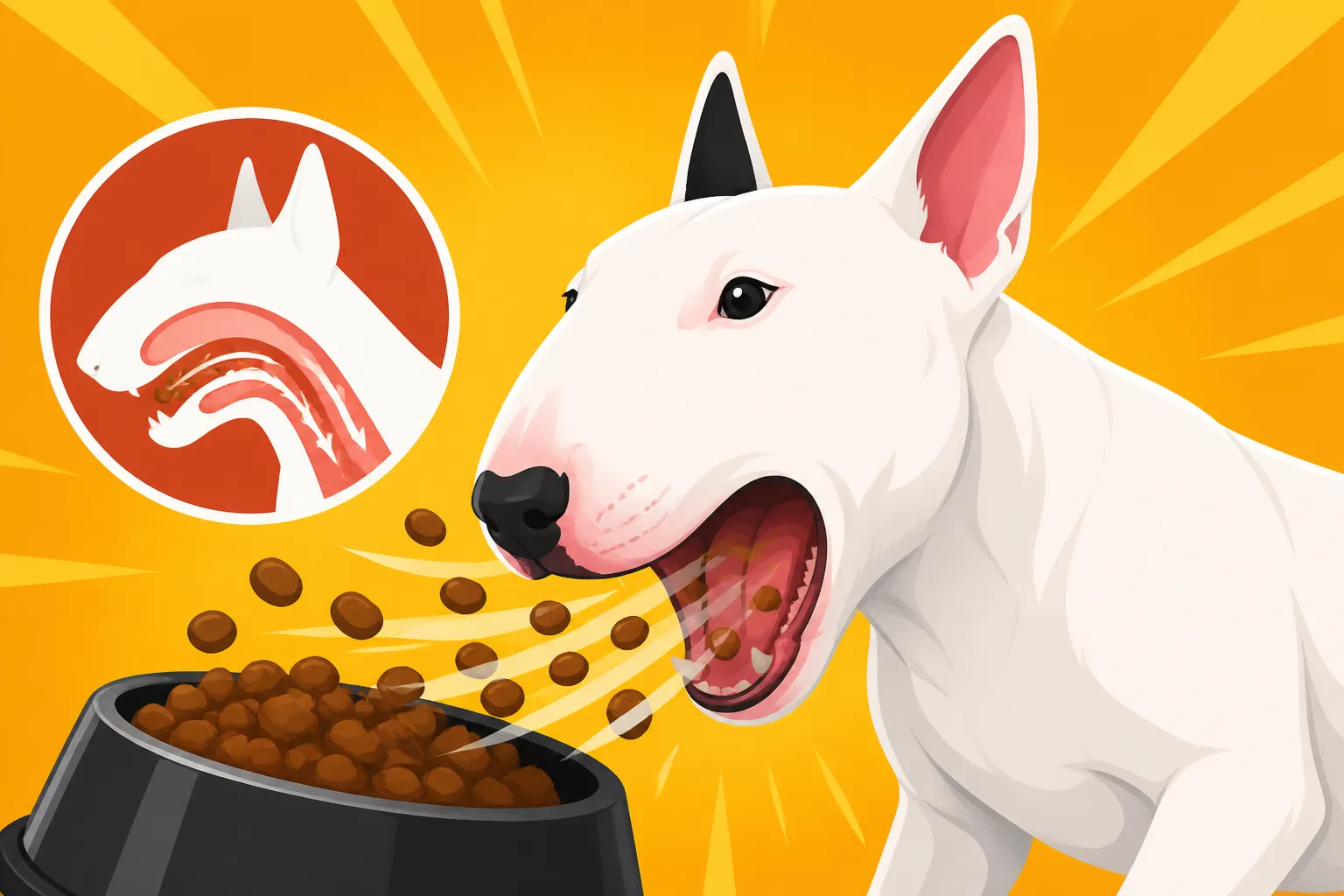
Why a Bull Terrier Inhales Its Food
If you're a Bull Terrier owner, you've probably witnessed it: your beloved, egg-headed companion descending upon their food bowl like a vacuum cleaner, inhaling their entire meal in mere seconds. It's not just a messy habit; it’s a source of real worry. You see them gulping, sometimes choking, then perhaps burping or even regurgitating, and it leaves you wondering if they're even tasting their carefully prepared meal. This guide is here to shed light on why Bull Terriers seem to be champions of speed eating and, more importantly, what you can do to help them slow down and enjoy their food safely.
The Bull Terrier's Innate Drive to Devour
It's easy to assume your Bull Terrier is just incredibly greedy, but there are often deeper, ingrained reasons why they inhale their food with such gusto. Understanding these factors can help you approach the problem with more empathy and effective solutions.
The Hunter-Gatherer Mentality and Powerful Jaws
Let's rewind a bit to the Bull Terrier's origins. While they were bred to be courageous companions and show dogs, their lineage includes tenacious bull-and-terrier types. These dogs weren't dainty eaters; they were often in environments where food might have been scarce or competitive. This can translate into an instinct to eat quickly, as if another dog (or even a person) might snatch their meal away. It's a primal drive, even if your Bull Terrier lives in the lap of luxury today.
Beyond instinct, consider their physical build. Bull Terriers possess incredibly powerful jaws, designed for gripping and holding. This strength, combined with a relatively short muzzle, means they can take in large mouthfuls of food with minimal chewing. They aren't delicately nibbling; they're scooping and swallowing. Think about it: a gentle Labrador might daintily pick up kibble, but a Bull Terrier often plows its entire face into the bowl, using its strong snout and powerful neck muscles to quickly get the food down. This isn't just about appetite; it's about sheer physical efficiency in getting food from bowl to gullet.
The Role of Competition and Scarcity
Even if your Bull Terrier is the only dog in the house, a perceived sense of competition can trigger rapid eating. Perhaps they grew up in a litter where they had to vie for milk or later for kibble. This early experience, whether real or imagined, can hardwire them to eat at top speed. It's a "use it or lose it" mentality that sticks around long after they've left their littermates.
Furthermore, if a dog has ever experienced periods of food scarcity – maybe they were a rescue who didn't always know when their next meal was coming, or perhaps they were simply left hungry between meals as a puppy – they can develop a habit of eating as if each meal might be their last. For some Bull Terriers, this behavior is a coping mechanism carried over from past experiences, even if their current environment is one of abundance. It's a survival instinct kicking in, not a reflection of how much you feed them now. This deeply ingrained habit can be one of the toughest to break, requiring patience and consistent intervention.
The Real Dangers of Rapid Eating for Your Bull Terrier
Watching your Bull Terrier inhale their dinner might seem comical at times, but it carries some significant health risks that no owner should ignore. These aren't just minor inconveniences; they can be serious, even life-threatening.
The Terrifying Threat of Bloat
One of the most immediate and frightening dangers associated with speed eating in deep-chested breeds like Bull Terriers is Gastric Dilatation-Volvulus (GDV), more commonly known as bloat. When a dog eats too quickly, they often swallow excessive amounts of air along with their food. This air, coupled with food and fluids, can cause the stomach to rapidly distend (dilate). In some cases, the distended stomach then twists upon itself (volvulus), trapping the air and blood. This is a medical emergency that requires immediate veterinary intervention.
Symptoms of bloat include a swollen, hard abdomen, unproductive retching or vomiting, restlessness, excessive drooling, and signs of pain or discomfort. It progresses rapidly and can be fatal if not treated quickly. While not every fast eater will experience bloat, the increased air intake from gulping food is a known risk factor. Owners of Bull Terriers should be acutely aware of this danger and take proactive steps to minimize fast eating. It’s a terrifying prospect, and preventing it is far better than dealing with an emergency. You don't want to find yourself in the emergency vet, wishing you had slowed down dinner time.
Choking, Vomiting, and Digestive Upset
Beyond bloat, there are other very real and uncomfortable consequences. Choking is a common concern. When a Bull Terrier inhales food, large pieces of kibble can become lodged in their throat, leading to gagging, coughing, or even complete airway obstruction. This is an immediate panic-inducing situation for any owner.
Furthermore, a lack of proper chewing means larger food particles reach the stomach, making digestion more difficult. This can lead to digestive upset, including gas, stomach aches, and even chronic vomiting or regurgitation. When food is swallowed whole, the digestive system has to work harder to break it down. This can result in food being vomited back up shortly after eating, not because the dog is sick, but simply because their stomach is overwhelmed. Over time, this can also hinder nutrient absorption, meaning your Bull Terrier isn't getting all the goodness from their food, despite eating a full meal. How Sensitive a Bull Terrier's Stomach Is is a real concern here, and speed eating only exacerbates it.
Other Long-Term Health Implications
Consistent rapid eating can also contribute to longer-term issues. The constant stress on the digestive system can potentially lead to inflammation or other gastrointestinal problems. While not always life-threatening, these issues can significantly impact your Bull Terrier's quality of life, leading to discomfort, weight issues, and expensive vet visits to diagnose the root cause of chronic digestive problems. It’s a cascade effect: what starts as a simple fast eating habit can spiral into complex health challenges.
There's also the potential for behavioral problems stemming from this intense relationship with food. A dog that constantly feels the need to guard its food, or who is excessively anxious around meal times, might develop other resource-guarding behaviors or general anxiety. Addressing fast eating isn't just about physical health; it's about fostering a calmer, more balanced demeanor around a fundamental need. Whether a Bull Terrier Guards Its Food is a valid question for many owners, and speed eating can often be an early indicator of such tendencies.
Practical Strategies to Slow Down Your Bull Terrier's Eating
So, your Bull Terrier is a speed demon at meal times. Don't despair! There are many effective, and often surprisingly simple, strategies you can employ to turn mealtime into a calmer, safer experience. The key is to make it physically harder or less rewarding to gobble down food in one gulp.
Embracing the Power of Slow Feeder Bowls and Puzzle Toys
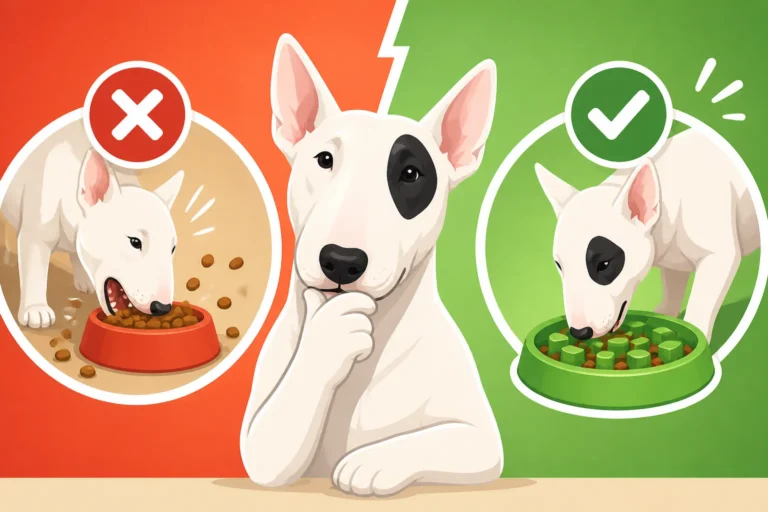
One of the most straightforward and popular solutions is investing in a slow feeder bowl. These aren't just regular bowls; they feature ridges, mazes, or obstacles that force your Bull Terrier to eat around them, thus slowing down their consumption. Instead of one large gulp, they have to work to get each mouthful. You can find a huge variety of these, from simple designs to more complex ones, on platforms like Chewy or Amazon. Look for sturdy, heavy-duty options, because a Bull Terrier's powerful nose and jaws can easily flip lighter, flimsier bowls.
| Slow Feeder Type | Description | Pros | Cons |
|---|---|---|---|
| Traditional Maze Bowl | Bowl with built-in ridges and patterns your dog navigates. | Widely available, easy to clean, various difficulty levels. | Some Bull Terriers might still find ways to scoop aggressively. |
| Lick Mat | Silicone mat with textures to spread wet food or soft treats. | Excellent for very slow eating/stress relief, good for wet food. | Not ideal for a full kibble meal, messy for dry food. |
| Puzzle Feeder | Interactive toy requiring manipulation to release kibble. | Engages mental energy, makes eating a "job," highly effective. | Can be quickly destroyed by determined Bull Terriers, requires supervision. |
| Outward Hound Fun Feeder | A popular brand of maze bowl, often praised for durability. | Durable designs, non-slip base, many shapes and sizes. | Still possible for very determined dogs to eat quickly. |
| Kong Wobbler | A weighted, treat-dispensing toy that wobbles and rolls. | Encourages active play during eating, very durable for dry kibble. | Can be noisy, may not hold a full meal for larger Bull Terriers. |
Puzzle toys take this a step further, turning mealtime into a mental exercise. Think about a Kong Wobbler or a similar treat-dispensing toy. You fill it with their kibble, and your Bull Terrier has to nudge, bat, or roll it around to get the food to fall out. This not only slows down eating but also provides valuable mental enrichment, tapping into their natural problem-solving instincts. It’s a fantastic way to tire out that busy Bull Terrier brain, too. What a Bull Terrier Does When It Is Bored often involves destructive chewing, and puzzle feeders can redirect that energy.
Creative Feeding Methods Beyond the Bowl
Sometimes, the bowl itself is the problem. Simply removing the bowl and changing the presentation of food can work wonders. One method is to scatter your Bull Terrier's kibble across a clean floor or a snuffle mat. A snuffle mat is a fabric mat with many hiding spots and folds where you can hide kibble, forcing your dog to sniff and search for each piece. This transforms eating into a natural foraging activity, engaging their powerful sense of smell and significantly slowing down consumption.
Another technique is hand-feeding, either partially or for the entire meal. This creates a bonding experience and allows you to control the pace of eating directly. You can offer a few kibbles at a time, asking for a "sit" or a moment of eye contact between each offering. This teaches patience and reinforces good manners around food.
If you have a backyard, you can even scatter kibble in the grass (ensure it's safe and free of hazards first). This makes for an engaging hunt. For Bull Terriers who are absolute vacuums, dividing their meal into multiple, smaller portions fed throughout the day can also help. Instead of one massive meal they can inhale, they get several mini-meals, reducing the intensity of their hunger at any one sitting.
Incorporating Different Food Textures
The type of food itself can also influence eating speed. Dry kibble is notoriously easy to gulp down whole. Consider adding some wet food or a bit of water to your Bull Terrier's kibble to create a softer, more challenging-to-gobble texture. Some owners even soak their kibble in water for 15-20 minutes before feeding, making it expand and soften. This not only slows eating but also aids hydration.
You might also explore different food formats. Brands like Ollie, which offer fresh, human-grade dog food, often come in a softer, more palatable texture that might naturally encourage slower eating because it requires a bit more thoughtful consumption than hard, dry kibble. Just remember to introduce any new food gradually to avoid upsetting your Bull Terrier's stomach.
When to Consult Your Veterinarian About Fast Eating
While fast eating is a common Bull Terrier quirk that often responds to behavioral modifications and specialized feeding tools, there are times when it warrants a deeper look from your veterinarian. It’s important to know when to seek professional advice.
Ruling Out Underlying Medical Conditions
Sometimes, excessive hunger or frantic eating can be a symptom of an underlying medical issue, not just a bad habit. Conditions like hyperthyroidism (though less common in dogs than hypothyroidism), certain gastrointestinal disorders that impair nutrient absorption, or even parasites can cause a dog to feel constantly hungry or to eat with unusual urgency. If your Bull Terrier has suddenly started speed eating, or if it's accompanied by other symptoms such as unexplained weight loss, changes in coat quality, increased thirst, or changes in bowel movements, it’s definitely time for a vet visit.
A vet can run diagnostic tests, including blood work and fecal exams, to rule out these possibilities. For instance, if your Bull Terrier isn't absorbing nutrients properly due to a digestive issue, they might feel chronically hungry, driving them to eat faster. What a Bull Terrier's Yearly Bloodwork Should Cover highlights the importance of regular health checks, where such issues might be caught early. Never dismiss a sudden, significant change in eating habits as just "being a Bull Terrier" without first consulting your vet.
Addressing Anxiety or Resource Guarding
Beyond purely physical conditions, sometimes fast eating is rooted in anxiety or a behavioral issue like resource guarding. If your Bull Terrier shows other signs of anxiety around food – growling if approached while eating, guarding their bowl, or showing stress signals like lip licking or yawning when you come near their food – it’s more than just gulping. This behavior might stem from past experiences or simply an innate tendency, but it can escalate if not addressed.
Your vet can help you assess if anxiety is playing a role and might recommend consulting a certified professional dog trainer or a veterinary behaviorist. These experts can help you implement a tailored behavior modification plan to reduce your Bull Terrier's anxiety around food, making meal times a much calmer and safer experience for everyone. This could involve counter-conditioning, desensitization, or specific training protocols that build confidence and trust around food resources. Whether a Bull Terrier Guards Its Toys or How a Bull Terrier Guards Its Person delve into similar behavioral aspects that might need professional guidance.
Ultimately, while fast eating is a familiar Bull Terrier trait, it's one that deserves your attention for the sake of their health and well-being. By understanding the reasons behind it and implementing practical solutions, you can transform mealtime from a frantic race to a calm, enjoyable experience for your unique companion.
Disclaimer
This article is for general informational purposes only and does not constitute professional advice. Laws, prices and regulations vary by location and change over time. Consult a qualified professional for guidance on your specific situation.