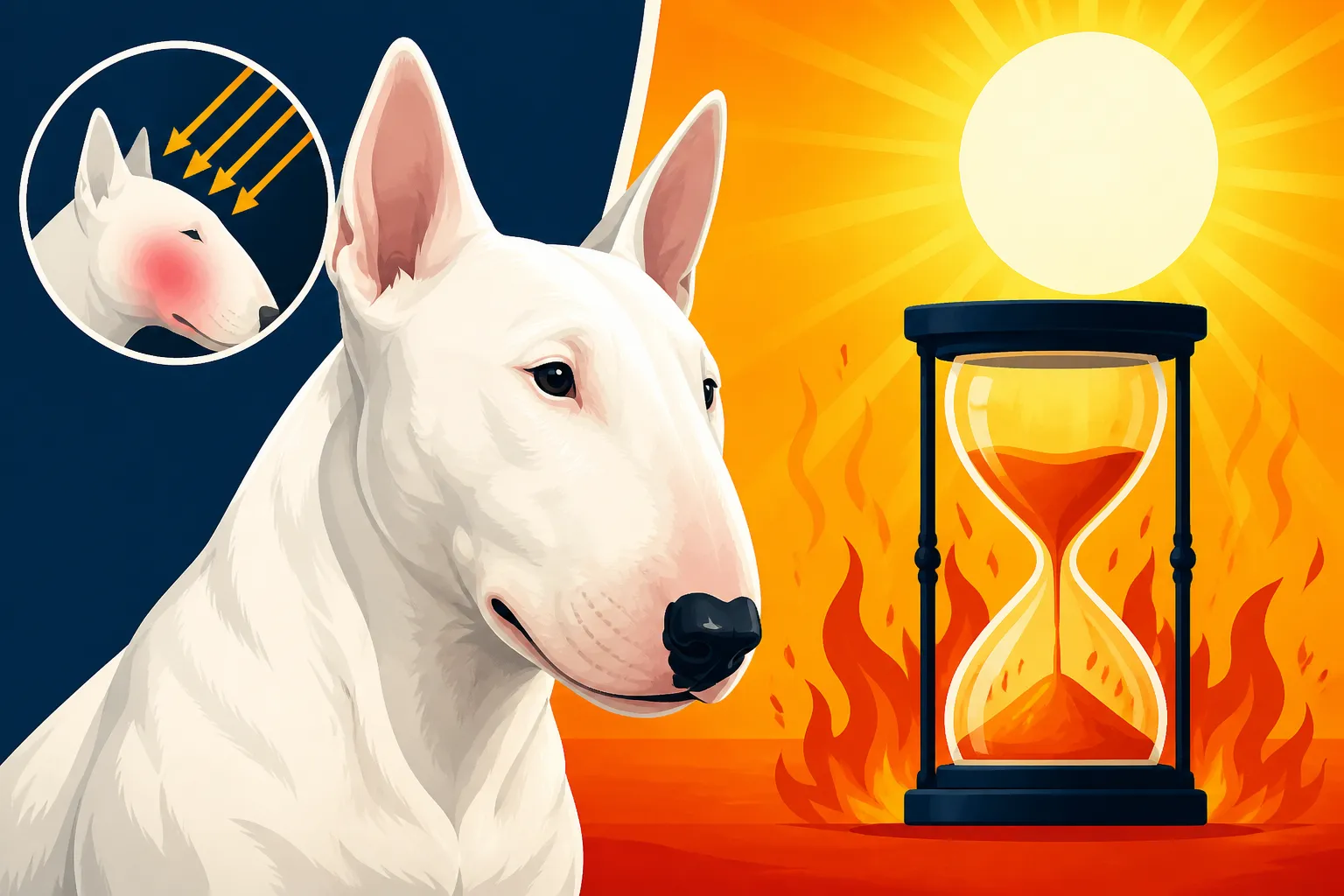
Why a White Bull Terrier Burns in an Hour
It’s a common frustration for white Bull Terrier owners: you think you’re just enjoying a quick five-minute stroll in the park, but before you know it, your dog's delicate pink skin is already starting to look a little flushed. Their striking white coats are beautiful, but they come with a significant vulnerability to the sun that many people underestimate. This guide will walk you through exactly why your white Bull Terrier is so susceptible to sunburn, the real risks involved, and, most importantly, how to keep them safe and comfortable, even on the brightest days.
The Science Behind a White Bull Terrier's Sun Sensitivity
Let's get right to the heart of why those gorgeous white coats come with a built-in sun challenge. It's not just about aesthetics; it's deeply rooted in the genetic makeup and physiological characteristics of these wonderful dogs. Understanding the "why" is the first step toward effective prevention.
Melanin and Its Role in Skin Protection
The primary reason white Bull Terriers are so vulnerable to the sun lies in a pigment called melanin. Melanin is the natural substance in skin, hair, and eyes that provides color. More importantly, it acts as the body's natural sunscreen. It absorbs harmful ultraviolet (UV) radiation from the sun, dissipating it as heat and protecting the underlying skin cells from damage. Dogs with darker coats and pigmented skin have abundant melanin, which forms a robust barrier against the sun's rays.
Think of it like this: melanin is your body's personal shield against the sun. Dogs with rich, dark pigmentation have a powerful, thick shield. A white Bull Terrier, however, largely lacks this protective pigment in their skin and often their coats. Their skin, particularly in areas like their bellies, inner thighs, nose, and ear tips, is typically pale pink, reflecting a severe deficiency of melanin. This means there's almost nothing there to absorb those harmful UV rays before they penetrate the skin and start causing damage. It's like going out in the midday sun without any sunscreen at all – the burn is almost immediate. This genetic predisposition means their skin is literally defenseless.
The Bull Terrier's Unique Coat and Skin
Beyond the lack of melanin, the physical characteristics of a Bull Terrier's coat and skin compound the problem. Bull Terriers have a short, smooth, and typically very sparse coat. Unlike breeds with thick double coats or dense, wiry hair, a Bull Terrier's fur offers very little physical protection from the sun. You can often see their pink skin right through their white hairs, especially when the hair lies flat or when they're wet. This is particularly true for pure white Bull Terriers, where even the individual hair shafts may contain little to no pigment.
Consider how your own skin feels when exposed to direct sunlight versus when it's covered by a thick blanket. That's essentially the difference between a white Bull Terrier's skin and that of a heavily coated breed. Their thin skin, coupled with a minimal coat, acts as an open invitation for UV radiation. Areas that are naturally less furred, like the insides of their ears, the bridge of their nose, their eyelids, and their belly, are hot spots for sunburn. Owners sometimes don't realize how quickly a burn can happen, believing a light coat offers some defense, but with a white Bull Terrier, the reality is that the sun penetrates with startling speed. This makes understanding A Bull Terrier's Skin Is Its Weakest Point particularly critical.
Understanding the Dangers of UV Exposure
It’s easy to dismiss a little sunburn as a minor irritation, something we’ve all experienced. But for a white Bull Terrier, constant or severe sun exposure carries a much heavier and more dangerous burden than just a temporary pink nose. The stakes are considerably higher, impacting their immediate comfort and their long-term health.
Short-Term Pain: Acute Sunburn
Just like us, dogs experience pain and discomfort from sunburn. An acute sunburn on a white Bull Terrier will manifest as redness, tenderness, and sometimes even blistering on the exposed skin. Imagine how painful it is to have your shoulders blister after a day at the beach – your Bull Terrier feels something similar, often worse because their skin is so thin and delicate. The most common areas affected are the bridge of the nose, the tips of the ears, the eyelids, and the belly, largely due to the sparse hair and lack of pigment in these spots.
Your dog might become restless, scratching or licking at the affected areas, which can lead to further skin irritation or even secondary infections if the skin barrier is compromised. You might notice them acting subdued, avoiding being touched, or even displaying signs of general discomfort. Sometimes, the skin can peel and flake, adding to their misery. A severe burn can even lead to more systemic issues like fever or dehydration, requiring immediate veterinary attention. It’s not just an aesthetic issue; it's a genuine source of distress for your beloved companion, making swift recognition and care essential.
Long-Term Worries: Skin Cancer Risks
The most serious long-term consequence of repeated sun exposure for white Bull Terriers is an increased risk of various skin cancers. Their lack of protective melanin means their skin cells are highly vulnerable to DNA damage from UV radiation. Over time, this cumulative damage can lead to cancerous growths. The two most common types seen in sun-damaged dogs are squamous cell carcinoma and melanoma. Squamous cell carcinoma often appears as raised, firm, sometimes ulcerated lesions, particularly on the nose, ear tips, or around the eyes. Melanoma, while often associated with dark spots, can also appear as non-pigmented (amelanotic) tumors, making them harder to identify on pink skin.
Regular checks are absolutely vital for white Bull Terriers. What might look like a benign wart or a persistently irritated patch could be something far more sinister developing underneath. These cancers can be aggressive and may require extensive surgery, radiation, or chemotherapy. Early detection is paramount, as treatments are most effective when the cancer is caught before it has a chance to spread. This is why you should always know How to Spot a Sun Damaged Patch on a Bull Terrier and understand that a vet consultation for any suspicious skin lesion is not an overreaction – it’s a necessary precaution for dogs with this particular genetic vulnerability. Understanding Whether a Bull Terrier Gets Skin Cancer is a crucial part of responsible ownership.
Practical Ways to Protect Your White Bull Terrier from the Sun
Knowing the risks is one thing, but actively protecting your white Bull Terrier is where the real work comes in. The good news is that there are many effective strategies you can employ to keep them safe and comfortable, allowing them to enjoy their lives without the threat of painful burns or long-term health complications.
Timing Walks and Seeking Shade
This is perhaps the most fundamental and easiest adjustment you can make. The sun's UV rays are strongest between 10 AM and 4 PM. During these peak hours, even a short time outdoors can be detrimental to your white Bull Terrier's unprotected skin. The solution is simple: schedule walks and outdoor playtime for early mornings or late evenings when the sun is lower in the sky and its intensity is significantly reduced.
When you are outside, always prioritize shaded areas. Seek out trees, covered patios, or even carry a small umbrella if you're in an open space like a park. If your yard doesn't have much natural shade, consider investing in a large patio umbrella or a portable shade structure. Teach your Bull Terrier to seek shade by rewarding them when they naturally gravitate towards it. Even on cloudy days, UV rays can penetrate the clouds, so remaining vigilant is always a good idea. Remember, for a white Bull Terrier, the sun isn't just warm; it's genuinely harmful. You might be surprised to learn Why a Bull Terrier Seeks Out the Sun despite the risks, so it's up to us to guide them.
Canine-Specific Sunscreens and Protective Gear
Just like we use sunscreen, there are products designed specifically for dogs. Human sunscreens often contain ingredients like zinc oxide or PABA that are toxic to dogs if licked and ingested. Always look for a sunscreen explicitly formulated for pets. Apply it generously to those vulnerable, sparsely haired areas: the bridge of the nose, ear tips, around the eyelids, and on their belly and groin. Reapplication is key, especially if your dog is swimming or running a lot. You can often find these specialized sunscreens on sites like Chewy or Amazon, making them easily accessible.
Beyond sunscreen, consider protective clothing. Lightweight, breathable UV-protective vests or shirts can offer an excellent physical barrier against the sun's rays. These are particularly useful for dogs who spend more time outdoors or have very sensitive skin. While your Bull Terrier might look a little silly in a rash guard, it's a small price to pay for their health and comfort. There are also doggie hats available that can protect their sensitive noses and ear tips. When choosing gear, ensure it's comfortable, doesn't restrict movement, and is made from materials that won't cause overheating. Think about Whether a Bull Terrier Should Wear a Shirt in Summer as a serious protective measure.
Environmental Control: Keeping Them Safe at Home
Your home environment also plays a crucial role in sun protection. If your white Bull Terrier loves to sunbathe by a window, be aware that glass doesn't block all UV rays. Over time, even indoor sunbathing can contribute to skin damage. Consider closing blinds or curtains during peak sun hours or applying UV-blocking film to windows in their favorite sunning spots.
For outdoor access, ensure they always have a shady retreat. A doghouse, a large umbrella, or even a covered run can provide refuge. Make sure fresh, cool water is always available, especially on warm days, as dehydration can exacerbate the effects of heat and sun exposure. Creating a cool, shaded space where they can relax and nap without direct sun exposure is paramount for their well-being. Even if they have a fully fenced yard, leaving them unsupervised in direct sun for extended periods is never a good idea.
Here's a quick comparison of sun protection methods:
| Protection Method | Pros | Cons | Best For |
|---|---|---|---|
| Seeking Shade | Free, natural, effective. | Limited availability in some areas; dog may not stay put. | Everyday walks, backyard play, outdoor relaxation. |
| Timing Walks | Avoids peak UV; no special equipment needed. | Restricts activity times; inconvenient for some schedules. | Daily exercise routines, especially during summer months. |
| Canine Sunscreen | Targeted protection for sensitive areas. | Requires frequent reapplication; potential for licking. | Nose, ears, belly; quick outdoor trips. |
| Protective Clothing | Excellent physical barrier; less reapplication. | May be uncomfortable for some dogs; can cause overheating. | Extended outdoor adventures, highly sensitive dogs. |
| Indoor Management | Total control over exposure; peace of mind. | Limits outdoor time; requires attention to window sun. | Ensuring safety while owner is away or during peak sun. |
Spotting and Treating Sunburn in Your Bull Terrier
Despite all your best efforts, sometimes a little too much sun can happen. Maybe they found a sunny spot in the yard you didn't anticipate, or a quick errand extended longer than planned. It's vital to know how to recognize the signs of sunburn and what steps to take to alleviate their discomfort and prevent further complications.
Recognizing the Signs
The first signs of sunburn on a white Bull Terrier are often similar to those you'd see on human skin:
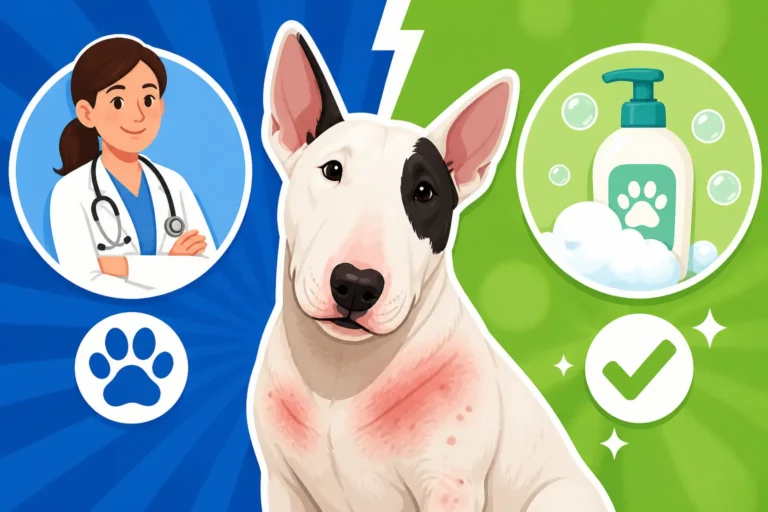
- Redness: The most obvious sign is a pink or reddish discoloration of the skin, especially in areas with sparse hair like the nose, ear tips, inner thighs, and belly. This can range from a faint flush to a deep, angry red.
- Tenderness: Your dog might flinch or pull away when you touch the affected areas. They may resist petting or handling that usually brings them joy.
- Warmth: The sunburnt skin will feel noticeably warmer to the touch than surrounding areas.
- Licking or Scratching: Your Bull Terrier might compulsively lick, chew, or scratch at the irritated spots, trying to relieve the discomfort. This can sometimes lead to raw skin or secondary infections.
- Peeling or Flaking Skin: In more severe cases, the skin might start to peel or flake a few days after the initial burn, much like human sunburn.
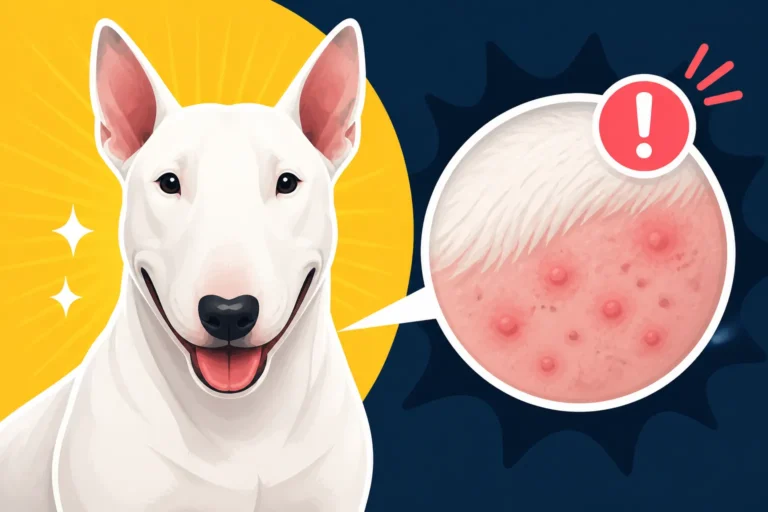
- Blistering: While less common than in humans, severe burns can sometimes lead to small blisters on the skin. This is a clear sign that veterinary attention is needed immediately.
Also, be mindful of their general demeanor. If they seem lethargic, unwilling to move, or show signs of pain when lying down, it could be related to widespread skin irritation or even mild heatstroke in combination with sunburn. Always check their ears carefully, as they are very prone to burning. Understanding Why a White Bull Terrier's Ear Tips Burn is essential for focused observation.
First Aid and Vet Care
If you suspect your white Bull Terrier has a sunburn, here’s what you can do and when to seek professional help:
- Remove from Sun Immediately: The absolute first step is to get your dog out of the sun and into a cool, shaded environment. This might seem obvious, but it's critical to prevent further damage.
- Cool Compresses: For mild burns, apply cool (not ice cold) compresses to the affected areas. A soft cloth dampened with cool water can provide immediate relief. Do not use ice directly on the skin, as it can cause further damage.
- Soothing Agents: Aloe vera gel (pure, dog-safe versions without additives like lidocaine or alcohol) can be very soothing. You can also ask your vet about a mild, pet-safe hydrocortisone cream to reduce inflammation and itching. Be very careful with any topical product, as your dog will inevitably try to lick it off. Consider a soft Elizabethan collar if licking is excessive. Avoid human lotions or creams that aren't specifically approved by a vet, as many contain ingredients that are toxic if ingested.
- Pain Relief: Never give your dog human pain relievers like ibuprofen or acetaminophen, as these are highly toxic and can cause severe health problems. If your dog seems to be in significant pain, contact your veterinarian immediately. They may prescribe safe, canine-specific pain medication.
- Monitor for Complications: Keep a close eye on the burnt areas for signs of infection (pus, foul odor, increasing redness or swelling) or blistering.
- When to See the Vet:
- Severe Redness or Blistering: Any sign of blistering warrants an immediate vet visit.
- Large Areas Affected: If a significant portion of your Bull Terrier’s body is sunburnt.
- Signs of Pain or Illness: If your dog is lethargic, vomiting, has a fever, or seems to be in severe discomfort.
- Infection: If the skin appears infected, a vet can prescribe antibiotics.
- Persistent Licking/Scratching: If home remedies aren't stopping your dog from bothering the area, a vet might have stronger solutions or identify another underlying issue.
Prompt action and veterinary consultation are key to managing sunburn and ensuring your white Bull Terrier's quick recovery. Remember, How a Bull Terrier Hides Pain means you need to be extra vigilant in observing their behavior and physical condition. A simple sunburn can escalate if not addressed properly, and your vet is always your best resource for advice and treatment.
Disclaimer
This article is for general informational purposes only and does not constitute professional advice. Laws, prices and regulations vary by location and change over time. Consult a qualified professional for guidance on your specific situation.