Which Five Tests the Bull Terrier Club Recommends
When you're looking for a Bull Terrier puppy, it's easy to get swept up in the adorable wiggles and that famously mischievous grin. But beneath all that charm, there's a serious responsibility: understanding the health predispositions of the breed and ensuring you're bringing home a puppy from a breeder who takes these concerns seriously. This guide will walk you through the five essential health tests recommended by the Bull Terrier Club, helping you understand what they are, why they matter, and what to ask your potential breeder.
The Foundation of a Healthy Bull Terrier: Why Testing Matters
Bringing a Bull Terrier into your life is a long-term commitment, potentially spanning The Ten to Fourteen Years a Bull Terrier Gets. And while no breeder can guarantee a dog will never face a health challenge, responsible breeding practices significantly stack the odds in your favor. Ignoring recommended health screens is like buying a car without checking if the engine runs – you might get lucky, but you're setting yourself up for potential heartache and massive veterinary bills down the road. These tests aren't just checkboxes; they're vital tools for breeders to make informed decisions and for you to have peace of mind about your puppy's genetic heritage.
Genetic Predispositions in Bull Terriers
Bull Terriers, like all purebreds, have certain health conditions that are more prevalent in their lines due to genetics. These aren't necessarily "faults" of the breed, but rather inherited traits that careful breeding can minimize or, in some cases, eliminate. Conditions like Hereditary Nephritis, certain heart defects, and even deafness are not uncommon, and knowing a breeder has actively screened for these shows their dedication to the breed's future and the health of their puppies. It’s about being proactive, not reactive, when it comes to the well-being of these wonderful dogs.
The Breeder's Role in Health Testing
A truly ethical Bull Terrier breeder understands that their responsibility extends far beyond simply producing puppies. They are stewards of the breed, dedicated to improving health and temperament with each generation. This means openly sharing health test results for their breeding stock, explaining what each test signifies, and being transparent about any health issues in their lines. If a breeder is vague, dismissive, or refuses to provide documentation for these five crucial tests, it should be a significant red flag. They should also be able to explain how these tests impact their breeding choices, showing a genuine understanding of canine genetics and breed-specific health.
The Five Essential Health Tests for Bull Terriers
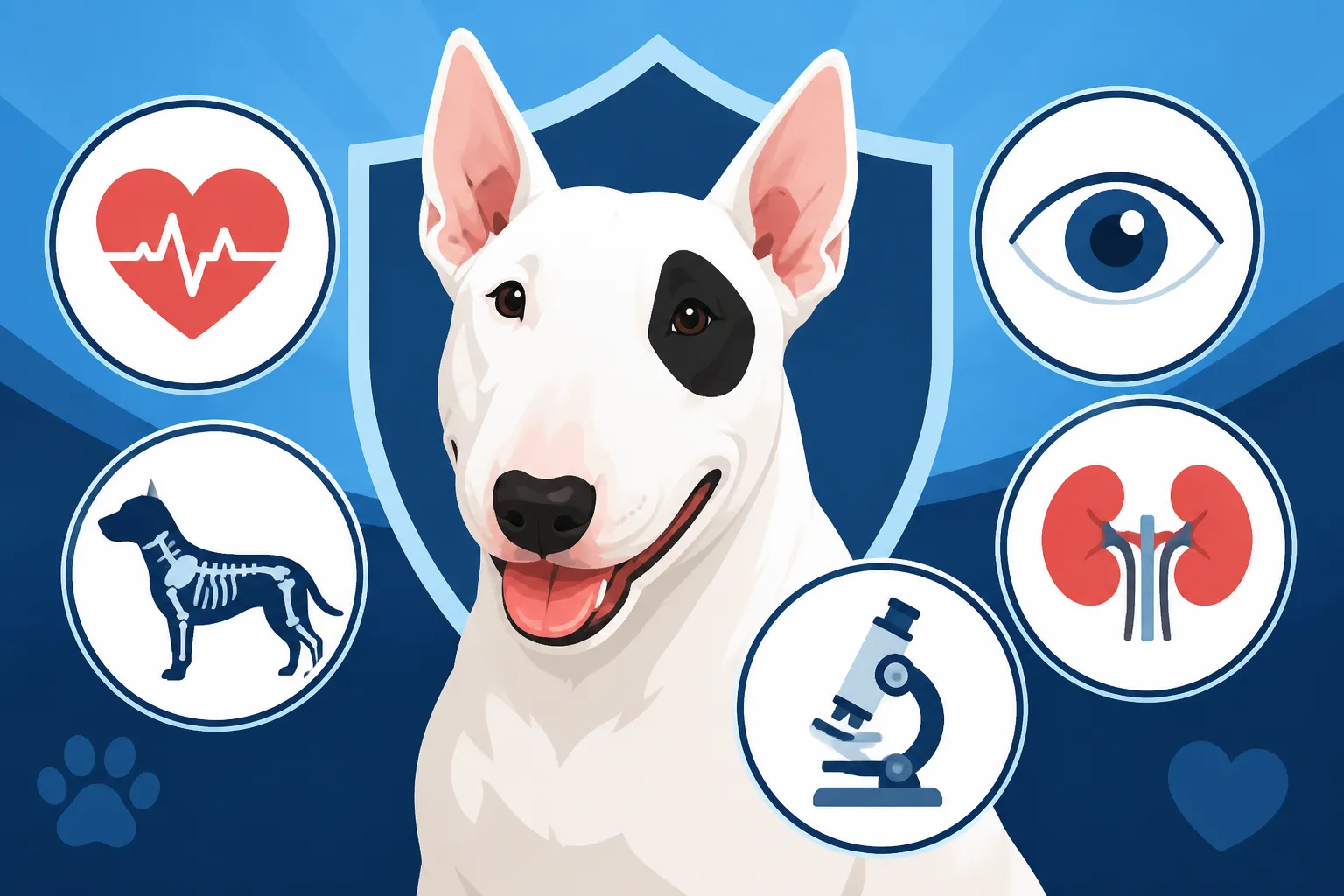
Navigating the world of canine health testing can feel a bit like learning a new language. But don't worry, we're going to break down the most important screenings, explaining what each one is and why it's so vital for Bull Terriers. These are the cornerstones of responsible Bull Terrier breeding, recommended by the Bull Terrier Club to safeguard the breed's future.
BAER Testing for Hearing
Understanding BAER Testing
The Brainstem Auditory Evoked Response (BAER) test is a non-invasive procedure used to check a dog's hearing. It measures electrical activity in the brain in response to auditory stimuli (clicks) presented through headphones. Electrodes are placed on the dog's head, and a computer records brainwave activity. It can detect hearing loss in one or both ears, known as unilateral or bilateral deafness. For Bull Terriers, particularly white ones, this test is absolutely critical, as deafness can be a significant inherited issue.
Why BAER Testing is Crucial for Bull Terriers
Deafness, especially unilateral deafness (deafness in one ear), can be tricky to spot in a puppy without specific testing. A unilaterally deaf dog can lead a perfectly normal life, but a bilaterally deaf dog requires specific training and management strategies. White Bull Terriers have a higher predisposition to congenital deafness due to the genes associated with their coat color, making BAER testing an absolute must. Without it, you might not know your puppy is deaf until much later, potentially missing crucial early intervention opportunities. How Many White Bull Terriers Are Born Deaf sheds more light on this specific risk. Even colored Bull Terriers should be tested, as deafness can still occur, though less frequently.
What to Expect from a Responsible Breeder
A responsible Bull Terrier breeder will have every puppy in their litter BAER tested before they go to their new homes. They should provide you with an official certificate detailing the results for your specific puppy – stating whether it has full hearing, is unilaterally deaf, or bilaterally deaf. This certificate should be signed by a veterinary specialist, usually a neurologist or ophthalmologist, who performed the test. Never accept a breeder's word alone; always ask for documented proof. This commitment to testing demonstrates their transparency and dedication to placing healthy, well-understood puppies.
Cardiac Screening for Heart Health
The Importance of a Healthy Heart
Heart disease is another serious concern in Bull Terriers. Conditions like Mitral Valve Dysplasia (MVD) and Aortic Stenosis (AS) can range from mild, manageable issues to severe defects that significantly impact a dog's quality of life and lifespan. An undiagnosed heart condition can lead to exercise intolerance, breathing difficulties, and even sudden collapse or death. Early detection through proper screening allows for appropriate management or, in breeding animals, the removal of affected individuals from the gene pool.
Different Types of Cardiac Screening
Cardiac screening for Bull Terriers typically involves two main components:
- Auscultation by a board-certified veterinary cardiologist: This is more than just a regular vet listening to the heart. A specialist has a trained ear to detect subtle murmurs or arrhythmias that a general practitioner might miss. They can grade any murmurs found, giving an indication of their severity.
- Echocardiogram: This is an ultrasound of the heart that allows the cardiologist to visualize the heart's structure, measure chamber sizes, assess valve function, and detect any abnormalities in blood flow. It's the gold standard for diagnosing congenital heart defects like MVD and AS. When a Bull Terrier Should Have an Echocardiogram provides more detail on the timing of this important test.
A breeder should have both parents of a litter screened by a cardiologist, preferably with an echocardiogram, to ensure their hearts are healthy before breeding.
Breeder Responsibility and Your Due Diligence
Look for a breeder who can provide recent, clear cardiac certificates from a board-certified veterinary cardiologist for both parents of your puppy. These certificates should explicitly state that no evidence of congenital heart disease (specifically MVD or AS) was found. Don't settle for "my regular vet listened to his heart and said it was fine." While your regular vet is excellent, a specialist's evaluation is far more thorough for these specific breed concerns. These specialized tests are an investment, and if a breeder cuts corners here, it suggests they might do so elsewhere.
Kidney Health: UPC and Ultrasound Screening
Understanding Hereditary Nephritis
Hereditary Nephritis (HN) is a devastating inherited kidney disease that can lead to kidney failure in young to middle-aged Bull Terriers. It's a progressive condition that often goes unnoticed until significant damage has occurred, making early and regular screening absolutely vital. The disease causes the kidneys to improperly filter waste from the blood, leading to a buildup of toxins and eventual organ failure. Hereditary Nephritis Takes Bull Terriers in Their Prime explains the seriousness of this condition.
The Twin Pillars of Kidney Screening
Two primary tests are recommended for screening Bull Terriers for kidney health:
- Urine Protein:Creatinine (UPC) Ratio: This simple urine test measures the amount of protein in the urine relative to creatinine. A high UPC ratio indicates that the kidneys are losing excessive protein, a key indicator of kidney disease, including HN. It's an important screening tool because protein leakage can be one of the earliest signs of kidney trouble. What a UPC Ratio Tells a Bull Terrier Owner can help you understand the results.
- Kidney Ultrasound: An ultrasound provides a visual assessment of the kidneys, allowing a veterinarian to examine their size, shape, and internal structure. This can help identify abnormalities like cysts (as seen in Polycystic Kidney Disease, another concern) or changes indicative of chronic kidney disease. A radiologist or specialist vet usually performs and interprets this test.
What to Demand from a Breeder
A diligent breeder will have both breeding parents annually screened with a UPC ratio and ideally, a kidney ultrasound before breeding. They should present you with documented proof of clear results for both tests. For the UPC ratio, you want to see consistently low numbers. For the ultrasound, a clear report indicating normal kidney size and architecture is key. This ongoing screening is crucial because kidney disease can develop over time, not just be present at birth. If a breeder is only testing once or not at all, they are simply guessing at the health of their lines. Also, consider products from reputable sources like Chewy, which can offer specialized renal diets if, God forbid, your dog ever needed one in the future.
Patellar Luxation Examination
What is Patellar Luxation?
Patellar luxation, or "slipping kneecap," is a condition where the patella (kneecap) dislocates or moves out of its normal groove in the femur (thigh bone). While it's common in many small breeds, Bull Terriers can also be affected. It can range from mild, occasional slipping that causes no pain, to severe, constant displacement that leads to lameness and pain, potentially requiring surgery. It can also predispose dogs to other orthopedic issues like cruciate ligament tears.
How Patellar Luxation is Diagnosed
Diagnosis of patellar luxation is typically done through a physical examination by a veterinarian. They will manipulate the knee joint to determine if the patella can be manually luxated and how easily it slips out of place. The severity is graded on a scale from 1 (mild) to 4 (severe). There isn't a DNA test for patellar luxation, so physical examination by a qualified vet is the standard.
Why Breeders Need to Screen
While perhaps not as life-threatening as heart or kidney disease, patellar luxation can significantly impact a dog's mobility and quality of life. Responsible breeders screen their breeding dogs to avoid propagating this structural defect. They should provide a certificate from a veterinarian stating that the parents have been examined and found to have healthy, stable patellas (ideally a grade 0, meaning no luxation). While it's not always a guarantee that puppies won't ever develop it, breeding from clear parents significantly reduces the risk.
Lethal Acrodermatitis (LAD) DNA Test
The Devastating Reality of LAD
Lethal Acrodermatitis (LAD) is a truly heartbreaking and fatal inherited disease specific to Bull Terriers. Affected puppies typically show signs of zinc malabsorption, resulting in severe skin lesions, immune system deficiencies, stunted growth, and a failure to thrive. Sadly, puppies with LAD rarely survive past two years of age, often succumbing much earlier due to overwhelming infections. Lethal Acrodermatitis Kills a Bull Terrier Puppy Before It Grows Up details the tragic impact of this condition.
The Power of the DNA Test
Unlike some other conditions, LAD can be definitively identified through a simple DNA test. This test determines if a dog is clear, a carrier, or affected by the LAD gene.
- Clear: The dog does not have the gene and cannot pass it on.
- Carrier: The dog carries one copy of the gene but is not affected itself. It can pass the gene to its offspring.
- Affected: The dog has two copies of the gene and will develop LAD.
The DNA test is a game-changer because it allows breeders to make informed breeding decisions to prevent affected puppies from being born. Two carriers should never be bred together, as this pairing risks producing affected puppies. Which Gene Causes Acrodermatitis in Bull Terriers provides more genetic context.
The Absolute Non-Negotiable Test
For any Bull Terrier litter, both parents must be DNA tested for LAD. A responsible breeder will provide you with clear certificates for both parents, ideally showing that at least one parent is "Clear" of the LAD gene. This means that even if the other parent is a carrier, no affected puppies will be produced. If a breeder is unable or unwilling to provide LAD DNA test results, walk away immediately. This test is easy, affordable, and completely preventable of a terrible condition. Your future Bull Terrier's life depends on this vital screening.
Summary of Bull Terrier Health Tests
To help you keep track, here's a handy table summarizing the five key health tests recommended by the Bull Terrier Club:
| Test Name | What it Screens For | Why it's Important for Bull Terriers | What to Look For (Breeder Documents) |
|---|---|---|---|
| BAER Test | Congenital Deafness (unilateral or bilateral) | High prevalence in the breed, especially white Bull Terriers. | Official BAER certificate for each puppy, signed by specialist. |
| Cardiac Screening | Heart defects (e.g., MVD, Aortic Stenosis) | Significant risk of life-threatening heart conditions. | Recent cardiac certificate for both parents from a board-certified cardiologist (ideally echocardiogram). |
| Kidney Screening | Hereditary Nephritis, other kidney disease | HN is a fatal, progressive kidney disease. | Annual UPC ratio results and kidney ultrasound report for both parents. |
| Patellar Luxation Exam | Slipping kneecaps | Can cause lameness, pain, and impact mobility. | Veterinary certificate stating normal patellas (Grade 0) for both parents. |
| LAD DNA Test | Lethal Acrodermatitis (fatal genetic disease) | Completely preventable fatal condition specific to Bull Terriers. | DNA test results for both parents (at least one 'Clear'). |
This table provides a quick reference, but remember to delve into the details for each test as discussed above.
Beyond the Five Tests: Ongoing Care and Considerations
While these five tests are the gold standard for initial breeding health, owning a Bull Terrier involves ongoing vigilance and care. Understanding these predispositions allows you to be a more informed owner, working proactively with your veterinarian throughout your dog's life.
The Value of Regular Veterinary Check-ups
Even with all the preventative health testing, regular veterinary check-ups are paramount. Your vet can monitor for subtle changes, conduct routine blood and urine tests, and keep an eye on your Bull Terrier's overall health as they age. Conditions like The Yearly Urine Test Every Bull Terrier Owner Should Book remain crucial, especially for kidney health. Early detection of any emerging issues, even those not directly covered by these breeding tests, can make a huge difference in prognosis and treatment success. Remember, a trusted veterinarian is your partner in your Bull Terrier's health journey.
Insurance: A Safety Net for the Unexpected
Even the most carefully bred Bull Terrier can face unforeseen health challenges. That's where pet insurance can be a literal lifesaver, especially for a breed with potential predispositions that can lead to costly treatments. Imagine receiving a diagnosis for a serious heart condition or needing ongoing management for kidney disease – the bills can quickly become overwhelming. Pet insurance, like that offered by Healthy Paws, can help cushion the financial blow, allowing you to focus on your dog's care rather than stressing about the cost. It’s a smart investment in your peace of mind and your Bull Terrier's future, helping to manage What Kidney Failure Costs a Bull Terrier Owner.
Nutrition and Lifestyle: Supporting Long-Term Health
Good health isn't just about genetics; it's also about providing optimal care throughout your Bull Terrier's life. A high-quality, balanced diet is fundamental, as is appropriate exercise. Brands like Ollie focus on fresh, human-grade ingredients that can contribute to overall wellness. While food can't cure genetic conditions, excellent nutrition supports immune function, maintains a healthy weight, and can even help manage symptoms of some conditions. Regular exercise, appropriate for their age and health status, keeps their muscles strong and their minds engaged, contributing to a happy, healthy life.
The Importance of a Good Relationship with Your Breeder
Finally, remember that your relationship with a responsible breeder doesn't end when you pick up your puppy. They should be a lifelong resource, willing to answer questions, offer advice, and provide support. Their commitment to these five health tests is a strong indicator of their dedication to the breed and to you as a Bull Terrier owner. This ongoing relationship is invaluable, especially as you navigate the unique joys and challenges of living with this extraordinary breed.
Disclaimer
This article is for general informational purposes only and does not constitute professional advice. Laws, prices and regulations vary by location and change over time. Consult a qualified professional for guidance on your specific situation.