What Dog Sunscreen Costs a White Bull Terrier Owner
For white Bull Terrier owners, the vibrant joy of a sunny day can quickly turn into a worry, as their beloved dog's pale skin and fine coat are incredibly vulnerable to the sun's harsh rays. This guide is here to shed light on exactly why sun protection is so critical for these unique dogs and to break down the cost considerations involved in keeping your white Bull Terrier safe and comfortable under the sun.
Why White Bull Terriers Are So Susceptible to Sunburn
It's a common misconception that all dog coats offer equal protection against the sun. For many white Bull Terrier owners, this reality hits hard the first time their dog gets a pink, irritated patch after even a short time outdoors. Unlike many breeds with dense undercoats or darker pigments that absorb UV radiation, white Bull Terriers often lack this natural defense, leaving them highly exposed.
The Barely-There Coat and Pink Skin
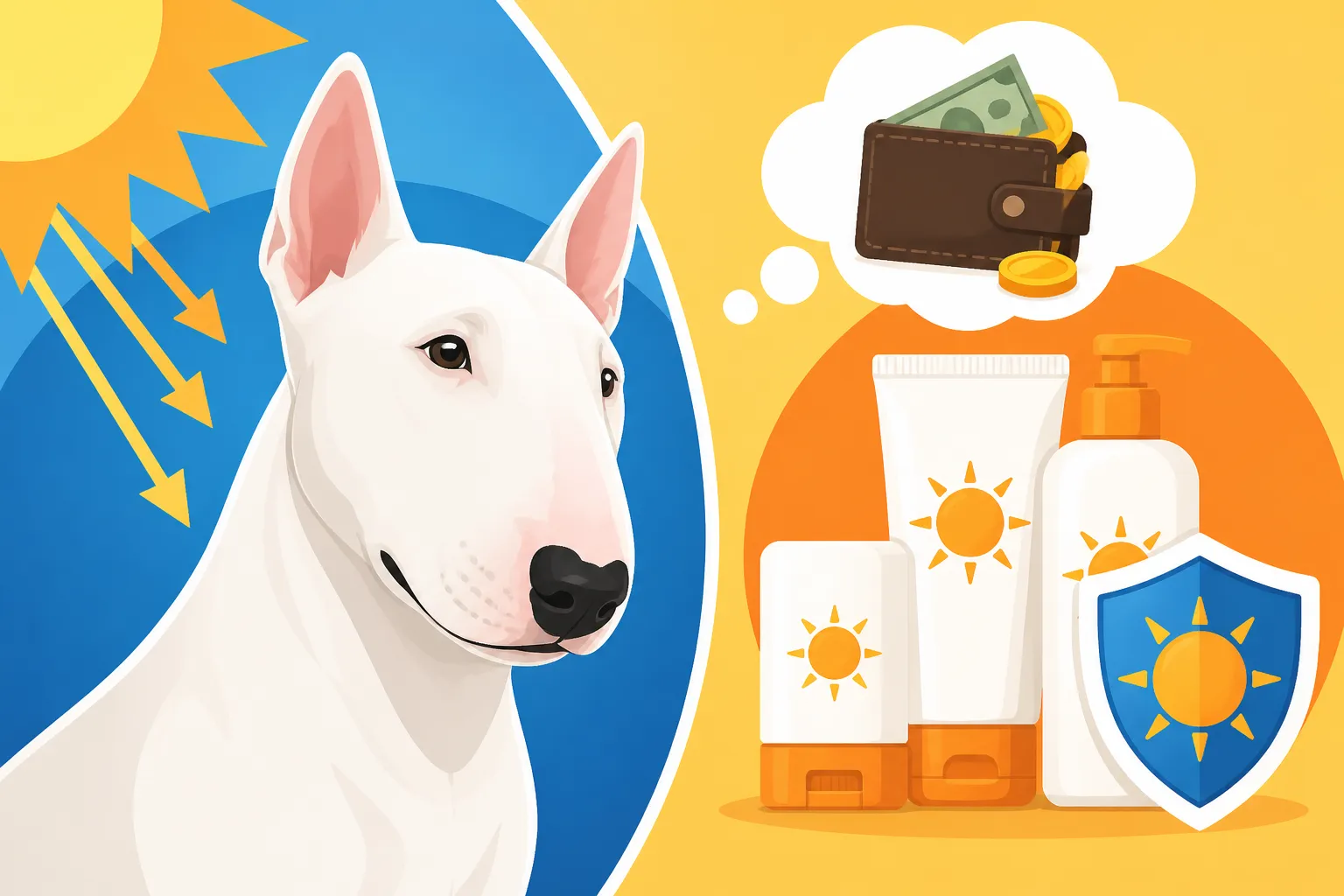
Take a good look at your white Bull Terrier's coat. It's usually short, sparse, and often feels coarse to the touch. What you're seeing isn't just a lack of color; it's a lack of the dense, protective fur that many other dogs possess. This thin covering offers minimal barrier against ultraviolet (UV) radiation. Beneath that sparse white fur lies delicate, often unpigmented pink skin, which is akin to human skin in its vulnerability to sunburn. Just as a fair-skinned person burns easily, so too does a white Bull Terrier. Every follicle of hair, every whisker, and every exposed patch of skin on your Bull Terrier is a potential site for sun damage.
This particular breed trait means that areas that might seem well-covered to a casual observer, like the top of the head or the back, can still be surprisingly exposed. When the sun beats down, those fine white hairs simply don't have the density or the pigment to block the harmful UV rays effectively. It’s a stark contrast to a dark-coated Labrador or a thick-furred Husky, whose coats act as a much more substantial physical shield. This inherent lack of natural sun protection is why white Bull Terrier owners must be particularly diligent about preventative measures.
Long-Term Risks of Sun Exposure
The immediate aftermath of too much sun might be a painful, red, and peeling sunburn, much like what a human experiences. Your Bull Terrier might become restless, itchy, and experience discomfort. However, the true danger of repeated or prolonged sun exposure goes far beyond a temporary burn. Each instance of sun damage contributes to a cumulative risk over your dog's lifetime.
The most serious long-term risk is the development of various forms of skin cancer. Just like in people, UV radiation can damage cellular DNA, leading to uncontrolled cell growth. Squamous cell carcinoma and hemangiosarcoma are two types of skin cancers that can be particularly aggressive in dogs and are strongly linked to sun exposure, especially in breeds with light skin and sparse coats. These cancers often appear in the most exposed areas, such as the nose, ear tips, and belly. Early detection is key, but prevention through consistent sun protection is always the best strategy. You can read more about Whether a Bull Terrier Gets Skin Cancer.
Beyond cancer, chronic sun exposure can lead to other skin issues. You might notice dry, flaky skin, thickening or leathery patches, and even hair loss in affected areas. These changes aren't just cosmetic; they can be uncomfortable for your dog and make them more prone to secondary infections. It's a progressive problem that, once started, can be difficult and costly to manage. This is why being proactive with sun protection, even when it feels like a small effort, pays huge dividends for your Bull Terrier's long-term health and well-being.
The Essential Role of Dog Sunscreen
Given the inherent vulnerabilities of a white Bull Terrier's skin, dog-specific sunscreen isn't just a nicety; it's a vital part of their outdoor routine, especially during warmer months or extended periods outside. Choosing the right product and knowing how to apply it correctly can make all the difference in preventing uncomfortable burns and mitigating serious health risks down the line.
What to Look for in a Safe and Effective Formula
When you're sifting through the options for dog sunscreen, your first priority must be safety. Human sunscreens, while effective for us, often contain ingredients that are toxic or irritating to dogs if ingested or absorbed. Ingredients like zinc oxide and para-aminobenzoic acid (PABA), common in many human formulas, can be harmful to dogs. Zinc oxide, if licked off, can cause zinc toxicosis, leading to severe gastrointestinal upset, red blood cell damage, and kidney problems. PABA can also be an irritant.
Instead, seek out sunscreens specifically formulated for pets. These will typically avoid those dangerous ingredients and focus on pet-safe alternatives. Many good quality dog sunscreens will list titanium dioxide as an active ingredient, which is generally considered safe. Look for formulas that are non-greasy, quick-drying, and preferably fragrance-free, as strong scents can be off-putting or even irritating to your Bull Terrier's sensitive nose and skin. Consider the texture too – a spray might be easier for broad areas, while a stick offers more precise application for tricky spots like the nose and ear tips. You can explore options on sites like Chewy, which often have dedicated sections for pet-safe products, making the selection process a little easier.
How Often and Where to Apply
Applying dog sunscreen isn't a one-and-done affair; it requires consistent reapplication, much like human sunscreen. A general rule of thumb is to apply it at least 20 minutes before your Bull Terrier goes outside, allowing it to absorb properly. If your Bull Terrier is swimming, rolling in the grass, or just generally active, you'll need to reapply more frequently – every two to four hours is a good starting point, and even more often if they've gotten wet or rubbed it off. Don't forget that even on cloudy days, UV rays can penetrate the cloud cover, so protection is still necessary. You might find more detailed advice on How Often a Bull Terrier Needs Sunscreen Reapplied.
The key to effective application is targeting the most vulnerable areas. Think of the places where your Bull Terrier's hair is thinnest or where their pink skin is most exposed. These are typically:
- Nose and Bridge of the Nose: This area is almost always bare and directly faces the sun.
- Ear Tips: Thin skin and often very exposed, these are prime spots for burning.
- Belly and Groin: When your Bull Terrier lies down, their sensitive underside is often exposed to reflected sun rays from the ground or direct sunlight.
- Inner Thighs: Similarly, these areas are often hairless and prone to burning.
- Paws (especially the tops): While pads are tough, the tops of the paws can burn.
- Any areas with scars or thin patches of fur: These are extra vulnerable spots.
Always do a small patch test first, especially if it's a new product, to ensure your Bull Terrier doesn't have an adverse reaction. Gently rub the product into the skin until it's absorbed, or spray a thin, even layer. If you use a spray, consider spraying it into your hands first and then rubbing it onto sensitive facial areas to avoid getting it into their eyes. Making this a routine, even a game, can help your Bull Terrier accept it as part of their outdoor prep.
Understanding the Cost of Dog Sunscreen
When you commit to being a Bull Terrier owner, you quickly learn that budgeting for their unique needs is crucial. Dog sunscreen, while not the most expensive item on your pet supply list, is a recurring cost that definitely adds up, especially since it's a non-negotiable for white Bull Terriers. It's not just the initial purchase price, but the ongoing need for replenishment that warrants consideration.
Price Ranges for Different Product Types
Dog sunscreens come in various forms, and each typically falls into a different price bracket, influenced by brand, ingredients, and quantity. You’ll generally find sprays, lotions/creams, and sticks as the main options.
- Sprays: These are often convenient for covering larger areas quickly and tend to be in a moderate price range per ounce. However, you might use them up faster, especially if your Bull Terrier is wiggly during application. A good quality spray from a reputable brand might be a bit more, but the convenience often makes it worthwhile for broad coverage on the back and sides.
- Lotions/Creams: These typically offer a thicker, more comprehensive barrier and might last longer on the skin, but can be messier to apply. They are usually found in the mid-to-higher price range, reflecting the concentration of active ingredients and often conditioning agents for the skin. Many owners prefer these for thorough application on sensitive areas like the belly.
- Sticks: Sunscreen sticks are fantastic for precise application on tricky spots like the nose, ear tips, and around the eyes (being careful not to get it in the eyes). They are often the most concentrated and can sometimes have a higher initial price point for a smaller volume, but because you use less per application, they can last quite a while for targeted protection.
Here's a general overview of how different formats might compare in terms of cost considerations:
| Sunscreen Type | Application Ease | Coverage Type | Typical Price Characteristic | Usage Rate | Best For |
|---|---|---|---|---|---|
| Sprays | Quick, convenient | Broad areas | Generally mid-range | Can be used up quickly | Large body areas, quick reapplication |
| Lotions/Creams | Requires rubbing in | Thorough, comprehensive | Mid to premium | Moderate | Sensitive skin, thorough coverage |
| Sticks | Precise, less messy | Targeted areas | Higher per volume | Economical for small spots | Nose, ear tips, sparse spots, on-the-go |
Remember, these are general characteristics. You might find budget-friendly versions of each type, or premium options with additional benefits like insect repellent or skin conditioners. It's always a good idea to check reviews and ingredient lists to ensure you're getting a product that's both safe and effective for your Bull Terrier.
Factors Influencing Your Annual Sunscreen Budget
The cost of dog sunscreen isn't a one-time purchase, and several factors will influence how much you spend annually to keep your white Bull Terrier protected. It’s an ongoing expense that savvy owners budget for, much like food or parasite prevention.
Firstly, how often your Bull Terrier is exposed to the sun plays a huge role. If your dog spends several hours outdoors every day, whether in the yard, at the dog park, or on long walks, you'll naturally go through more sunscreen than if they're primarily an indoor dog with short potty breaks. A Bull Terrier living in a sunny, warm climate year-round will also have a higher annual cost than one in a cooler, cloudier region.
Secondly, the size of your Bull Terrier impacts how much product you use. A large adult Bull Terrier, even with its short coat, has more surface area to cover than a small puppy. You'll need more product for each application, meaning you'll deplete bottles or sticks faster. This is where purchasing larger sizes, if available, or buying in multi-packs from retailers like Chewy might offer some cost savings in the long run.
Finally, the specific product you choose will directly affect your budget. Some premium brands, often those found at specialty pet stores or vet clinics, will cost more upfront but might offer superior ingredients, better water resistance, or more effective UV blocking. Other, more budget-friendly options are available and can be perfectly adequate, especially if you're diligent with reapplication. It's a balance between cost, effectiveness, and convenience. Don't forget to factor in potential shipping costs if you're ordering online.
When you tally it all up, your annual sunscreen budget for a white Bull Terrier could range significantly, but expect it to be a consistent line item. Think of it as an investment in your dog's long-term health, helping to prevent potentially much higher veterinary bills down the road if sun damage leads to serious skin conditions or cancer.
Beyond Sunscreen: A Holistic Approach to Sun Protection
While dog sunscreen is an indispensable tool for protecting your white Bull Terrier, it's most effective when integrated into a broader strategy of sun safety. Relying solely on sunscreen can leave gaps in protection, and a multi-faceted approach ensures maximum defense against harmful UV rays.
Protective Gear and Shade Solutions
Consider dressing your Bull Terrier in lightweight, breathable UV-protective clothing, especially for extended outdoor adventures. These special shirts are designed to block a significant percentage of UV rays and can cover large areas of the body that might be hard to consistently sunscreen, such as the back and torso. They come in various sizes and styles, often available through online pet retailers. While it might seem a bit over-the-top to dress your dog, for a white Bull Terrier, it's a practical and effective layer of defense, particularly if they enjoy lounging in a sunny spot in the yard. You might find ideas for Whether a Bull Terrier Should Wear a Shirt in Summer.
Beyond clothing, actively seek out and utilize shade. This might seem obvious, but it's easy to overlook when you're caught up in an activity. During peak sun hours, generally between 10 AM and 4 PM, it's best to keep your Bull Terrier indoors or ensure they have access to ample shade, whether under a tree, an umbrella, or a covered patio. If you're out at a park or beach, bring your own pop-up canopy or umbrella. Shade reduces both direct UV exposure and heat, which is an added bonus for preventing overheating. Even short periods of intense sun exposure can contribute to damage, so every shaded moment helps.
Long-Term Health Monitoring and Related Costs
Sunscreen and protective gear are excellent preventative measures, but a vigilant approach to your Bull Terrier's skin health is also paramount. Regular self-checks of your dog's skin can help you spot any unusual changes early, allowing for prompt veterinary attention. This includes checking for new lumps, bumps, discolorations, or areas of irritation that might not be obviously sunburn-related but could be a symptom of cumulative sun damage. You can learn how to conduct The Weekly Skin Check Every Bull Terrier Needs.
Incorporating these checks into your routine, perhaps during a regular grooming session or cuddle time, is free and incredibly valuable. However, if you do notice anything concerning, the costs associated with veterinary investigation and treatment can be significant. This might include biopsies, lab tests, and, if cancer is diagnosed, potential surgeries, chemotherapy, or radiation. While precise figures vary widely, these treatments represent a substantial financial commitment. This is where having pet insurance, perhaps from a provider like Healthy Paws, can offer a crucial safety net, helping to cover a percentage of these unexpected and often high costs. Investing in a good diet, such as fresh food options from companies like Ollie, can also contribute to overall skin health and resilience, though it doesn't replace the need for direct sun protection. Ultimately, a proactive approach to sun protection, combined with diligent health monitoring, is the best way to safeguard your white Bull Terrier's well-being and manage potential long-term costs.
Disclaimer
This article is for general informational purposes only and does not constitute professional advice. Laws, prices and regulations vary by location and change over time. Consult a qualified professional for guidance on your specific situation.