What a Bull Terrier’s First Kidney Workup Costs
It's truly unsettling when you notice subtle changes in your Bull Terrier's health, especially when the vet starts mentioning "kidneys." The worry isn't just about their well-being, but also the sudden, overwhelming questions about what tests are needed, what they'll tell you, and frankly, how much it's all going to cost. This guide is here to walk you through what to expect during your Bull Terrier's initial kidney workup, helping you understand the process and the potential financial impact.
The Initial Red Flags and What They Mean
Before you even get to the vet for a workup, there are often subtle cues your Bull Terrier gives that something isn't quite right. Our Bull Terriers are masters of hiding discomfort, so noticing these early signs can be critical. Ignoring them or putting off a vet visit because you're worried about the bill only delays diagnosis and can make treatment more complicated down the line.
Subtle Symptoms You Might Miss
Bull Terriers are known for their clownish antics and robust appearance, which can sometimes mask underlying health issues. When it comes to kidney problems, the early signs are often so vague you might attribute them to normal aging or just a bad day. You might notice your dog drinking a little more water than usual, or perhaps needing to go outside to urinate more frequently. They might seem a bit more tired after their usual walk, or less enthusiastic about playtime. Sometimes, their appetite might dip slightly, or they might seem a little pickier with their food. These are easy to dismiss, but for a Bull Terrier, they can be early warnings that their kidneys are struggling. Keeping a keen eye on these changes, even if minor, and documenting them can provide your vet with invaluable information.
Another common sign can be a slight change in their coat quality, becoming duller, or even mild skin issues that pop up without an obvious cause. While many things can cause skin problems, a systemic issue like kidney disease can sometimes manifest this way. Some owners might also report a faint, unusual odor from their dog's breath, often described as metallic or ammonia-like, due to the buildup of toxins the kidneys normally filter out. It’s these seemingly insignificant shifts in routine and appearance that can hint at something more serious brewing internally.
When to Seek Urgent Veterinary Attention
While the subtle signs warrant a prompt, non-emergency vet visit, some symptoms indicate a more pressing situation where waiting could be detrimental. If your Bull Terrier suddenly stops eating or drinking entirely, starts vomiting repeatedly, or becomes lethargic to the point of not wanting to move, it's time for an emergency vet visit. These are signs that kidney function might be severely compromised, leading to a rapid buildup of toxins in their system. Similarly, if they are straining to urinate, or producing very little urine despite frequent attempts, it could indicate a blockage or acute kidney injury, which requires immediate medical intervention.
Any sudden onset of disorientation, weakness, or even seizures can also be related to severe kidney failure, where toxins affect brain function. In these cases, every hour counts. Don't hesitate to call your emergency veterinary clinic right away. While the cost implications of an emergency visit are higher, addressing acute issues quickly can make a significant difference in prognosis and recovery. Thinking about Signs a Bull Terrier's Kidneys Are Failing is crucial here.
Understanding the Bull Terrier's Predisposition
It’s a tough truth that certain breeds carry genetic predispositions to specific health conditions, and for our beloved Bull Terriers, kidney disease, particularly Hereditary Nephritis, is a significant concern. This isn't something that happens because of poor care or bad luck; it's an inherited condition that can silently progress, taking these otherwise vibrant dogs in their prime. Breeders dedicated to the health of the breed work tirelessly to screen for this, but it’s still something every Bull Terrier owner needs to be aware of.
Understanding this predisposition is key to being proactive. It means that even if your Bull Terrier seems perfectly healthy, routine kidney screenings, like yearly urine tests, are not just optional extras but essential parts of their preventative care. Knowing that your Bull Terrier might be susceptible helps you and your vet catch any issues early, before they become critical. It’s part of responsible ownership for this unique breed. You can learn more about Hereditary Nephritis Takes Bull Terriers in Their Prime for a deeper dive into this serious condition.
Breaking Down the First Kidney Workup: What to Expect
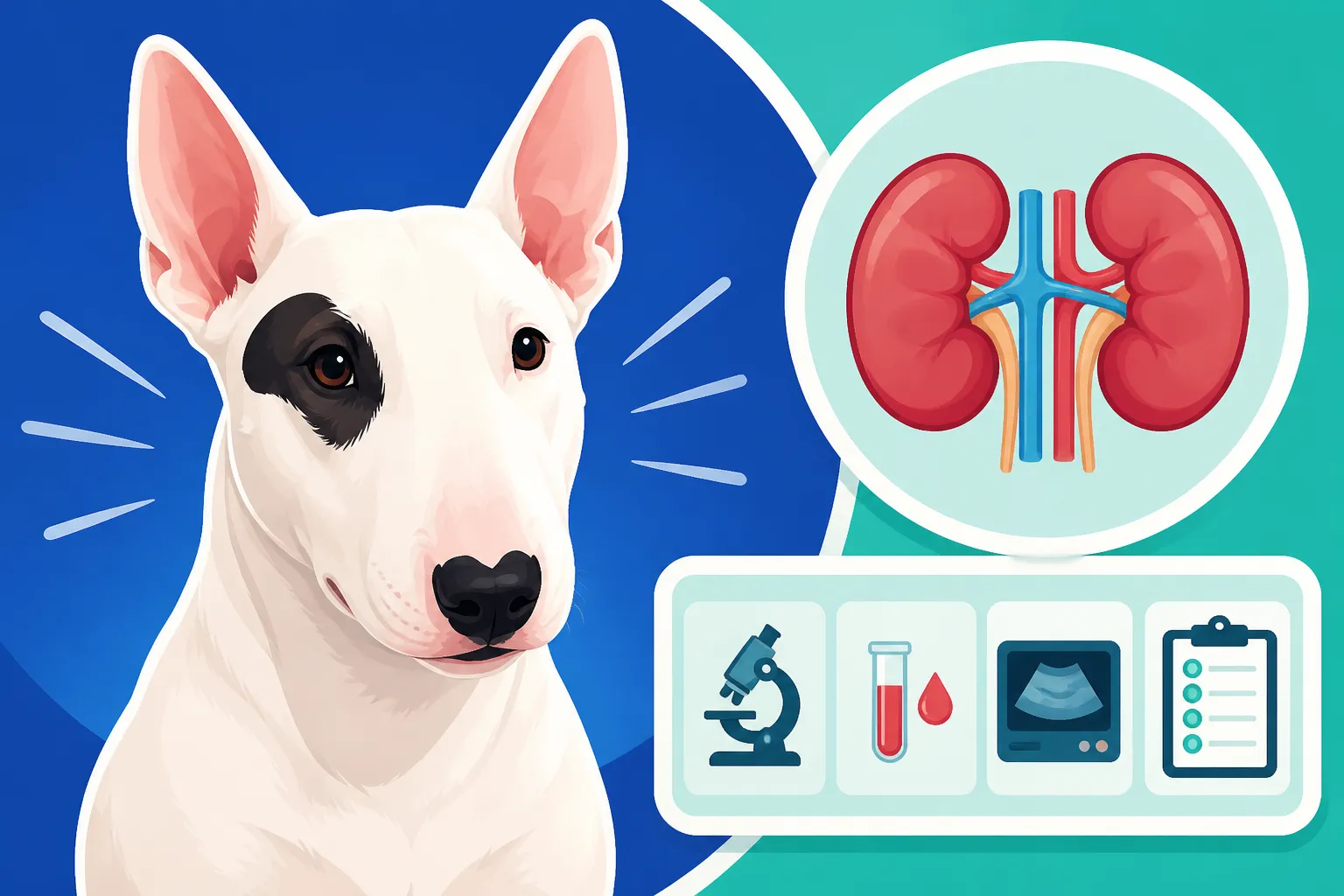
When your vet suspects kidney issues, they won't just guess. They'll recommend a series of diagnostic tests to pinpoint the problem, assess its severity, and rule out other conditions. This initial workup is comprehensive and designed to give a full picture of your Bull Terrier's kidney health. It’s the starting point for any treatment plan and a critical investment in their future.
The Importance of a Urinalysis
The first, and often most telling, test in a kidney workup is a simple urinalysis. This involves collecting a urine sample, ideally by cystocentesis (a sterile method where the vet uses a needle to draw urine directly from the bladder) to avoid contamination. The urine is then analyzed for several key indicators. The vet will look at its concentration (specific gravity), which tells them how well the kidneys are able to concentrate urine. Dilute urine can be a major red flag for kidney disease.
Beyond concentration, the urinalysis checks for the presence of protein, glucose, blood, crystals, and bacteria. Protein in the urine, especially persistent proteinuria, is a significant indicator of kidney damage, as healthy kidneys should retain protein in the bloodstream. A urine protein-to-creatinine (UPC) ratio test is particularly important for Bull Terriers to specifically measure protein loss, which is a hallmark of Hereditary Nephritis. Your vet will often recommend The Yearly Urine Test Every Bull Terrier Owner Should Book as a routine measure, and this is exactly why. What a UPC Ratio Tells a Bull Terrier Owner is another piece of vital information you'll want to understand.
Bloodwork: Uncovering the Full Picture
While urinalysis provides crucial insights into kidney function, bloodwork offers a broader view of your Bull Terrier's overall health and specifically, how well their kidneys are filtering waste from the blood. The two primary markers your vet will focus on are Blood Urea Nitrogen (BUN) and Creatinine. When kidneys aren't functioning optimally, these waste products build up in the bloodstream, leading to elevated levels. However, it's important to remember that BUN can also be affected by hydration status and diet, so creatinine is often considered a more reliable indicator of kidney function.
Beyond BUN and creatinine, a full chemistry panel will also assess electrolyte levels (like potassium, sodium, and phosphorus), which can become imbalanced with kidney disease. It also checks calcium, albumin, and red blood cell counts. Kidney disease can lead to anemia, as the kidneys produce a hormone called erythropoietin, which stimulates red blood cell production. An increase in phosphorus is also a common and serious consequence of failing kidneys. A complete blood count (CBC) will also be run to look for signs of infection or other systemic issues that might be impacting kidney health. This comprehensive blood panel gives your veterinarian a snapshot of how all major organ systems are functioning, ensuring a holistic diagnosis.
Imaging: Seeing What's Inside
Sometimes, blood and urine tests aren't enough to fully understand the extent or cause of kidney problems. That's when imaging, primarily ultrasound, comes into play. A renal ultrasound allows your veterinarian or a specialist to visually inspect the size, shape, and internal structure of your Bull Terrier's kidneys. They can look for abnormalities like cysts, tumors, stones, or changes in the kidney architecture that might indicate chronic disease or acute injury. This non-invasive procedure can often reveal issues that blood and urine tests simply can't.
For Bull Terriers, an ultrasound can be particularly helpful in assessing for conditions like polycystic kidney disease or the specific changes associated with Hereditary Nephritis, even though the latter is primarily diagnosed via genetic testing and UPC ratios. The visual information from an ultrasound complements the lab results, giving your vet a more complete diagnostic picture. In some cases, if something truly unusual is seen, a biopsy might be recommended, but this is less common for an initial workup and is a more invasive procedure. Knowing What a Bull Terrier's Kidney Ultrasound Costs can help you prepare for this important diagnostic step.
Navigating the Costs: Tests, Consultations, and Beyond
Let's be real, facing potential kidney issues in your Bull Terrier is stressful enough without adding financial uncertainty to the mix. The cost of an initial kidney workup can vary widely depending on where you live, your veterinary clinic's pricing, and the specific tests deemed necessary. It’s rarely a single fee, but rather a collection of services that add up.
The Cost of Diagnostic Tests
When it comes to the diagnostic tests themselves, you're looking at a range of expenses. A basic urinalysis might be a relatively modest fee, but if it includes a urine protein-to-creatinine ratio, the cost will increase. Bloodwork, specifically a full chemistry panel and complete blood count, will be a more significant line item. These are standard tests, but their processing through an external lab can add to the expense.
An abdominal ultrasound, especially if performed by a board-certified veterinary internal medicine specialist or radiologist, will be the most substantial single cost among the initial diagnostics. Think of it as investing in clarity – seeing inside your Bull Terrier can often provide definitive answers or help rule out critical issues. While I can't give you exact numbers, understand that these tests represent sophisticated medical analysis and equipment, which is reflected in their pricing. Here’s a general idea of the types of costs involved:
| Test Type | Purpose | Typical Cost Range (General Shape) |
|---|---|---|
| Urinalysis | Checks urine concentration, pH, presence of blood, protein, glucose, bacteria. | Low to Moderate |
| UPC Ratio | Quantifies protein loss in urine, crucial for Bull Terriers with kidney concerns. | Moderate |
| Blood Chemistry Panel | Assesses kidney function (BUN, creatinine), electrolytes, other organ health. | Moderate to High |
| Complete Blood Count | Checks red/white blood cell counts, indicators of anemia or infection. | Moderate |
| Abdominal Ultrasound | Visualizes kidney size, shape, internal structure; identifies cysts, stones, tumors. | High (especially if done by specialist) |
| Blood Pressure | Monitors systemic hypertension, common with kidney disease. | Low (often included or a small add-on) |
This table provides a general overview, but always get a detailed estimate from your veterinary clinic. They understand your budget concerns and can often help prioritize tests if necessary.
Specialist Consultations: When They're Needed
For many routine kidney issues, your primary care veterinarian is perfectly capable of diagnosing and managing the condition. However, for complex cases, or if the diagnosis isn't straightforward, they might recommend a consultation with a veterinary internal medicine specialist or a veterinary nephrologist (a kidney specialist). These specialists have advanced training and equipment, and can offer a deeper level of insight into your Bull Terrier's condition.
A specialist consultation involves their time to review all previous records, perform a thorough physical examination, and often recommend additional, more advanced diagnostics. This will add another layer of cost, but it can be invaluable. Think of it as getting a second opinion or bringing in an expert for a particularly tricky problem. While it's an added expense, the peace of mind and potentially more accurate or effective treatment plan a specialist can provide is often worth it for the long-term health of your Bull Terrier.
Medications and Dietary Changes: Starting Expenses
Once a diagnosis is made, the initial costs don't necessarily stop at diagnostics. Your Bull Terrier might be prescribed medications to manage symptoms, control blood pressure, reduce protein in the urine, or bind phosphorus. These medications will be an ongoing expense. Additionally, a critical component of managing kidney disease in Bull Terriers is often a change in diet. Many vets will recommend a prescription renal diet, which is specifically formulated with controlled protein, phosphorus, and sodium levels.
Brands like Chewy or Ollie, or other specialty pet food suppliers, offer prescription renal diets that are typically more expensive than your standard over-the-counter kibble. This isn't just a food choice; it's a medical intervention, and it's vital for slowing the progression of kidney disease. Initially, there might be the cost of purchasing a new bag or case of this specialized food, and then the ongoing monthly expense. Your vet will guide you on Which Diet a Bull Terrier With Kidney Disease Needs. These initial medication and dietary expenses are part of getting your Bull Terrier on the right path to managing their kidney health.
Planning Ahead: Insurance and Long-Term Considerations
Discovering your Bull Terrier has kidney issues can be a gut punch, and the financial implications can feel overwhelming. However, with good planning and understanding your options, you can better prepare for the road ahead. Thinking about long-term care from the outset can alleviate some of the immediate financial strain.
Pet Insurance and Pre-Existing Conditions
Pet insurance can be a lifesaver for unexpected health crises, but it's crucial to understand how it works, especially concerning pre-existing conditions. Most pet insurance policies, including those from providers like Healthy Paws, will not cover conditions that were diagnosed or showed symptoms before your policy started or during a waiting period. This is why getting your Bull Terrier insured when they are young and healthy is highly recommended, ideally before any signs of kidney disease even emerge.
If your Bull Terrier is already showing symptoms or has received an initial diagnosis of kidney disease, it will likely be considered a pre-existing condition, meaning the policy probably won't cover treatment related to it. However, it's still worth investigating. Some policies might cover unrelated future illnesses or accidents, and some have clauses for "curable" pre-existing conditions after a certain symptom-free period, though chronic kidney disease usually isn't in that category. It’s a complex area, so always read the fine print and speak directly with insurance providers about their specific exclusions and definitions of pre-existing conditions. For more information, you might want to look into Whether Insurance Covers Bull Terrier Kidney Disease.
Budgeting for Potential Long-Term Care
Once kidney disease is diagnosed, it's typically a chronic condition that requires ongoing management. This means the initial workup costs are just the beginning. You'll likely face regular follow-up appointments, repeat blood and urine tests to monitor kidney function and adjust medications, and continuous purchases of prescription diets and supplements. This can quickly add up to a significant sum over your Bull Terrier's lifespan.
It's a really good idea to start a dedicated savings fund for your Bull Terrier's health, if you haven't already. Even a small amount put aside regularly can grow into a substantial buffer for these inevitable costs. Consider discussing with your vet a realistic long-term cost projection for managing your Bull Terrier's specific condition. This proactive approach can help you prepare financially and ensure you can provide the best possible care for your beloved companion without constantly feeling overwhelmed by unexpected bills. Understanding What a Bull Terrier's Lifetime Kidney Bill Runs can help you set realistic expectations.
Support and Resources
You're not alone in navigating these challenges. Many Bull Terrier owners have faced similar diagnoses, and there are resources available to help. Online Bull Terrier communities and breed-specific forums can offer invaluable emotional support and practical advice from people who truly understand. Your veterinary team is also a primary resource; don't hesitate to ask them about payment plans, prescription assistance programs, or referrals to veterinary social workers who can help you explore financial aid options.
Some veterinary schools offer reduced-cost specialty services, and certain non-profits provide grants for pet owners facing expensive treatments. While these often have eligibility requirements, they are worth exploring. Remember, advocating for your Bull Terrier’s health also means advocating for your own peace of mind and financial stability. Leaning on these resources can help you feel more empowered and less isolated as you manage your Bull Terrier's kidney health.
Disclaimer
This article is for general informational purposes only and does not constitute professional advice. Laws, prices and regulations vary by location and change over time. Consult a qualified professional for guidance on your specific situation.