How a Bull Terrier’s Skull Is Filled Out
A Bull Terrier’s head can look dramatically different from that of other breeds: its profile curves down into the muzzle, with no obvious stop between forehead and nose. If you have heard that the skull should be “filled out” but are not sure what that means, this guide explains the breed’s head shape, how it develops, and when an unusual appearance deserves a vet’s attention.
What “filled out” means in a Bull Terrier
Reading the outline of the head
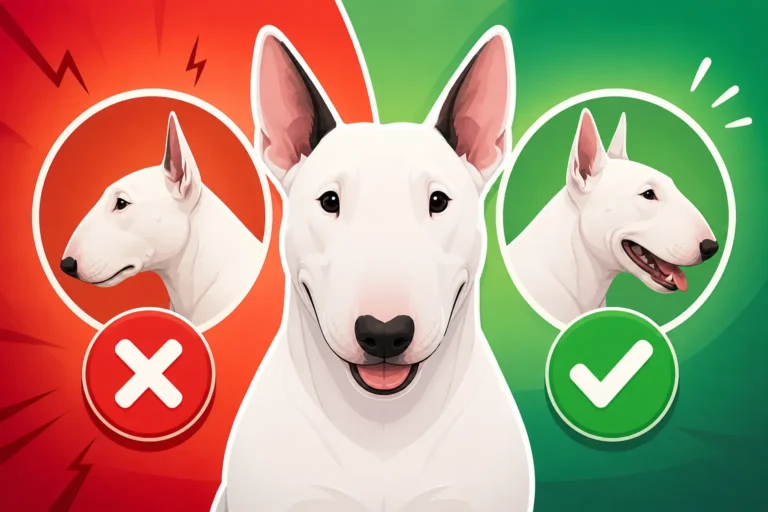
When people describe a Bull Terrier’s skull as “filled out,” they usually mean that the head looks smoothly and strongly formed rather than narrow, hollow, or sharply divided into separate sections. It is informal descriptive language, not a diagnosis or a single measurement. In the breed’s characteristic outline, the skull and muzzle flow together in a continuous curve.
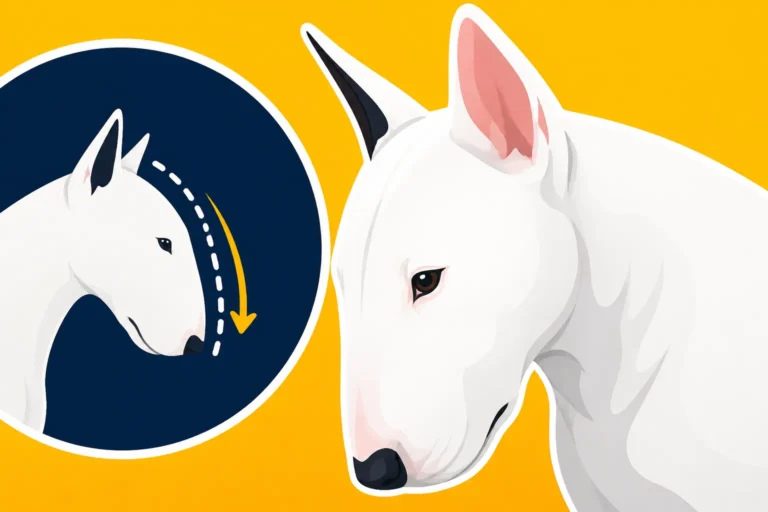
From the side, the forehead slopes gently toward the nose rather than ending in a pronounced dip. That transition is often called a downface. Seen from the front, the head should look substantial and balanced, not pinched through the cheeks or excessively narrow at the muzzle. The skull’s overall shape is part of the breed type, alongside its small, triangular eyes and erect ears.
It helps to think of “filled out” as describing the overall impression, not one isolated bulge or feature. A dog may have a broad-looking head because of its bone structure, muscle, coat, posture, and the angle of a photograph. That is why a single head-on picture rarely tells the whole story. For a fuller explanation of the characteristic outline, see Where the Bull Terrier's Egg Shaped Head Came From and What a Bull Terrier's Downface Is.
The skull is not a rounded dome
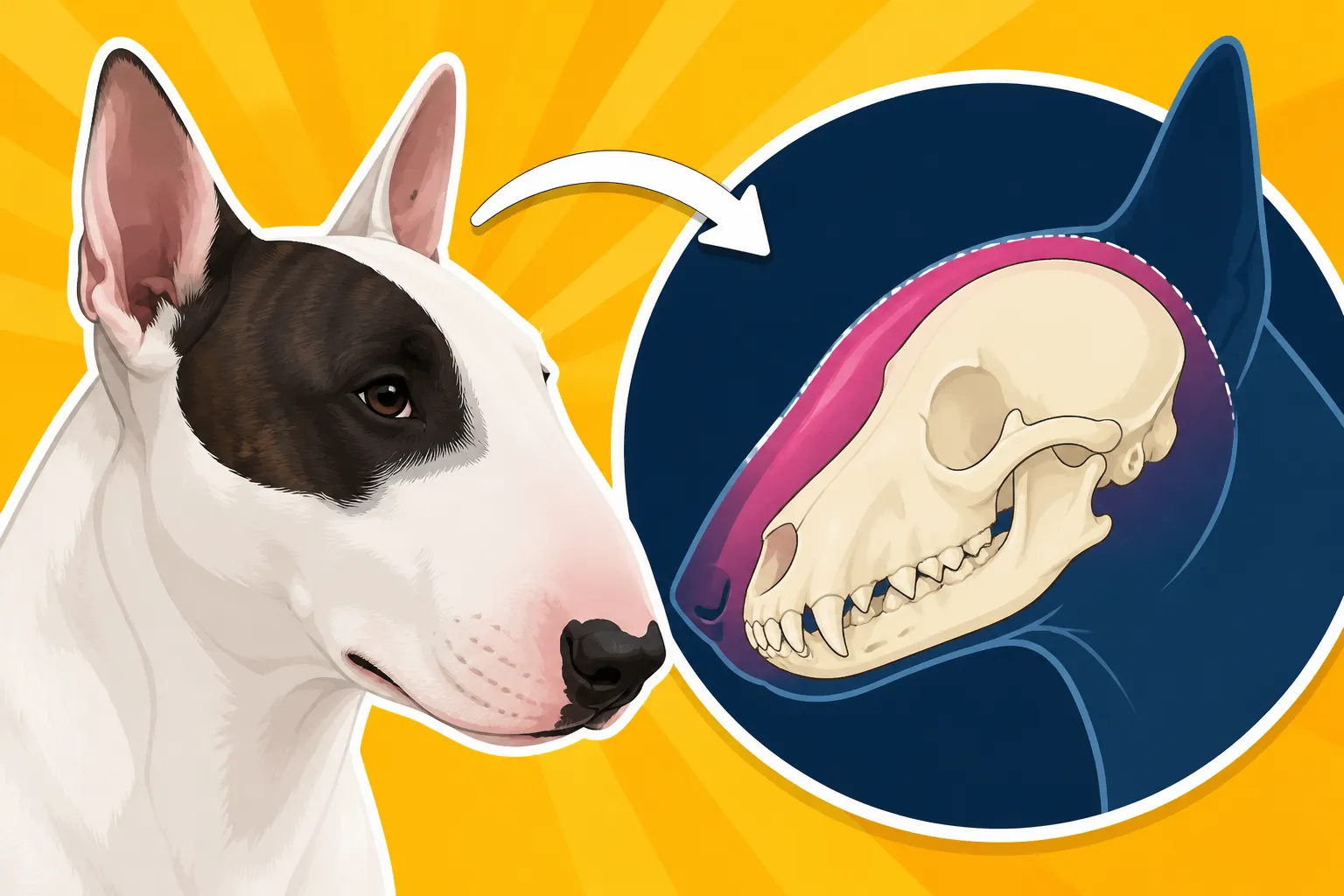
The Bull Terrier’s distinctive profile can be easy to misread. Its head is sometimes described as egg-shaped, but that does not mean the skull should look like a round ball or a smooth dome when viewed from every angle. The breed’s recognizable form comes from the relationship between the skull, the long muzzle, and the gradual curve between them.
A very pronounced stop—the indentation often visible between the forehead and muzzle in other breeds—would interrupt that smooth profile. The Bull Terrier’s head is known for having little to no visible stop. This does not mean every dog’s outline is identical. Individual heads vary, and lighting, expression, camera angle, and age can all change how prominent the curve appears.
The shape also does not mean that the dog’s skull has been physically “filled” with anything. It is not a cavity that needs to be packed out, nor is it a result of special chewing routines. The underlying form is chiefly a matter of inherited structure and normal growth. For more on the profile itself, Why a Bull Terrier Has No Stop and How the Bull Terrier's Head Changed Over Time provide useful context.
How skull shape differs from head size
A head can be large without having the breed’s characteristic outline, and a correctly shaped head does not need to be enormous. “Filled out” is not a reliable way to judge a dog’s health, quality, or future adult size. It is one piece of a broader description of breed type.
The skull is the bony structure, while the visible head also includes soft tissues and muscles. Cheek muscles can make a mature dog look broader than a lean young dog, and differences in body condition can affect the overall appearance. But a dog should not be overfed or encouraged to gain weight in an attempt to make its head look fuller. Extra body fat is not a healthy substitute for the breed’s natural structure.
A balanced assessment considers the whole dog: its movement, proportions, expression, and general condition, as well as its head. Comparing a puppy to a mature show dog can be especially misleading. Puppies are still changing, and their proportions may look awkward or unfinished for a time.
How a Bull Terrier’s head develops
Puppy growth does not happen all at once
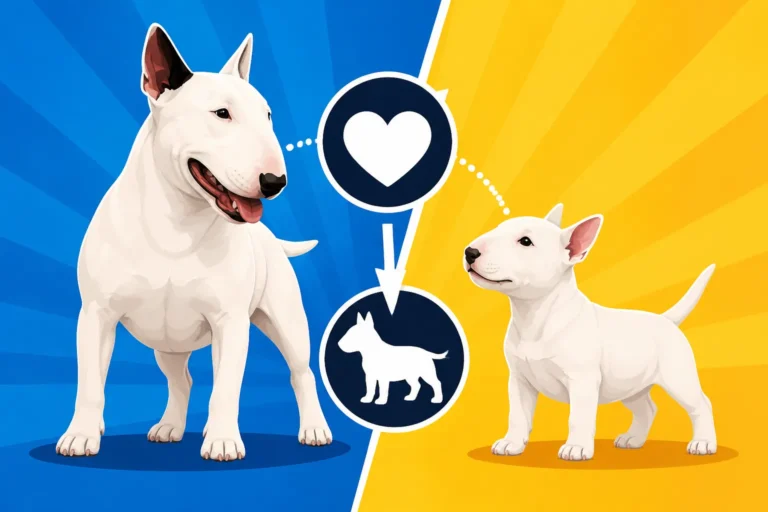
A Bull Terrier puppy’s head changes as the rest of its body grows. The puppy may go through stages when the muzzle seems long, the skull seems narrow, or the ears and eyes appear oversized in relation to the face. These temporary proportions are common in growing dogs and do not, on their own, predict what the adult head will look like.
Growth is not perfectly even from week to week. A puppy can look suddenly taller or leggier as the body changes, while the head seems to catch up later. Owners sometimes compare photos and worry that the skull has become less rounded or the muzzle more prominent. Often, they are seeing ordinary changes in proportion, not a problem with the bones.
Inherited traits influence the eventual shape, but no one can precisely forecast every detail from a single puppy photograph. If you are choosing a puppy, look at the parents and other relatives where possible, and ask the breeder to explain the family’s development and health history. The breed’s overall head shape is explored in Who Bred the First Downfaced Bull Terrier.
Adult appearance varies from dog to dog
Even among well-bred Bull Terriers, heads are not carbon copies. Some dogs have a more pronounced curve; others have a subtler profile. Age, sex, overall size, family lines, muscle development, and individual variation all contribute to what you see. A dog may also look different when relaxed than when alert, with its ears forward and facial muscles engaged.
A show-ring description is not a promise that every pet Bull Terrier will have an identical outline. Breed standards describe an ideal, while real dogs show a range of features. A difference in head shape alone does not establish that a dog is unhealthy or poorly cared for.
If you are evaluating a dog for a show or breeding program, seek guidance from an experienced breed mentor or judge who can assess the entire dog in person. If you are simply living with a pet, there is usually no need to scrutinize every curve. A comfortable dog with normal breathing, eating, and activity deserves attention as an individual, not just as a profile photograph.
Chewing cannot reshape the skull
A persistent myth is that a Bull Terrier’s head can be made broader or more “filled out” by giving it hard chews or making it work its jaw. Chewing exercises jaw muscles, but it does not safely remodel the skull into the breed’s characteristic shape. A dog’s bones develop through normal growth; trying to force a cosmetic change can risk dental injury, fractured teeth, or choking.
Choose chews for safe use, not for head shaping. A chew should be appropriate to the dog’s size and chewing style, and a person should supervise the dog. Avoid items so hard they cannot yield under pressure, and remove damaged or small pieces that could be swallowed. If you shop at Chewy, use product guidance as a starting point, then check suitability with your veterinarian, particularly for a puppy or a dog with dental concerns.
Chewy may also be a convenient place to look for ordinary dental-care supplies, such as dog toothbrushes and toothpaste, but those products maintain oral hygiene; they do not alter skull shape. A healthy, comfortable mouth matters far more than trying to change the appearance of the head.
What affects the appearance of a full head
Bone, muscle, and body condition
A Bull Terrier’s visible head is a combination of bone, muscle, skin, and other soft tissues. This is why two dogs with similar underlying skull structure can appear different in photographs. One may be more muscular through the cheeks, while another has a finer build or a different expression.
Body condition can change the face’s appearance too, but weight gain is not a sensible route to a fuller-looking head. Excess weight can put strain on a dog’s joints and affect its overall health. Instead of judging by the outline of the cheeks alone, keep an eye on the dog’s body condition and ask your veterinarian to assess whether its weight is appropriate.
A sudden change is more important than a lifelong difference. If one side of the face becomes swollen, the jaw looks uneven, or the dog develops a new lump, arrange veterinary advice. These changes are not normal ways for a skull to “fill out,” and they should not be explained away as breed type.
Coat, light, and camera angle
Short coats reveal the shape of the head clearly, but shadows can make that shape look more dramatic than it is. A side-lit photo may deepen the shadow beneath the forehead, while a low camera angle can exaggerate the muzzle or broaden the skull. A wide-angle phone lens held close to the dog can also distort proportions.
For a fair visual comparison, photograph the dog at the same distance and angle over time, in even light, with its head in a natural position. Avoid comparing a puppy’s close-up snapshot with a mature dog’s formal show photograph. They are not equivalent views.
Photos are useful for tracking change, but they cannot confirm what is happening beneath the skin. If you notice a persistent asymmetry or a change in shape, share the images with your veterinarian. They can examine the dog directly and decide whether further assessment is needed.
Genetics matters more than a special routine
The Bull Terrier’s characteristic head shape is inherited. Feeding a balanced diet supports normal growth, but no food, supplement, massage, or exercise plan can guarantee a particular head outline. Adding supplements without veterinary advice can be unnecessary or even harmful, especially when a puppy is already eating a complete diet formulated for its life stage.
Good breeding decisions focus on health and sound structure, not just an exaggerated look. If you are speaking with a breeder, ask about the parents’ health screening, the puppies’ veterinary care, and how the breeder evaluates temperament and overall conformation. A narrow focus on one dramatic feature can distract from more important questions about the dog’s lifelong wellbeing. What People Get Wrong About the Bull Terrier offers a broader look at common assumptions about the breed.
When a head shape deserves veterinary attention
Normal variation versus a new change
A naturally narrow-looking head, a subtle curve, or a puppy that has not yet developed adult proportions is not automatically a medical problem. What matters is whether the dog is behaving normally and whether its head has always looked that way. Gradual, symmetrical development is different from a new or rapidly changing swelling.
Contact a veterinarian if you notice facial swelling, pain when the dog is touched, difficulty opening or closing the mouth, trouble chewing, drooling that is new for the dog, or a sudden change in how the jaw lines up. A lump, wound, or one-sided bulge also warrants an examination. These signs may have causes unrelated to the skull’s breed shape, so an in-person assessment is the sensible next step.
Seek prompt veterinary care if the dog has trouble breathing or swallowing, severe pain, or a rapidly worsening facial change. Do not press, massage, or attempt to reshape the area while waiting for advice.
Eating and breathing are more useful clues than appearance
A Bull Terrier with a characteristic head should still be able to eat, drink, breathe, and play comfortably. If a dog drops food, chews on only one side, avoids hard or dry food, paws at its mouth, or seems uncomfortable while eating, those are practical reasons to book a veterinary check. The concern is function, not whether the skull looks full enough.
Likewise, unusual breathing noises, persistent difficulty breathing, or a sudden change in breathing should not be dismissed as a consequence of head shape. A veterinarian can look for dental, oral, airway, or other causes. Bringing short video clips of the behavior can help if the problem is intermittent.
For routine dental care, introduce handling gently and use products made for dogs. If you buy supplies through Chewy, confirm that toothpaste is specifically intended for dogs and follow your veterinarian’s advice about brushing and dental checks. Human toothpaste is not an appropriate substitute.
Questions to ask a breeder or veterinarian
If you are considering a puppy, ask the breeder how the parents’ health and structure are assessed, and whether you can meet the mother and see the puppies in their home environment. A responsible conversation should cover more than the shape of the head. Ask what veterinary checks the litter has received and what support is available if you have concerns after bringing the puppy home.
If your question is about a dog you already own, describe what changed and when. Note whether the change is on one side or both, whether it is painful, and whether eating or breathing has been affected. Clear photos taken from the front and side can help illustrate the concern, but they do not replace an examination.
| What you notice | What it may mean | Sensible next step |
|---|---|---|
| A lifelong, even head shape that differs from another Bull Terrier | Normal individual variation may be involved | Ask a breeder or breed mentor about conformation if you are curious |
| A puppy whose proportions seem to change as it grows | Ordinary growth may affect appearance | Track development without trying to alter it |
| A new lump, swelling, or one-sided change | A problem unrelated to normal skull shape may be present | Arrange veterinary assessment |
| Difficulty chewing, mouth pain, or a changed bite | Dental or oral discomfort may need attention | Contact your veterinarian |
| Trouble breathing or swallowing | A potentially urgent functional problem | Seek prompt veterinary care |
The phrase “filled out” is best understood as a description of the Bull Terrier’s smoothly connected skull and muzzle, not a goal that owners should try to create. Genetics and normal growth shape the head; safe care means supporting the dog’s health, protecting its teeth, and asking a veterinarian about sudden changes or problems with eating and breathing.
Disclaimer
This article is for general informational purposes only and does not constitute professional advice. Laws, prices and regulations vary by location and change over time. Consult a qualified professional for guidance on your specific situation.