How Hinks Made the Bull Terrier Coat White
Many Bull Terrier enthusiasts, myself included, often marvel at the breed's striking white coat, wondering about its origins. It's a hallmark of the breed, a defining feature that sets it apart, but it wasn't just a happy accident. Achieving that pristine "White Cavalier" look was a deliberate and challenging undertaking by the breed's creator, James Hinks, and understanding how he did it offers a fascinating glimpse into the very foundations of our beloved Bull Terriers. This guide will explore the meticulous breeding strategies and historical context behind the Bull Terrier's iconic white coat.
The Vision of James Hinks: Purity and a New Ideal
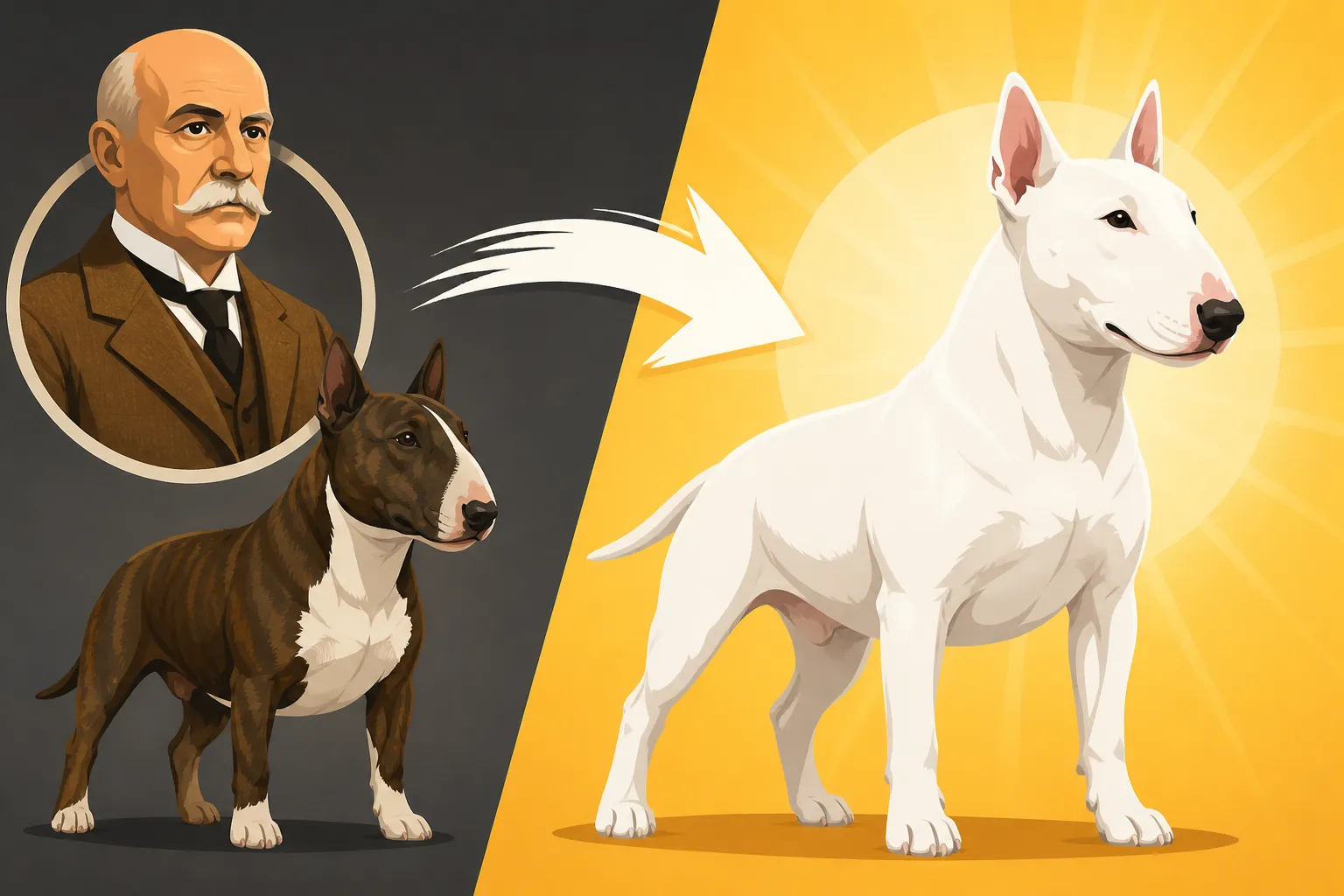
James Hinks, a dog dealer from Birmingham in the 1860s, wasn't just breeding dogs; he was crafting a vision. He saw beyond the rough-and-tumble "bull and terrier" types of his day, dogs primarily bred for fighting pits, and envisioned something nobler, more refined, and aesthetically pleasing. His ambition was to create a dog of impeccable courage and spirit, yes, but one that was also strikingly beautiful and distinctive. This desire for a truly unique appearance led him down the path of developing the all-white Bull Terrier.
Hinks sought to produce a dog that embodied strength without overt aggression, a true gentleman's companion. The all-white coat was a symbol of this purity and elegance, distinguishing his creations from the often parti-colored or brindle dogs that were common in the earlier "bull and terrier" crosses. It wasn't merely about color; it was about elevating the breed's status and making a clear statement about its new purpose and identity. This aspiration to create the "White Cavalier" was a driving force, as you can read more about in The White Cavalier: Why the Bull Terrier Never Started Fights.
The Prevailing Dogs of the Era
To understand Hinks's innovation, we need to look at the canine landscape he started with. The foundational dogs for what would become the Bull Terrier were primarily the Old English Bulldog and various terrier types. These were sturdy, tenacious working dogs, often with a mix of colors – brindles, reds, fawns, and pieds (white with colored patches). They were bred for function, with appearance often a secondary consideration.
The Old English Bulldog, while possessing immense strength and courage, was a far cry from the sleek, elegant Bull Terrier Hinks envisioned. These dogs were heavier, lower to the ground, and came in a variety of robust colors. Their temperament, while brave, was also often geared towards the harsh realities of their original roles. Hinks took this raw material and began to reshape it, literally and figuratively, aiming for a dog that retained the bulldog's heart but gained a terrier's agility and a distinct, refined appearance.
The Role of the English White Terrier
Crucial to Hinks's quest for an all-white coat was the English White Terrier. This now extinct breed was itself an offshoot of various old white terriers, bred for their pristine white appearance and often used as ratters. While not possessing the robust head or powerful build of the Old English Bulldog, the English White Terrier was, as its name suggests, consistently white. It offered Hinks the genetic material he needed to achieve his desired coat color.
By carefully integrating the English White Terrier into his breeding program, Hinks introduced the genes responsible for an unblemished white coat. This wasn't a simple cross-breeding; it was a sophisticated process of selection, breeding individuals that not only possessed the desired white color but also contributed to the overall conformation and temperament Hinks was striving for. The English White Terrier played a pivotal role in imbuing the emerging Bull Terrier with that signature snowy appearance, a trait that would soon become its most recognizable feature. You can learn more about the historical background of the breed in Where the Bull Terrier Comes From.
Hinks's Meticulous Breeding Strategy
James Hinks was a true master of selective breeding, meticulously pairing dogs to achieve his specific goals. His process wasn't just about throwing two dogs together; it was a carefully considered plan, almost like an artist mixing colors to achieve a perfect shade. He understood the nuances of heredity, even if the scientific understanding of genetics was still in its infancy. His primary focus, beyond temperament and conformation, was establishing and fixing the all-white coat.
He sought out the whitest individuals from his existing stock and continually bred them together, ruthlessly culling any puppies that displayed significant colored markings. This intense selection pressure for a pure white coat was the cornerstone of his strategy. It meant that even if a litter had a few colored pups, only those that met the strict white standard would be considered for future breeding, ensuring the trait was carried forward and intensified with each generation. This kind of dedication to a specific aesthetic was revolutionary for the time.
Introducing the Dalmatian Influence
While the Old English Bulldog provided the strength and the English White Terrier contributed the white coat, Hinks is also widely believed to have introduced another breed to perfect his creation: the Dalmatian. The Dalmatian brought a certain elegance, athleticism, and a distinct lack of heavy-set features that Hinks found desirable. More importantly, Dalmatians are often white with distinct spots, and the introduction of these genes might have further refined the 'whiteness' and even contributed to the sleek, clean lines of the emerging Bull Terrier.
The Dalmatian influence wasn't just about color; it also contributed to the Bull Terrier's unique head shape, particularly the "downface" or "Roman finish" that would become characteristic. However, in the context of color, the Dalmatian's genes for white were undoubtedly valuable. By incorporating this breed, Hinks was essentially refining the genetic pool, ensuring that the desired traits, including the pristine white coat, became more consistent and less prone to throwbacks to earlier, more heavily marked ancestors. It was a complex genetic puzzle, but Hinks clearly had a clear image of the final picture in his mind.
The Genetic Push for Purity
The push for an all-white coat was, at its heart, a genetic endeavor. Hinks was effectively selecting for specific alleles that resulted in the absence of pigment in the coat. This is often achieved through genes that inhibit melanin production in the fur, creating a white appearance. What Hinks might not have known, however, were the unintended consequences of such intense selection for white. Certain genes responsible for white coats are often linked to other traits, some of which can be problematic.
The sustained breeding of white-to-white over generations drastically increased the probability of all-white offspring. It was a testament to his understanding of animal husbandry and careful observation of his breeding lines. This persistent dedication to "purity" of color meant that within a few generations, the distinctive all-white Bull Terrier was established, standing out dramatically from its more variegated ancestors. Why Hinks Wanted an All White Dog elaborates on his motivations for this genetic pursuit.
Unintended Consequences of the White Coat
While Hinks successfully created his iconic "White Cavalier," the intense focus on achieving an all-white coat wasn't without its challenges, particularly regarding the health of the breed. Early breeders, and even Hinks himself, likely encountered issues that, with our modern understanding of genetics, we can now attribute directly to the gene responsible for the white coat. It's a classic example of how selecting for one aesthetic trait can inadvertently bring along others.
One of the most significant and heartbreaking issues linked to the all-white coat in Bull Terriers is deafness. The gene that causes the absence of pigment in the coat can, in some cases, also affect the development of the cochlea, the hearing organ in the inner ear. This can lead to unilateral (one ear) or bilateral (both ears) deafness. It's a heavy price that many beautiful white Bull Terriers have paid, and it’s a reality that breeders and owners must still contend with today.
The Link to Deafness
The connection between white coat color and deafness is well-documented across several breeds, including Dalmatians, white Boxers, and, of course, Bull Terriers. It's not the white color itself that causes deafness, but rather a gene that interferes with the migration and survival of melanocytes (pigment-producing cells) in the inner ear. If these cells are absent or dysfunctional in the cochlea, the dog cannot hear.
For Bull Terriers, particularly white ones, this means a higher incidence of congenital deafness compared to their colored counterparts. This issue was likely present in Hinks's early white Bull Terriers, though without formal diagnostic tools like the BAER test, it would have been harder to identify and quantify. Breeders now understand the importance of testing puppies, as discussed in How Many White Bull Terriers Are Born Deaf and Why a White Bull Terrier Should Be BAER Tested, to identify affected individuals early and make informed decisions about breeding lines. Reputable breeders will always conduct BAER (Brainstem Auditory Evoked Response) testing on their entire litter before placing puppies.
Other Health Considerations
Beyond deafness, the strong emphasis on white coats in early Bull Terriers also led to an increased predisposition to certain skin issues. White-coated dogs often have pink skin underneath their fur, which is more susceptible to sunburn and irritation. This was likely a concern even in Hinks's time, as dogs spent more time outdoors and in working roles. While not as life-altering as deafness, skin sensitivities required careful management from early owners.
These issues highlight the delicate balance in breeding for specific traits. While Hinks achieved his aesthetic ideal, the genetic cost became apparent over time. Modern breeders now strive to breed healthy dogs first, even as they work to maintain the distinctive appearance that Hinks pioneered. Companies like Chewy offer a wide range of sensitive skin shampoos and sun protection products specifically for dogs with delicate skin, helping today's white Bull Terrier owners manage these historical genetic legacies.
The Evolution of the Colored Bull Terrier
Initially, Hinks's ideal was the pure white Bull Terrier, and for a significant period, these were the only ones truly recognized and valued. However, as breeders continued to work with the lines, colored puppies would inevitably appear in litters, even from white parents, as the genes for color could still be carried recessively. These colored Bull Terriers were often overlooked or even culled in the early days, not fitting the "White Cavalier" ideal. Whether Only White Bull Terriers Were Shown at First delves into this period.
Over time, however, attitudes began to shift. Breeders realized that these colored variations often possessed excellent health and temperament, and by incorporating them into breeding programs, they could broaden the gene pool and potentially reduce the incidence of certain health issues associated with exclusive white breeding. This led to a gradual acceptance and eventual recognition of colored Bull Terriers, creating the diverse spectrum of colors we see in the breed today, from brindle to tricolor. It was a pragmatic step that ensured the long-term health and vitality of the breed, building upon Hinks's original foundation but adapting it for the future.
Modern Breeding and the White Bull Terrier Legacy
Today, the legacy of James Hinks's dedication to the white coat lives on, but with a far greater understanding of responsible breeding practices. While the striking white Bull Terrier remains incredibly popular, breeders are now armed with scientific knowledge and diagnostic tools to mitigate some of the challenges that came with that early pursuit of purity. The goal is no longer just a beautiful white coat, but a beautiful and healthy white coat.
Modern Bull Terrier breeders emphasize health testing as a paramount concern. BAER testing for deafness is standard practice, allowing breeders to identify puppies affected by the white-linked gene. This information is crucial for placing deaf puppies in appropriate homes with owners who understand their special needs, and for informing future breeding decisions. Genetic diversity is also a key consideration, ensuring that the breed remains robust and resilient against hereditary conditions. You can research what What a Bull Terrier Breeder Should Have Tested entails before acquiring a puppy.
Health Testing and Responsible Breeding
Responsible Bull Terrier breeders understand that a truly exceptional dog encompasses both form and function, beauty and health. They actively participate in health screening programs, not just for deafness, but for other hereditary conditions common in the breed, such as heart and kidney issues. This commitment ensures that while the iconic white coat endures, it does so within a framework of ethical and health-conscious breeding.
For prospective Bull Terrier owners, choosing a breeder who prioritizes health testing is non-negotiable. They will openly share BAER test results for entire litters, along with other health clearances for the parents. This transparency is a hallmark of a breeder who is dedicated to the well-being of the breed as a whole, honoring Hinks's vision by producing sound dogs for future generations. When you're looking for dog supplies or even specific sensitive-diet foods, stores like Chewy are excellent resources for finding products recommended by reputable breeders and vets.
Appreciating the White Bull Terrier Today
Despite the historical challenges, the white Bull Terrier continues to captivate hearts with its unique appearance and charming personality. Owners of white Bull Terriers learn to embrace their dog's individual quirks, including managing skin sensitivities or adapting to deafness, if present. They understand that the beauty of the white coat is part of a rich history, a deliberate creation that speaks to the ingenuity and vision of James Hinks.
From a practical standpoint, caring for a white Bull Terrier involves a bit more mindfulness. Protecting their pink skin from sunburn with dog-safe sunscreen or protective clothing is important, especially for those who love to bask in the sun. Regular skin checks, as detailed in A Bull Terrier's Skin Is Its Weakest Point, are crucial to catch any issues early. These small considerations are a small price to pay for the joy and companionship these magnificent "White Cavaliers" bring into our lives, a testament to Hinks's enduring legacy.
| Aspect of White Coat | Hinks's Era (1860s) | Modern Era (Today) |
|---|---|---|
| Primary Goal | Aesthetic purity, "White Cavalier" ideal | Aesthetic appeal, combined with health and temperament |
| Breeding Method | Intense selective breeding of white-to-white, culling colored pups | Selective breeding, prioritizing health test results (e.g., BAER) |
| Key Influences | English White Terrier, Dalmatian, Old English Bulldog | Diversified gene pool, includes colored lines for health |
| Deafness | Present, but often undiagnosed or poorly understood | Identified early via BAER testing, managed responsibly |
| Skin Issues | Present, managed empirically | Better understood, managed with specific products (e.g., sunscreen, sensitive shampoos from Chewy) |
| Genetic Knowledge | Observational, empirical | Scientific, DNA-based, understanding of gene linkages |
Disclaimer
This article is for general informational purposes only and does not constitute professional advice. Laws, prices and regulations vary by location and change over time. Consult a qualified professional for guidance on your specific situation.