Whether a Bull Terrier Is a One Person Dog
Many Bull Terrier owners worry if their beloved clown will only ever truly bond with one person, leaving others feeling left out or ignored. It's a valid concern, especially if you have a family or want your dog to be comfortable and affectionate with various people. This guide dives deep into the reality of Bull Terrier bonding, exploring whether they truly are 'one-person dogs' and how to foster strong connections with everyone in the household.
Unpacking the Bull Terrier's Unique Bonding Style
The reputation of the Bull Terrier as a "one-person dog" often stems from their intense loyalty and focused affection once they've chosen their primary human. However, this doesn't mean they are incapable of forming deep, meaningful bonds with multiple family members. It's more about the depth and intensity of their primary attachment, combined with their sometimes discerning nature. They aren't aloof, but they are certainly particular.
The Myth of Exclusive Affection
Let's get one thing straight: a Bull Terrier is rarely truly a "one-person dog" in the sense that they will ignore or dislike everyone else. Their affection, when given, is usually robust and undeniable. However, they do tend to gravitate towards the person who provides the most consistent care, training, and positive interaction. This person often becomes their sun, moon, and stars, and it's a bond that is truly special. They might follow this chosen person from room to room, leaning on them, seeking constant reassurance, and offering their silly antics. This deep attachment is part of what makes them such compelling companions, but it can sometimes be misinterpreted as exclusivity.
It's important to differentiate between a preference and an exclusion. A Bull Terrier might have a clear favorite, but they typically still show warmth and engage with others. They might just reserve their most enthusiastic greetings or their deepest cuddles for that one special human. Think of it like a child who loves all their relatives but has a particular adoration for Grandma because she always has cookies. The other relatives aren't disliked; Grandma just has a special place. For an insight into their overall personality, you might want to read about What a Bull Terrier's Temperament Is Really Like.
Early Socialization and Lasting Impressions
The foundation of a Bull Terrier's ability to bond widely is laid during their puppyhood. Proper, consistent socialization from a young age is absolutely crucial. This means exposing them to a variety of people – men, women, children, people in hats, people with umbrellas, people of different builds and voices – in positive, controlled ways. If a Bull Terrier puppy primarily interacts with one person during their formative weeks and months, it's far more likely they will develop a strong, almost singular focus on that individual.
Think about a puppy who only ever gets fed, walked, and played with by one adult. Naturally, that adult becomes the center of their universe. This isn't necessarily a bad thing, but it does contribute to the "one-person dog" perception. If, however, multiple family members are involved in feeding, training sessions, and playtime, the puppy learns to associate positive experiences with a broader range of individuals. This early exposure helps them generalize their trust and affection. This is key to building a well-adjusted dog who enjoys the company of the whole family, even if they still have a cherished favorite. You can learn more about how they express affection in How Physically Affectionate a Bull Terrier Is.
Factors Influencing a Bull Terrier's Preferred Person
While early experiences are vital, several ongoing factors contribute to why a Bull Terrier might favor one person over others. It's rarely a conscious choice on their part to exclude, but rather a natural response to patterns of interaction, consistency, and perceived value.
The Role of the Primary Caregiver
Often, the person who handles the most consistent daily care becomes the Bull Terrier's primary attachment. This includes feeding, walking, managing potty breaks, and being the go-to for comfort and attention. If one family member is consistently the one to fill the food bowl, initiate walks, and offer the most engaging playtime, it makes perfect sense that the Bull Terrier would view them as the ultimate provider and protector. For instance, in a household where one partner works from home and takes on most of the dog-related duties, while the other is out all day, the dog will almost certainly develop a stronger bond with the stay-at-home partner.
It's not just about the basics, either. It's about being present and responsive. If your Bull Terrier comes to you for comfort when they're scared, or if you're the one who always knows how to get them interested in a game, that builds a powerful connection. They learn to trust and rely on that individual above all others. This is why Why a Bull Terrier Follows You Everywhere is such a common observation among Bull Terrier owners – they simply want to be near their favored human.
Consistency in Training and Positive Reinforcement
Bull Terriers are intelligent, but also famously stubborn. They respond incredibly well to consistent, positive reinforcement training. If one person is primarily responsible for their training, using clear cues, rewarding desired behaviors, and making the process enjoyable, that person will quickly become a highly respected and cherished figure in the dog's life. Think about it: if every time your dog sits for you, they get a delicious treat and enthusiastic praise, but with another family member, the rewards are inconsistent or the requests less clear, it's obvious who they'll prioritize listening to.
Online training platforms, such as BAXTER & Bella, can provide structure and consistency that can be shared across family members, ensuring everyone is on the same page with cues and rewards. This helps prevent confusion for your Bull Terrier and reinforces the idea that all humans are sources of good things and clear communication. If you're teaching your Bull Terrier to Teaching a Bull Terrier to Sit and Stay, having everyone use the same method will strengthen the bond and the behavior. This consistency doesn't just build good manners; it builds trust and respect.
Individual Personality and Life Experiences
Just like people, every Bull Terrier has a unique personality. Some are naturally more outgoing and eager to please, while others can be a bit more reserved or discerning about who they give their full trust to. A Bull Terrier who had limited exposure to different people in puppyhood, or one who experienced negative interactions, might be slower to warm up to new individuals or might cling more tightly to the person who helped them feel safe. Rescue Bull Terriers, for example, might come with past experiences that shape their bonding patterns.
Even within the same litter, you'll find variations. One puppy might be a social butterfly, loving everyone equally, while another might be a bit more selective. These inherent personality traits, combined with their life experiences, play a significant role in how widely they distribute their affection. It's important to respect your individual Bull Terrier's comfort levels and never force interactions, allowing them to build trust at their own pace.
Strategies for Fostering Family Bonds
If you're noticing your Bull Terrier gravitating heavily towards one person, or if you simply want to ensure they're well-bonded with everyone in your household, there are plenty of proactive steps you can take. The key is consistent, positive, and varied interaction.
Sharing Responsibilities and Training Duties
The most effective way to encourage multi-person bonding is to ensure that all family members are actively involved in your Bull Terrier's daily life. This means distributing responsibilities like feeding, walking, grooming, and training.
Here’s a breakdown of how different family members can contribute:
| Family Member Role | Key Responsibilities | Bonding Impact |
|---|---|---|
| Primary Feeder | Consistent meal times, positive association with food. | Dog associates them with primary resource, survival. |
| Daily Walker | Providing exercise, exploring new scents, leash training. | Dog views them as leader for adventure, energy outlet. |
| Playmate/Trainer | Engaging games, consistent training sessions (5-10 min). | Dog sees them as fun, source of mental stimulation and guidance. |
| Groomer/Cuddler | Brushing, ear checks, quiet cuddle time. | Dog associates them with comfort, gentle touch, security. |
| Treat Dispenser | Offering high-value rewards for good behavior. | Dog sees them as a generous, positive presence. |
If you have children, even simple tasks like holding the leash during a short, supervised walk or helping to measure out food can build connections. For young children, it's essential to teach them How to Teach a Child to Play With a Bull Terrier appropriately and supervise all interactions closely. Remember, dogs learn by association, and positive experiences with each person build a stronger, more generalized bond.
Quality Time with Each Family Member
Beyond basic care, dedicate specific "quality time" where each family member engages with the Bull Terrier individually. This doesn't have to be long, elaborate sessions. Even 10-15 minutes of focused attention can make a huge difference. This could be:
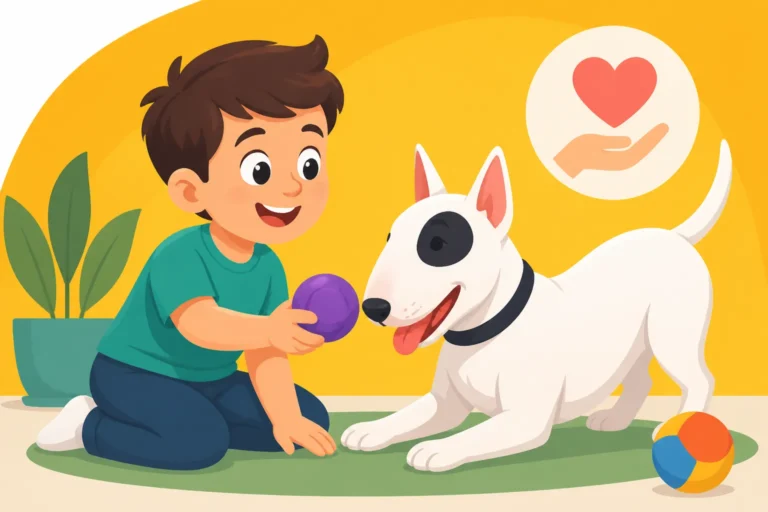
- One-on-one playtime: Fetch in the yard, a game of tug-of-war (with rules, of course!), or hide-and-seek with treats.
- Training sessions: Short, fun sessions where different family members work on commands like sit, stay, or come. This reinforces that everyone can be a source of positive direction and rewards.
- Quiet cuddle time: For many Bull Terriers, a gentle scratch behind the ears or a quiet moment on the couch is pure bliss. Different family members can take turns offering this calm, affectionate contact.
- Enrichment activities: Puzzle toys or chew sessions. If different family members are the ones to provide these engaging activities, it helps your Bull Terrier see them all as valued members of their "pack." Many fantastic enrichment toys and tools can be found on platforms like Amazon, offering a wide variety to keep their minds busy.
Consistency in these positive interactions from everyone helps your Bull Terrier learn that all humans in their home are valuable, loving, and trustworthy.
Creating Positive Associations
The goal is to make every family member a source of good things. This involves more than just treats.
- Designated "good things" people: One person might always be the one to give the favorite chew toy, another the person who initiates a game of fetch, and another the one who delivers a special, high-value treat.
- Controlled greetings: Ensure that all family members greet the Bull Terrier calmly and positively. Overly excitable or rough greetings can sometimes be overwhelming, especially for a puppy.
- Shared experiences: Family outings, like trips to a dog-friendly park or a quiet hike, can be powerful bonding experiences for everyone involved. If everyone is part of these fun adventures, it reinforces their place in the Bull Terrier's world.
- "Nothing in life is free" with everyone: Implement a "learn to earn" program where the Bull Terrier has to do a simple command (sit, down) for everything they want – food, going outside, getting a pat. Ensuring everyone in the family consistently uses this approach will strengthen every bond and reinforce manners. This also helps with issues like Living With a Bull Terrier That Body Slams You for Fun.
Ultimately, while a Bull Terrier might have a favorite, their capacity for love and loyalty extends far beyond a single individual. With intentional effort, shared responsibilities, and consistent positive interactions, your Bull Terrier can truly be a cherished and devoted member of the entire family. They are, after all, renowned for their incredible personalities and capacity for affection.
Disclaimer
This article is for general informational purposes only and does not constitute professional advice. Laws, prices and regulations vary by location and change over time. Consult a qualified professional for guidance on your specific situation.