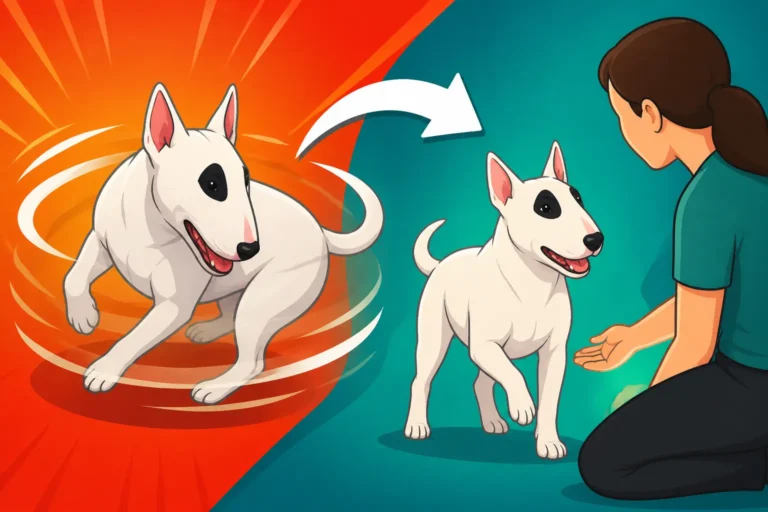
How Smart a Bull Terrier Really Is
Many Bull Terrier owners, myself included, have stood in the middle of a room, utterly baffled by our seemingly obtuse dog, only to watch them moments later figure out a complex latch or outwit us for a dropped treat. It's a common frustration that makes you wonder: just how smart is this goofy, egg-headed companion? This guide will dive deep into the unique intelligence of the Bull Terrier, unraveling the mystery behind their often-misunderstood cleverness and offering insights into how to work with their very particular brand of brilliance.
Understanding the Bull Terrier Brain: More Than Just 'Stubborn'
The common lament among Bull Terrier owners, or those who’ve tried to train one, is that they are "stubborn." It’s a label that gets tossed around so casually it almost feels like part of their breed standard. But is it truly stubbornness, or are we perhaps misinterpreting a profound, independent intelligence at play? It’s not that a Bull Terrier can’t learn; it’s often that they choose not to, or they have an entirely different, arguably more interesting, idea of how things should go. This isn't about rote learning or eager compliance; it's about a dog with a robust sense of self and an agenda all their own.
The Independent Thinker vs. The Eager-to-Please
Most people envision a "smart" dog as one that performs tricks on cue, fetches tirelessly, and always looks to its owner for direction. Think of those Border Collies or Golden Retrievers, practically begging to be given a job, soaking up every command like a sponge. They thrive on pleasing their human, and their intelligence often manifests as an eagerness to comply and excel in traditional obedience.
A Bull Terrier, however, operates on a different wavelength. They possess a powerful independent streak, a legacy of their heritage, that makes them less inclined to blindly follow orders. If they don't see the immediate benefit or logic in a command, they might just stare at you with those deep-set, triangular eyes, politely declining to participate. This isn't a lack of comprehension; it's a deliberate choice. You might ask your Bull Terrier to "sit," and they know exactly what that means. They simply might be thinking, "Why should I? I'm comfortable standing here, and you don't have that particularly tasty piece of cheese in your hand right now." This independent thinking can be incredibly frustrating for owners accustomed to more biddable breeds, but it’s a testament to their own internal processing. They don’t just react; they evaluate. It's a distinct form of intelligence, requiring a different approach from their human companions.
Problem-Solving Prowess and Canine Shenanigans
If you ever doubt a Bull Terrier's intelligence, just watch them when they really want something. That's when their problem-solving skills truly shine. These aren't dogs that wait patiently for you to open the treat cabinet; they're the ones who will systematically try every knob, lever, and hinge until they figure it out. I've known Bull Terriers who could unlatch crates, open child-proof gates, and even manipulate their bowls to make more noise until they got fed. They learn patterns quickly, not just in terms of commands, but in terms of cause and effect in their environment.
For instance, if your Bull Terrier sees you hide a favorite toy under a blanket, they won't just stand there barking. They'll use their nose, their paws, and their formidable head to burrow, nudge, and flip until they uncover their treasure. This isn't random flailing; it's often a calculated sequence of actions based on previous observations. They understand spatial relationships, leverage, and persistence. This kind of intelligence means they absolutely need a job, or they'll invent one – usually one that involves redecorating your sofa or investigating the contents of your trash bin. Providing them with appropriate outlets for their keen minds, such as puzzle toys or scent work, is crucial to channeling this ingenious energy productively. Without sufficient mental engagement, their problem-solving can quickly devolve into destructive behaviors that test the patience of even the most dedicated owner.
Training a Bull Terrier: It's All About Motivation (and Patience!)
Training a Bull Terrier isn't like training other dogs. You can't just repeat a command a hundred times and expect them to fall in line out of sheer desire to please. Their intelligence demands respect, creativity, and a deep understanding of what makes them tick. It’s a dance of wits, where you’re constantly trying to be one step ahead of their independent spirit. The good news is, once you crack their code, they are absolutely capable of learning and excelling. It just might not look like the traditional obedience training you're used to seeing.
Finding Their "Why": High-Value Rewards and Play
Forget dry kibble and a pat on the head for a Bull Terrier. To truly motivate these clever canines, you need to bring out the big guns: high-value rewards that speak directly to their desires. For some, it's a tiny piece of real cheese or cooked chicken. For others, it's a specific, squeaky toy that they absolutely adore. And for many, it's an exhilarating game of tug or a quick sprint in the yard. The key is to discover Which Reward Outranks a Bull Terrier's Own Idea. Their intelligence makes them discerning; they weigh the value of the reward against the effort required to perform the task. If the scales tip in favor of lounging, you're out of luck.
Incorporating play into training isn't just a fun bonus; it's often the most effective tool. Bull Terriers have a playful, clownish nature, and they respond incredibly well to training that feels like a game rather than a chore. Whether it's chasing a flirt pole as a reward for a perfect recall or a vigorous game of fetch after a loose-leash walk, making training enjoyable will unlock their cooperation. Brands like Amazon offer a huge variety of durable toys that might become your Bull Terrier's ultimate motivation, from heavy-duty rubber chew toys to puzzle feeders. Experiment to find what truly excites your specific dog, because what works for one Bull Terrier might be completely ignored by another.
The Importance of Short, Engaging Sessions
A Bull Terrier’s attention span isn't endless. In fact, if you try to drag out a training session, you'll likely find yourself talking to a dog that has suddenly developed an intense interest in a dust bunny on the floor or has simply decided to wander off. Their minds are active and inquisitive, but they also get bored easily by repetition. This is where the concept of How Many Reps a Bull Terrier Gives You comes into play – often, it's not many. You might get three or four solid repetitions before they "quit."
The solution is short, frequent, and highly engaging training sessions. Think five to ten minutes, packed with energy, variety, and plenty of rewards. Keep it fun, keep it positive, and always end on a high note. This might mean practicing "sit" twice, then doing a quick recall game, then working on "stay" once, and finishing with a beloved toy. By breaking up training into digestible chunks, you keep their minds stimulated without allowing boredom to set in. This also helps prevent them from shutting down under pressure, which is a very real response for sensitive, independent thinkers like Bull Terriers. Online training platforms, like BAXTER & Bella, can be invaluable here, offering structured lessons that emphasize positive reinforcement and cater to a dog's natural learning pace, helping owners develop strategies for these unique learners.
The Social and Emotional Intelligence of a Bull Terrier
While their independent nature might sometimes make them seem aloof or purely self-interested, Bull Terriers possess a deep well of social and emotional intelligence. They are incredibly attuned to their human companions, often far more than their stoic expressions let on. This isn't just about reading body language; it's about understanding the subtle cues of human emotion and responding in ways that demonstrate a complex internal world.
Reading Their People and Situations
Bull Terriers are masters at reading their people. They pick up on moods, stress, and happiness with remarkable accuracy. If you're having a bad day, your Bull Terrier might be the one quietly leaning against your leg, offering silent comfort. If you're excited, they'll often mirror that energy with their characteristic joyful exuberance, sometimes even body-slamming you in an attempt to join the fun. How Sensitive a Bull Terrier Is to Tone is truly remarkable; a sharp word can make them visibly deflate, even if they were just minutes ago "ignoring" a command. They understand more than we give them credit for.
They also excel at reading situations. They can tell the difference between a playful wrestling match with a family member and a genuine threat. They sense when you're about to leave the house, often positioning themselves strategically by the door or giving you "the look." This awareness isn't just instinct; it's a learned intelligence based on observation and association. They learn routines, anticipating your next move, which is why Why a Bull Terrier Follows You Everywhere is so common – they want to be part of the action, or at least know what the action is. This emotional intelligence means they thrive in environments where they are truly integrated into the family, rather than left alone to figure things out for themselves.
Adapting to Family Life and Home Dynamics
Integrating into a human family requires a significant amount of emotional and social intelligence, and Bull Terriers do this with a unique blend of devotion and cheekiness. They learn the household rules – and then they figure out how far they can push them. They know which family member is more likely to give in to their pleas for an extra treat, and which one means business. This isn't just cunning; it's an understanding of hierarchical dynamics and individual personalities.
They adapt to routines with a surprising consistency, particularly when it involves food or walks. They’ll learn the sound of your car, the jingle of your keys, or the time of day their favorite human usually wakes up. This adaptation extends to children, too, often forming incredibly strong bonds and becoming patient, albeit sometimes clumsy, playmates. Their ability to integrate and bond so deeply, despite their independent streak, speaks volumes about their capacity for complex relationships. It also showcases their intelligence in navigating the intricacies of a human household, understanding who's who, what's allowed, and how best to get what they want.
Common Misconceptions About Bull Terrier Intelligence
It’s easy to dismiss a Bull Terrier as "not very smart" when they don't conform to our preconceived notions of canine intelligence. This often leads to frustration for owners and an underestimation of the dog's true capabilities. However, by reframing our understanding, we can begin to appreciate the distinct brilliance that defines this incredible breed.
"They're Just Stubborn": Re-framing Resistance as Independent Thought
The "stubborn" label truly dogs the Bull Terrier, but it's often a misinterpretation of a highly intelligent, independent mind at work. When a Bull Terrier "refuses" a command, it's rarely because they don't understand it. More often, it's because they've weighed the pros and cons in their own Bull Terrier brain and decided there are more interesting or rewarding things to do. They possess a deep sense of self-preservation and a robust internal compass. How Stubborn a Bull Terrier Is is often directly proportional to how little they perceive the value of your request.
Consider this: you ask your Bull Terrier to sit. They know what "sit" means. But they also know that the squirrel just ran across the yard, or that your attention is currently focused on them, giving them an opening to try and get that toy they've been eyeing. Their intelligence allows them to prioritize their desires over your request, especially if your request isn't backed by irresistible motivation. This isn't a lack of smarts; it's a demonstration of complex decision-making and a strong will. Understanding this distinction is vital for training. It means you need to be more compelling, more creative, and more consistent than your Bull Terrier's independent spirit. It’s also why Why a Bull Terrier Decides a Cue Is Optional is a question many owners ponder daily.
Beyond Obedience: Showcasing Different Kinds of Smart
If we only measure intelligence by a dog's ability to perform traditional obedience, then many breeds would fall short, and the Bull Terrier might not top the list. But intelligence comes in many forms. Bull Terriers excel in areas often overlooked:
- Emotional Intelligence: As discussed, their ability to read and respond to human emotions is profound. They can be incredibly empathetic, offering comfort when you're sad, or joining in your joy with unbridled enthusiasm. Whether a Bull Terrier Is a One Person Dog often comes down to their deep emotional bonding with a chosen human, showing a loyalty that requires significant relational intelligence.
- Problem-Solving & Cunning: Their knack for figuring out how to get into mischief, open doors, or manipulate situations to their advantage demonstrates high cognitive ability. This isn't just brute force; it's strategic thinking.
- Adaptability: Despite their strong personalities, they adapt remarkably well to different living situations, as long as they are with their people and receive consistent attention and exercise. This includes adjusting to new routines, new homes, and even new family members.
- Memory: They have excellent long-term memory, especially when it comes to people, places, and pleasurable experiences. Try forgetting their favorite walk route or the person who gives the best treats; they certainly won't!
A Bull Terrier’s smarts isn't about being the fastest to learn a hundred tricks for a competition. It’s about being uniquely clever, possessing a profound emotional depth, and having an independent spirit that, while challenging, is ultimately part of their charm. They might not always do what you ask, but they almost always know why you're asking, and they've probably already considered three alternatives. Appreciating How Short a Bull Terrier's Training Session Has to Be and adapting your approach will unlock their true potential, revealing a deeply intelligent and endlessly entertaining companion.
| Type of Intelligence | How a Bull Terrier Manifests It | Implications for Owners |
|---|---|---|
| Independent Thought | Evaluates commands, often chooses not to comply without clear incentive. | Requires high-value rewards and compelling motivation. |
| Problem-Solving | Figures out latches, opens doors, finds hidden treats. | Needs secure containment and stimulating puzzle toys/jobs to do. |
| Emotional IQ | Reads human moods, offers comfort, reacts to tone. | Sensitive to harsh corrections; thrives on positive reinforcement and connection. |
| Situational Awareness | Learns routines, anticipates events (walks, meal times, departures). | Can be prone to separation anxiety if not managed; benefits from predictable routine. |
| Selective Hearing | Masters ignoring commands when distracted by something more interesting. | Short, engaging training sessions are crucial. Avoid over-repetition. |
Disclaimer
This article is for general informational purposes only and does not constitute professional advice. Laws, prices and regulations vary by location and change over time. Consult a qualified professional for guidance on your specific situation.