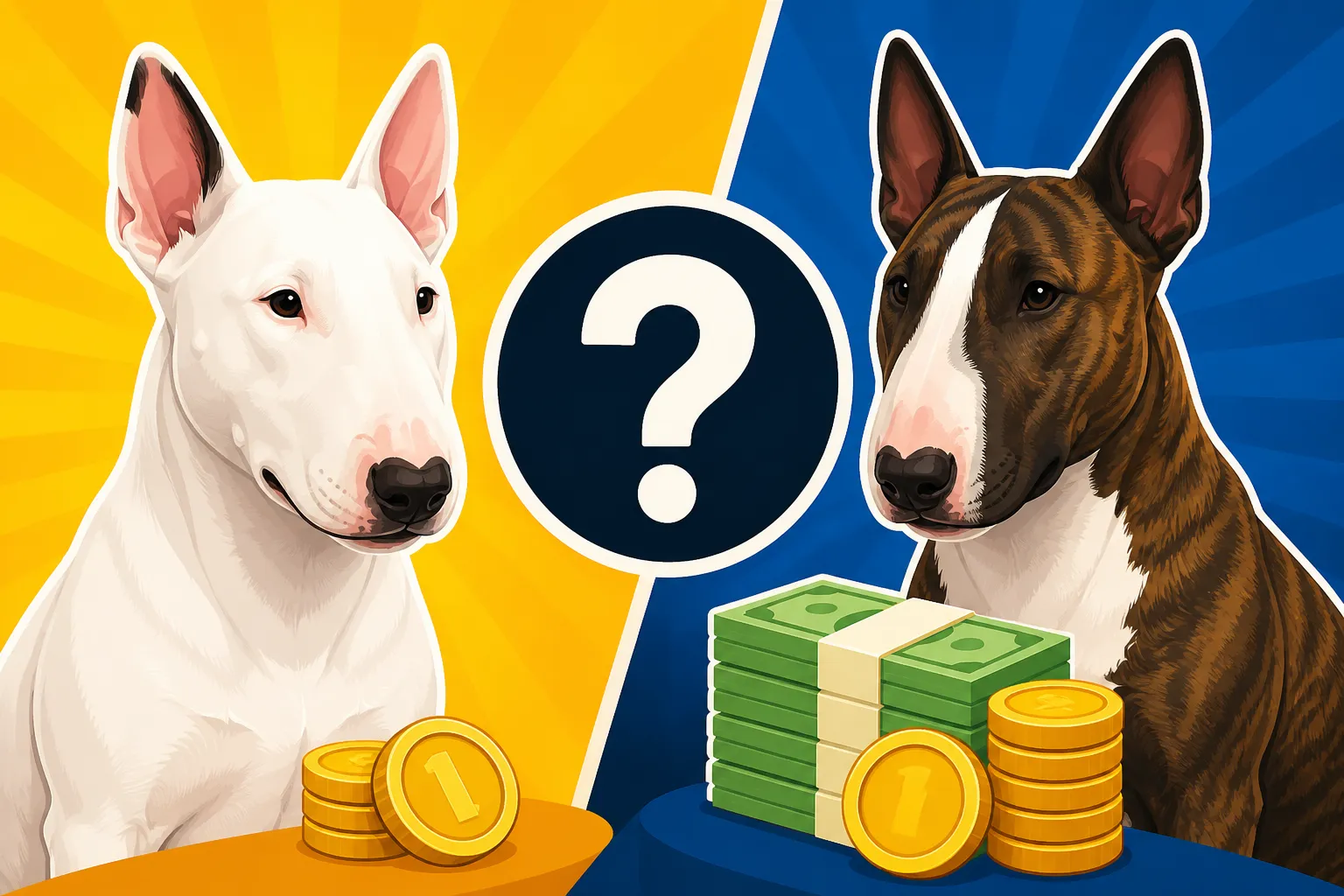
Whether a Brindle Bull Terrier Costs More
It's completely natural to wonder if a specific coat color, like brindle, will impact the price of a Bull Terrier puppy. You're looking at a dog that already commands a certain investment, and it makes sense to try and understand every factor that goes into that initial cost. While the dazzling brindle pattern is certainly striking, the actual price tag of your future Bull Terrier is influenced by a much broader range of considerations than just its coat. This guide will walk you through what really drives Bull Terrier pricing, and where brindle fits into that picture.
The Truth About Bull Terrier Puppy Pricing: It's More Than Just Color
When you start looking for a Bull Terrier puppy, you’ll quickly realize there’s a wide range in prices. It’s not like buying a sweater where the color might add a few dollars to the cost. With a living, breathing companion, the price reflects a complex tapestry of factors, most of which have absolutely nothing to do with whether their coat is a beautiful brindle, a classic white, or a striking tricolor. Understanding these underlying elements is crucial before you even start to think about specific markings.
Breeder Reputation and Experience
A significant portion of a Bull Terrier's price is tied directly to the breeder's reputation and their experience. A seasoned breeder who has dedicated years, even decades, to the breed will likely charge more than a backyard breeder or an accidental litter. Why? Because they're investing heavily in the health, temperament, and betterment of the breed. This means careful selection of breeding pairs, often importing lines, and participating in dog shows to prove their dogs' conformation and temperaments. They're not just creating puppies; they're upholding a standard and ensuring the integrity of the Bull Terrier line. You’re paying for their expertise, their network, and the peace of mind that comes from knowing your puppy has the best possible start.
Health Testing and Pedigree
This is arguably the most critical factor influencing a Bull Terrier's price, and something every prospective owner should scrutinize. Reputable breeders invest a substantial amount of money into health testing their breeding dogs. For Bull Terriers, this includes specific checks for conditions common to the breed, such as heart murmurs (often an echocardiogram), kidney function (UPC ratio tests), hearing (BAER test, especially for white dogs), and genetic tests for conditions like Lethal Acrodermatitis. These tests aren't cheap, and a breeder who performs them is essentially guaranteeing a healthier puppy, which saves you a potentially enormous amount in vet bills down the line. A puppy from parents who have had all recommended health clearances will naturally cost more than one whose parents are untested. Similarly, a strong, documented pedigree, tracing back to healthy, well-regarded ancestors, adds to the value. A breeder offering a puppy with multiple generations of proven health and temperament is offering something truly valuable. What a Bull Terrier Breeder Should Have Tested delves deeper into these essential checks.
Location and Demand
Just like real estate, the cost of a Bull Terrier can vary depending on where you live. Breeders in areas with a higher cost of living or regions where Bull Terriers are particularly popular might have higher prices. Demand also plays a role; if there are fewer reputable breeders in your region and a high number of interested buyers, prices can be driven up. Conversely, if you live in an area with many reputable breeders, there might be more competitive pricing. However, never let location be the sole determinant. Traveling further for the right puppy from the right breeder is almost always worth it in the long run.
Brindle Bull Terriers: Is the Coat Color a Price Factor?
Now, let's get to the heart of your question: does a brindle coat make a Bull Terrier more expensive? The short answer is usually no, not significantly. While certain traits can command a premium in some breeds, for the Bull Terrier, coat color generally isn't a primary driver of price in the way health testing or pedigree are.
Brindle in the Bull Terrier Standard
The brindle pattern, a striking striped or streaked effect, is a recognized and accepted color in the Bull Terrier breed standard. It’s not considered rare or exotic, nor is it a fault. Bull Terriers come in a variety of colors, including white, black brindle, red, fawn, and tricolor. While historically white Bull Terriers were once the only accepted color, colored Bull Terriers, including brindles, have been fully recognized for a long time. This means that a brindle puppy is just as "standard" as a white or red one. Because it's a common and accepted variation, it doesn't inherently command a higher price. Some might even argue that the color variations, Whether a Brindle Bull Terrier Costs More or Whether a Tricolor Bull Terrier Costs More, are simply a matter of personal preference rather than a true rarity.
Personal Preference and Minor Fluctuations
Ultimately, the impact of a brindle coat on price is usually negligible and comes down more to individual preference and perhaps slight, temporary market fluctuations. If a particular buyer really wants a brindle, and a breeder happens to have a stunning brindle puppy available while other colors are less in demand, there might be a small difference. However, it's highly unlikely to be a substantial premium. Most reputable breeders price their puppies based on the quality of the litter as a whole, the health clearances of the parents, and the effort invested in raising them, rather than dictating price purely by coat color. In fact, some breeders might even have an easier time placing a white puppy simply due to historical preference, even though all colors are equally valid today.
The Myth of Rarity Driving Cost
Sometimes, people mistakenly believe that any deviation from the most common appearance might mean a higher price. For example, a pure white Bull Terrier might sometimes be seen as more "classic" by some, while a brindle might be seen as "different." However, within the Bull Terrier world, brindle is a well-established and admired color pattern. It doesn't present any unique health challenges or require special care that would justify a higher price point. If a breeder tries to charge significantly more for a brindle puppy simply because of its color, it might be a red flag that they are not prioritizing the right aspects of breeding.
Why Health and Reputation Truly Drive Bull Terrier Costs
It's easy to get caught up in the aesthetics of a puppy – that adorable brindle coat, the mischievous twinkle in their eye. But when it comes to the true cost and value of a Bull Terrier, superficial traits like coat color pale in comparison to the foundations of health and a breeder's commitment to the breed. These are the elements that impact your wallet and your heart for the next decade or more.
Preventing Future Heartache and Expense
The real "savings" you make when buying a Bull Terrier aren't found in getting a slightly cheaper puppy due to its color. They're found in investing in a puppy from parents who have undergone rigorous health screening. Think about it: a puppy from untested parents might seem like a bargain upfront. But if that puppy develops hereditary kidney disease, like Hereditary Nephritis Takes Bull Terriers in Their Prime, or a serious heart condition such as The Heart Murmur a Bull Terrier Puppy Should Be Checked For, the emotional and financial toll can be devastating. Treating chronic conditions can quickly run into thousands of dollars, far exceeding any initial saving. This is where the long-term cost truly manifests.
Table: Factors Influencing Bull Terrier Puppy Price
| Factor | Impact on Price | Relevance to Brindle Coat | Why it Matters |
|---|---|---|---|
| Breeder Reputation | High | None directly | Reflects experience, ethics, and care for puppies. |
| Parental Health Testing | High | None directly | Prevents costly and heartbreaking hereditary diseases. |
| Pedigree/Ancestry | Medium-High | None directly | Indicates consistent quality and predictable traits. |
| Location & Demand | Medium | None directly | Regional market forces and availability. |
| Conformation/Show Potential | Medium-High | None directly | If puppy is exceptional quality for showing/breeding. |
| Brindle Coat Color | Low-Negligible | Direct | A matter of aesthetic preference, not rarity or superior health. |
As you can see, the brindle coat is a minor consideration compared to the foundational elements of responsible breeding. A breeder charging more for a brindle is likely prioritizing superficiality over substance.
The Value of a Health Guarantee
A reputable Bull Terrier breeder will almost always offer a health guarantee, often covering hereditary conditions for a certain period. This isn't just a piece of paper; it's a testament to their confidence in their breeding program and their commitment to you and the puppy. While no guarantee can prevent every possible issue, it provides a layer of protection and demonstrates the breeder's ethical approach. This kind of assurance is invaluable and is often reflected in the price, regardless of the puppy's coat color. You want a breeder who stands by their dogs, not one who's just trying to make a quick sale based on a trendy color.
Supporting Ethical Breeding Practices
When you pay a fair price for a well-bred Bull Terrier, you're not just buying a dog; you're supporting ethical breeding practices. These breeders put immense time, effort, and financial resources into ensuring their dogs are healthy, well-socialized, and truly represent the best of the breed. They raise their puppies in clean, stimulating environments, provide proper nutrition, early socialization, and often begin preliminary training. This foundational work is crucial for a Bull Terrier's development into a well-adjusted adult, and it's reflected in the price, not the coat pattern. Your investment helps these breeders continue their vital work, ultimately benefiting the entire breed.
Making an Informed Decision: Finding Your Brindle Bull Terrier
So, you've got your heart set on a brindle Bull Terrier, and that's wonderful! They are truly gorgeous dogs. The key now is to navigate the process with an informed perspective, focusing on what truly matters for your future companion's health and happiness, rather than getting sidetracked by color-based pricing.
Prioritize Health and Temperament Over Color
When you contact breeders, make your primary questions about health testing, temperament of the parent dogs, and their socialization practices. Ask to see proof of health clearances for both parents, especially for things like cardiac exams and kidney screenings. A good breeder will be transparent and proud to share this information. Don't be afraid to ask Which Questions to Ask a Bull Terrier Breeder to ensure you're getting all the necessary details. If you're comparing two puppies, one brindle and one white, and the brindle is significantly more expensive solely because of its color, but both come from equally health-tested parents, then that price difference is likely unjustified. Focus on the substance first, and the color second.
Research Reputable Breeders Thoroughly
This cannot be stressed enough. A responsible Bull Terrier breeder will be able to talk at length about their dogs, their lines, and the specific health concerns within the breed. They'll also be intensely curious about you and your living situation, wanting to ensure their puppy goes to a suitable home. Ask about their involvement with the Bull Terrier Club and whether they adhere to its breeding guidelines. Visit their facility if possible, or at least have extensive video calls. Be wary of any breeder who has multiple litters available all the time, offers a "deal," or doesn't ask you many questions in return. A truly dedicated breeder prioritizes finding the right homes above all else.
Budgeting for the Long Haul
Remember, the initial purchase price of your Bull Terrier is just the beginning. The ongoing costs over their lifetime will far outweigh that initial investment, and none of those depend on their coat color. Consider food – a good quality diet is essential. Brands like Ollie or other premium dog food options can be a significant monthly expense, but they contribute to your dog's long-term health. Then there are vet visits, vaccinations, preventative medications, and potentially unexpected health issues. Pet insurance from providers like Healthy Paws can be a lifesaver, helping to mitigate the financial shock of accidents or illnesses. Don't forget training classes, durable toys (Bull Terriers are masters of destruction, so shops like Chewy might become your regular haunt for tough toys!), and grooming supplies. What the First Year With a Bull Terrier Costs and Twelve Years of a Bull Terrier, Priced Out are excellent resources to help you create a realistic budget for your new companion.
When you weigh all these factors, you'll see that while a brindle Bull Terrier is a beautiful choice, its cost is truly about the quality of the breeding, the health of the puppy, and the long-term commitment you're making, not just the pattern of its fur.
Disclaimer
This article is for general informational purposes only and does not constitute professional advice. Laws, prices and regulations vary by location and change over time. Consult a qualified professional for guidance on your specific situation.