Whether Blue Eyes Occur in Bull Terriers
The distinct, often comical, appearance of a Bull Terrier can spark a lot of questions, especially when it comes to their striking features. One common point of curiosity, and sometimes concern, revolves around eye color, particularly the presence of blue eyes, which in some breeds can signal underlying health issues. This guide aims to thoroughly explore whether blue eyes occur in Bull Terriers, what this might mean for their health, and what responsible owners and prospective guardians need to know about this captivating trait.
The Distinctive Bull Terrier Eye and Its Standard
Bull Terriers are known for their unique head shape and those famously small, dark, triangular eyes that give them such a distinctive, sometimes mischievous, expression. It’s part of what makes them, well, them! But beyond their charm, there's a specific standard for their eyes that guides breeders and judges, and it offers insight into why blue eyes are not typically associated with the breed in its ideal form.
What the Breed Standard Says About Eye Color
If you ever look at the American Kennel Club (AKC) breed standard for Bull Terriers, you’ll notice a very specific description for their eyes. They should be "small, dark, and deeply set." The shape is explicitly "triangular," which gives them that characteristic glint. Dark brown is the preferred color, so dark they almost appear black. This deep pigmentation isn’t just an aesthetic choice; it’s intrinsically linked to the overall health and lineage of the breed as it was developed. Any deviation from this, such as eyes that are light in color or appear round, is generally considered a fault. A blue eye, in particular, is not part of the standard for a fully pigmented Bull Terrier, making its appearance noteworthy and requiring further examination.
The Genetics Behind Bull Terrier Eye Color
Eye color in dogs, much like in humans, is largely determined by genetics, specifically the amount and type of melanin pigment present in the iris. For most dogs, brown is the default eye color, with variations like amber or yellow-green emerging from different genes that dilute this pigment. However, blue eyes are a bit different. In many breeds, blue eyes are linked to specific genes like the merle gene (which Bull Terriers do not carry) or certain dilution genes that affect overall pigmentation.
In the case of Bull Terriers, especially those with white coats, the situation is more nuanced. Their pigmentation, or lack thereof, is often controlled by the extreme white piebald gene. This gene is responsible for their iconic all-white coats, but it can also affect melanocyte migration and development in other areas, including the eyes and the inner ear. While it doesn't typically create the kind of vibrant blue eyes seen in breeds like Siberian Huskies (which have a completely different genetic basis for blue eyes), it can lead to a lack of pigment in the iris that results in a blue appearance, particularly when combined with the extreme white coat. This is not the same as a dilution gene causing blue eyes in a colored dog, but rather a side effect of the gene responsible for their white coat.
Understanding Blue Eyes in Bull Terriers
So, while blue eyes aren't typical for a Bull Terrier, they do occur under certain circumstances. It's crucial for any Bull Terrier enthusiast to understand these scenarios and what they imply, especially since "blue eyes" can mean different things depending on the context.
When Blue Eyes Might Appear in Bull Terriers
There are a few situations where you might encounter a Bull Terrier with blue eyes:
- Puppy Eyes: This is the most common and least concerning reason. Just like human babies, many Bull Terrier puppies are born with blue eyes. This is because their melanin production isn't fully active yet. Their eyes will typically transition to their permanent dark color around 8 to 12 weeks of age. If you see a very young Bull Terrier puppy with blue eyes, it’s usually nothing to worry about; they're just not fully developed.
- Heterochromia: This is a condition where a dog has two different colored eyes (e.g., one blue and one dark) or multiple colors within a single iris. While striking, complete heterochromia (one blue eye) in a Bull Terrier is usually a result of the same genetic factors that lead to their white coat. It's often seen in white or mostly white dogs where the gene responsible for white spotting has affected one eye's pigmentation more than the other. Segmental heterochromia, where only a part of the eye is blue, can also occur.
- Extreme White Patterning and Pigment Loss: For Bull Terriers, particularly those with an all-white coat, blue eyes are almost always associated with the extreme piebald gene. This gene essentially stops pigment from developing in specific areas. If it affects the iris, it can result in a blue eye. This isn't a "blue eye gene" in the way it is in some other breeds; rather, it's a lack of pigment where there should be dark brown. This complete absence of pigment is also often what leads to deafness.
- Albinism (Extremely Rare): True albinism in dogs is incredibly rare, much rarer than simple white coats. An albino Bull Terrier would lack pigment everywhere—pink skin, white fur, and often pale blue or even pink eyes due to the visibility of blood vessels. This is a severe genetic condition with many health implications beyond just eye color.
The Link Between Blue Eyes, White Coats, and Deafness
This is the most critical point for Bull Terrier owners to grasp. In white Bull Terriers, there's a well-documented genetic link between their lack of coat pigment, blue eyes, and congenital deafness. The gene responsible for the white coat pattern, the piebald gene, impacts melanocytes—the cells that produce pigment. If these melanocytes are absent in the inner ear during development, the dog will be deaf. These same cells can also be absent in the iris, leading to a blue eye.
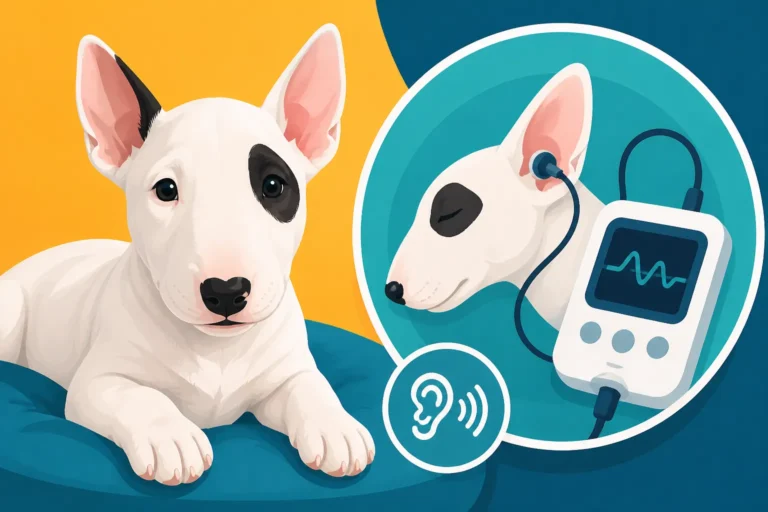
It’s not that blue eyes cause deafness, but rather that both the blue eye and deafness can be symptoms of the same underlying genetic issue related to pigmentation. This is why approximately 18% of white Bull Terriers are born unilaterally deaf (deaf in one ear), and around 2% are bilaterally deaf (deaf in both ears). The presence of even one blue eye in a white Bull Terrier significantly increases the likelihood of deafness on that side of the head, and sometimes bilaterally. This is precisely why a responsible breeder will always recommend that Why a White Bull Terrier Should Be BAER Tested as puppies. The Brainstem Auditory Evoked Response (BAER) test is the only definitive way to confirm hearing status, regardless of eye color.
Understanding this connection is paramount. While a blue eye might look striking, it's a clear signal that the dog should have its hearing thoroughly checked. You can read more about How Many White Bull Terriers Are Born Deaf to grasp the scope of this issue within the breed.
Implications for Health and Breeding
While a blue-eyed Bull Terrier might look unique, it's vital to consider the health ramifications and the responsibilities that come with breeding such dogs. It’s not just about aesthetics; it’s about the animal's well-being and the future of the breed.
Health Concerns Associated with Blue Eyes in Bull Terriers
The primary and most significant health concern associated with blue eyes in Bull Terriers, particularly white ones, is deafness. As discussed, the same genetic mechanism that results in a lack of pigment in the iris can also cause a lack of pigment in the inner ear, which is essential for proper hearing development.
Deafness can be unilateral (in one ear) or bilateral (in both ears). A unilaterally deaf Bull Terrier can often lead a perfectly normal life without their owner even realizing they have a hearing deficit, as they compensate so well. However, bilaterally deaf Bull Terriers require specific care and training approaches. It's a journey, but Whether a Unilaterally Deaf Bull Terrier Lives Normally is a resounding yes, and many deaf Bull Terriers thrive in loving homes. However, their placement requires careful consideration, and Whether a Deaf Bull Terrier Should Be Placed in a Home depends heavily on the prospective owner's understanding and commitment to their unique needs.
Beyond deafness, other health issues directly linked to blue eyes are rare in Bull Terriers unless we're talking about true albinism, which comes with a host of other severe problems like extreme light sensitivity and skin cancer risk. For the typical white Bull Terrier with blue eyes due to the piebald gene, deafness is the overwhelming concern. However, proactive veterinary care is always important. Regular check-ups, ensuring a balanced diet, and being vigilant about other breed-specific issues like The Yearly Urine Test Every Bull Terrier Owner Should Book or The Heart Murmur a Bull Terrier Puppy Should Be Checked For are crucial for all Bull Terriers. Investing in a good pet insurance plan from providers like Healthy Paws can also offer peace of mind when facing potential health issues, whether related to genetics or unforeseen accidents.
Ethical Breeding Practices and Eye Color
For any responsible Bull Terrier breeder, health should always be the top priority. This includes rigorous health testing of breeding stock and making informed decisions based on those results. Breeders should meticulously screen for hereditary conditions, and this absolutely extends to evaluating eye color and performing BAER testing.
Mandatory Testing: Reputable breeders will always BAER test all white puppies before they go to their new homes, regardless of eye color. This is non-negotiable. They will be transparent with these results, providing certificates to potential buyers. You can learn more about What a Bull Terrier Breeder Should Have Tested to ensure you're working with an ethical source.
Breeding Decisions: Breeding dogs with blue eyes (especially white ones) is a complex issue. While a unilaterally deaf dog can lead a full life as a pet, Whether a Deaf Bull Terrier Should Be Bred is a different question entirely. Most ethical breeders would advise against breeding a deaf Bull Terrier, whether unilateral or bilateral, to avoid passing on the predisposition for deafness. Even a white Bull Terrier with normal hearing but striking blue eyes should be carefully considered in a breeding program, as the blue eyes still indicate the presence of the extreme white piebald gene that can produce deaf offspring. The goal is always to reduce the incidence of hereditary diseases, not perpetuate them. Knowing Which Health Tests a Bull Terrier Breeder Should Run is vital for making responsible choices that protect the breed's health. Many owners find relief knowing that services like those covered by Healthy Paws can help manage the expenses of these critical health tests and subsequent care.
Transparency: A reputable breeder will openly discuss the genetic risks, including those associated with white coats and potential deafness, and provide all health clearances. If a breeder dismisses concerns about blue eyes or refuses to BAER test, it's a major red flag.
Living with a Blue-Eyed Bull Terrier
If you find yourself with a blue-eyed Bull Terrier, or are considering adopting one, it's important to understand that they can be wonderful companions, just like any other Bull Terrier. The key is to be informed and prepared for any associated needs.
Care and Considerations for Deaf Bull Terriers
Should your blue-eyed Bull Terrier be diagnosed with deafness (which, as we’ve discussed, is the primary concern), adapting your care routine is important, but far from insurmountable. Deaf dogs are highly intelligent and adapt incredibly well to living without sound.
- Communication is Key: You’ll rely on visual cues and hand signals for communication. Start teaching these early, even if your puppy can hear. Consistency is vital. Many resources exist for training deaf dogs, and they often pick up hand signals faster than hearing dogs pick up verbal commands because they rely on them completely.
- Safety First: Deaf dogs cannot hear cars, bicycles, or other dangers. Therefore, they should always be walked on a leash in unfenced areas. A securely fenced yard is a must for off-leash play. Consider a vibrating collar (not a shock collar) for recall in emergencies, though hand signals are usually preferred.
- Waking Them Up: Since they can’t hear you approach, avoid startling them. Gentle touches or tapping the floor near them can signal your presence without causing alarm.
- Socialization: Just like all Bull Terriers, early and positive socialization is crucial. Expose them to many different sights, sounds (that they can feel, like vibrations), and experiences in a controlled manner. This helps them become confident and well-adjusted adults. While a Bull Terrier's skin is its weakest point, ensuring general health and comfort also includes being mindful of their environment.
- Love and Laughter: Remember, a deaf Bull Terrier is still a Bull Terrier at heart—full of joy, clownish antics, and boundless affection. They often form incredibly strong bonds with their families.
Challenging Misconceptions About Blue-Eyed Dogs
There are many myths and misconceptions swirling around dogs with blue eyes, and sometimes even Bull Terriers in general. It's easy for people to jump to conclusions, but it's important to challenge these notions with facts and experience.
One common myth is that blue-eyed dogs are somehow inherently more aggressive or "wild." This is absolutely untrue. A dog's temperament is influenced by genetics, early socialization, training, and environment—not by the color of its eyes. A blue-eyed Bull Terrier, if well-bred and properly raised, will have the same loving, devoted, and often hilarious personality as any other Bull Terrier. They are known for being Why a Bull Terrier Is Called a Clown and their unique character shines through, regardless of their eye color or hearing status.
Another misconception is that blue eyes always signify poor health. As we've clarified, while blue eyes in Bull Terriers are strongly linked to the risk of deafness, they don't automatically mean the dog will have a multitude of other severe health problems. Proactive management, regular vet check-ups, and potentially pet insurance from providers like Healthy Paws for unforeseen issues, ensure that a blue-eyed Bull Terrier can enjoy a long and happy life, often How Long a Bull Terrier Lives on Average, if well cared for.
By understanding the facts, owners can advocate for their blue-eyed Bull Terriers and help educate others, fostering a more informed and compassionate view of these special dogs.
Here's a quick overview of Bull Terrier eye colors and their implications:
| Eye Color | Typical Occurrence | Associated Health Concerns | Breed Standard Adherence |
|---|---|---|---|
| Dark Brown/Black | Most common, preferred, full pigmentation | Generally none | Ideal |
| Blue (Puppy) | All puppies are born with blue eyes | None, typically changes to dark brown by 8-12 weeks | Temporary, normal |
| Blue (Adult, One) | Heterochromia, often in white/partially white dogs | Increased risk of unilateral deafness on the blue-eyed side | Fault (not standard) |
| Blue (Adult, Both) | Primarily in white Bull Terriers | Significantly increased risk of bilateral deafness | Fault (not standard) |
| Amber/Light Brown | Rarely seen, indicates diluted pigment in colored BTs | Generally none, but not typical for the breed | Fault (not standard) |
| Pink (Albino) | Extremely rare albinism | Severe light sensitivity, vision problems, skin cancer, general poor health | Major Fault |
Disclaimer
Please remember that this article provides general information and should not replace professional veterinary advice. Always consult with a qualified veterinarian or a certified veterinary specialist for any health concerns or before making decisions about your pet's care.