Whether the Egg Head Causes a Bull Terrier Any Problem
A Bull Terrier’s egg-shaped head can look dramatic enough to raise questions about breathing, eyesight, or jaw problems. In most dogs, though, the profile is a normal breed trait, not a diagnosis. This guide explains what the shape means, which problems it does and does not cause, and what changes deserve a veterinary check.
What makes a Bull Terrier’s head egg-shaped
The breed’s distinctive profile
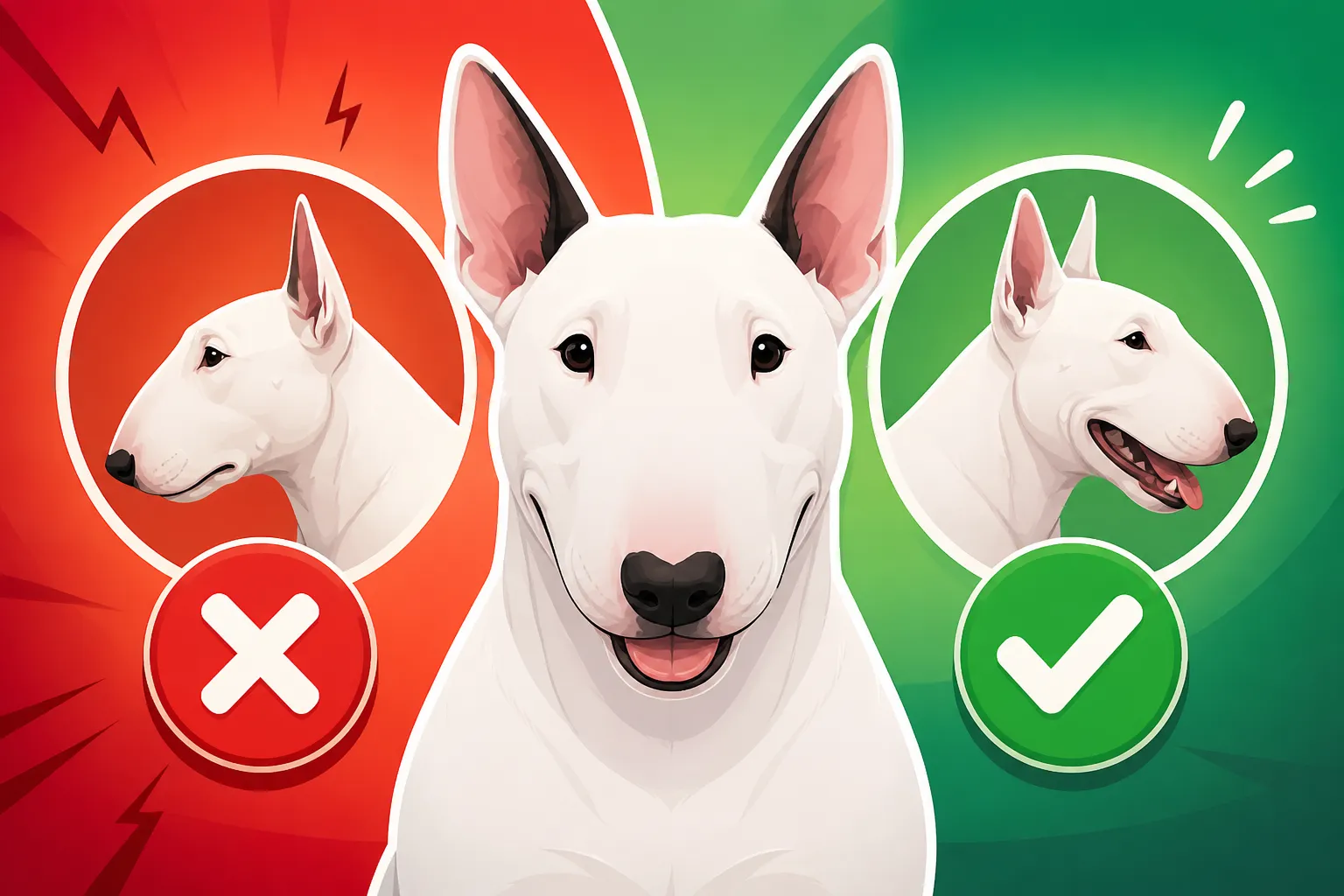
The Bull Terrier’s head is known for its long, gently curving outline, often called an egg-shaped head. Viewed from the side, the profile typically slopes from the top of the skull down toward the nose without the pronounced indentation, or “stop,” seen in many other breeds. The head is broad and strong, but its outline should still look smooth rather than sharply angular.
That shape is part of the breed’s appearance, not a condition that develops as a dog grows. Puppies’ heads change as they mature, and individual Bull Terriers vary in how pronounced their profile looks. A photo taken from an unusual angle can make a muzzle or forehead look more extreme than it does in person, so appearance alone is not a reliable way to judge health.
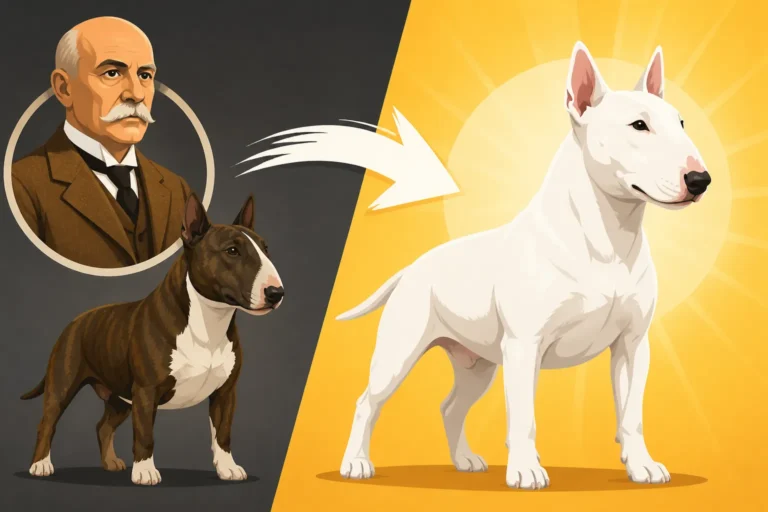
If you want to understand how the profile developed, Where the Bull Terrier's Egg Shaped Head Came From looks at its history. The terms can be confusing at first: Why a Bull Terrier Has No Stop explains one feature of the profile, while What a Bull Terrier's Downface Is describes the curve from the skull toward the nose.
What the head shape does not automatically mean
An egg-shaped head does not, by itself, mean a Bull Terrier has a breathing disorder, brain problem, or painful skull. Bull Terriers are not built with the very shortened muzzle associated with many brachycephalic breeds. Their distinctive profile is different from a face that has become so shortened or crowded that normal function is affected.
The shape also does not tell you whether an individual dog can see, hear, chew, or breathe comfortably. Those functions depend on the dog’s actual anatomy and health, not simply whether its head looks more or less egg-shaped. A dog with a typical-looking head can still develop an eye, dental, or other health problem, and a dog with an especially striking profile may function normally.
It is understandable to wonder whether a feature this unusual must come with a hidden downside. The useful distinction is between breed type and individual symptoms. A smooth, familiar profile without signs of discomfort is generally just the Bull Terrier’s appearance. A change in function, a sudden change in the face, or persistent discomfort warrants attention regardless of how closely the dog matches the breed’s outline.
Possible health concerns to watch for
Teeth, jaws, and chewing
The head’s outline alone does not establish that a Bull Terrier has a jaw or bite problem. What matters is how the teeth meet, whether the dog can close its mouth comfortably, and whether chewing is normal. A veterinarian can assess the bite and look for damaged, crowded, or painful teeth during an examination.
Pay attention if your dog suddenly drops food, chews on one side, avoids harder food, paws at its mouth, or becomes reluctant to pick up toys. Bad breath, bleeding gums, swelling around the face, or a change in eating habits can also be reasons to arrange a veterinary visit. These signs have many possible causes; they should not be attributed to the egg-shaped head without an examination.
A puppy’s mouth deserves particular care as adult teeth come in. If you are choosing chews, avoid very hard items that could damage teeth, and ask your veterinarian what is appropriate for your dog’s age and chewing style. Retailers such as Chewy may offer a range of toys and dental products, but a product label cannot confirm that an item is suitable for a dog with a specific dental concern. For more on normal tooth count and dental structure, see Whether a Bull Terrier Should Have Forty Two Teeth.
Eyes and the surrounding area
Bull Terriers are known for their small, triangular-looking eyes, which contribute to their distinctive expression. That appearance is a separate feature from the curved skull profile. A particular eye shape is not proof that the dog has poor vision or that the egg-shaped head is pressing on the eyes. The Bull Terrier Is the Only Breed With a Triangular Eye explores why the eyes look so unusual.
Look for signs such as squinting, persistent tearing, redness, cloudiness, discharge, rubbing, or a sudden difference between the two eyes. A dog may also seem hesitant in dim light or begin bumping into familiar objects if its vision is affected. Those signs call for an eye examination rather than a guess based on head shape.
Do not put human eye drops or leftover medication into your dog’s eyes unless a veterinarian specifically instructs you to do so. If you need basic eye-cleaning supplies, Chewy and other pet retailers can be places to browse, but ongoing redness, pain, or discharge needs veterinary advice—not simply a different wipe or rinse.
Breathing, heat, and exercise
The egg-shaped outline is not the same thing as a shortened, flattened muzzle. In general, a Bull Terrier should be able to breathe comfortably at rest and recover normally after suitable exercise. However, any dog can have an airway, heart, or other health problem, so it is important to respond to symptoms instead of assuming that noisy breathing is “just the breed.”
Contact a veterinarian if your dog struggles to breathe while resting, has repeated fainting episodes, develops blue or unusually pale gums, or cannot recover after mild activity. Severe breathing distress, collapse, or a sudden inability to stand is an emergency. In warm weather, watch for heavy panting that does not settle, weakness, confusion, or vomiting, and move the dog to a cooler area while seeking urgent veterinary guidance.
A dog that snores occasionally while sleeping is not necessarily in trouble, but new or worsening snoring, coughing, gagging, or exercise intolerance should be discussed with a veterinarian. These signs need assessment on their own merits. They should not be dismissed because the dog has a distinctive head.
Appearance versus a problem that needs attention
A practical way to judge what you are seeing
Rather than trying to decide whether a head looks “too egg-shaped,” compare your dog with its own usual appearance and behavior. A stable profile, comfortable eating, normal activity, and no obvious eye or breathing symptoms are more reassuring than a quick comparison with a breed photo. Individual Bull Terriers do not all have identical heads.
A simple observation record can help if something seems to be changing. Note when a symptom started, whether it happens during eating or exercise, and whether it is getting better or worse. A short video of unusual breathing, chewing, or eye rubbing can give your veterinarian useful context. Do not delay care to gather evidence if your dog appears acutely unwell.
The table below separates ordinary variation from signs that deserve follow-up. It is not a diagnostic tool, but it can help you decide what to watch and what to report.
| What you notice | What it may mean | Sensible next step |
|---|---|---|
| A smooth, curved head profile that has always been present | Normal variation in breed appearance | Mention it during routine veterinary care if you have questions |
| A profile that looks different only in certain photos | Camera angle, lighting, or posture may affect its appearance | Compare the dog in person and avoid judging from one image |
| Difficulty chewing, dropping food, or avoiding toys | Possible dental or oral discomfort | Arrange a veterinary examination |
| Squinting, redness, cloudiness, or repeated eye rubbing | Possible eye irritation or disease | Contact a veterinarian, promptly if painful or sudden |
| Noisy or labored breathing, especially at rest | Possible airway or other health concern | Seek veterinary advice; treat severe distress as an emergency |
| Sudden facial swelling or a rapid change in appearance | Injury, inflammation, or another medical issue may be involved | Contact a veterinarian promptly |
What a veterinary examination can clarify
A veterinarian can look at the dog’s face, teeth, eyes, and breathing in context. If the concern is chewing, the examination may include checking the bite and mouth for damaged or painful teeth. If the concern is an eye, the vet can assess the eye itself rather than trying to infer a problem from its shape.
Sometimes the answer is simply that the dog’s head is normal for that individual and there is no sign of a functional issue. In other cases, the profile may be incidental to a separate problem that needs treatment. Either way, the examination helps distinguish appearance from cause—something that is difficult to do from a photo or a breed description alone.
It is also reasonable to ask what signs should prompt a recheck and what changes can safely be monitored at home. If a vet recommends a product for dental care or enrichment, Chewy may be one of several places to look for suitable options; follow the veterinarian’s guidance on the type of product rather than choosing solely by appearance or online reviews.
Choosing and caring for a Bull Terrier without fixating on the profile
Ask about function, not just looks
If you are considering a Bull Terrier puppy, ask the breeder about the parents’ general health and whether the puppy has had routine veterinary checks. Watch the puppy breathe while resting, move around, and eat. The goal is not to find the most exaggerated head shape; it is to choose a healthy, comfortable puppy and learn about its health history.
A responsible breeder should be willing to discuss health testing and provide relevant records. A head that looks more dramatic is not evidence of better health or better breeding. If you are reviewing breed characteristics, How a Bull Terrier's Skull Is Filled Out can help explain the structure without treating a particular look as a health guarantee.
For an adult dog, focus on what the dog can do comfortably: eat, play, rest, and breathe without persistent difficulty. A rescue dog may have an unknown history, so a veterinary check soon after adoption is a practical way to establish a baseline. You can also ask the vet to assess the teeth and eyes as part of that visit.
Everyday care that supports comfort
Keep up with routine veterinary examinations and bring up small changes before they become persistent. If your dog is reluctant to chew, has a new eye symptom, or sounds different when breathing, describe exactly what you have noticed. “His face looks odd” is less useful than “he started dropping kibble last week and chews only on the left.”
Use appropriately sized toys and supervise chewing, especially if your dog is a powerful chewer. A toy that is too small can be a choking risk, while a very hard chew can damage teeth. Chewy can be one shopping option when you need to compare product sizes or types, but always check suitability for your dog and ask your veterinarian if dental disease or a recent procedure is involved.
Most importantly, let the dog’s comfort guide your concern. A Bull Terrier’s egg-shaped head may be striking, and it can take time to get used to the look, but the profile alone is not a reason to assume something is wrong. Watch for changes in function, seek veterinary advice for persistent symptoms, and judge the individual dog rather than the silhouette.
Disclaimer
This article is for general informational purposes only and does not constitute professional advice. Laws, prices and regulations vary by location and change over time. Consult a qualified professional for guidance on your specific situation.