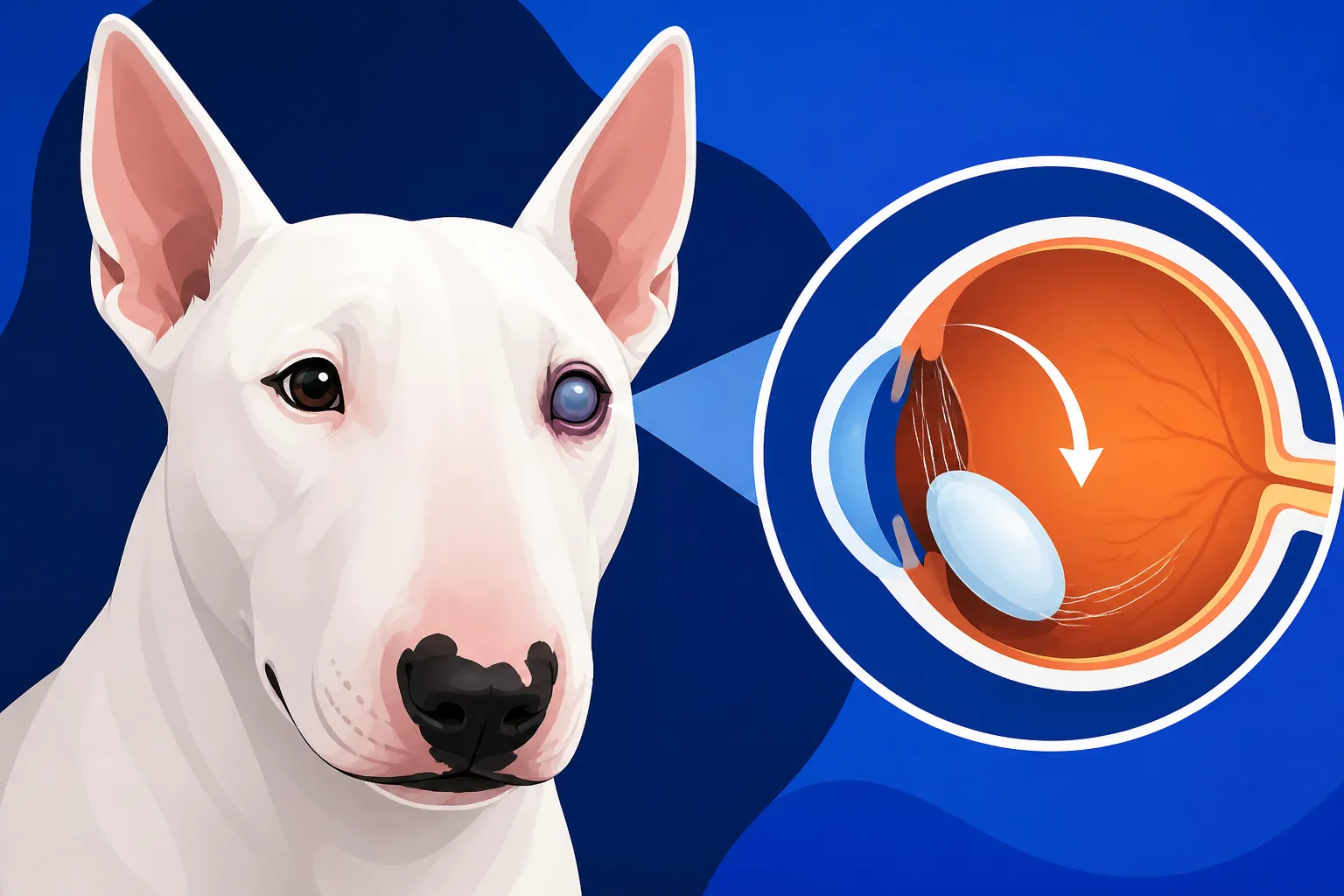
Primary Lens Luxation in a Bull Terrier
It's truly heartbreaking when your beloved Bull Terrier starts showing signs of discomfort, especially when it involves something as vital as their eyes. You see them squinting, pawing at their face, and a subtle cloudiness might appear, sending a wave of panic through you. This isn't just a minor irritation; for Bull Terriers, it can often signal a serious, painful, and sight-threatening condition known as Primary Lens Luxation (PLL). This guide is here to walk you through understanding what PLL is, how to recognize its urgent symptoms, the diagnostic process, and the treatment options available, so you can be equipped to help your cherished companion.
What Exactly Is Primary Lens Luxation in Bull Terriers?
Primary Lens Luxation (PLL) is a truly devastating inherited eye condition where the lens of your Bull Terrier's eye detaches, either partially (subluxation) or completely (luxation), from its normal position. It's not just a floating lens; this detachment is incredibly painful and can lead to severe secondary complications, most notably glaucoma, which can rapidly lead to blindness if not addressed immediately. For us Bull Terrier owners, this condition hits particularly hard because our breed is genetically predisposed to it, unlike many other breeds where lens luxation is often secondary to trauma or other eye diseases.
The root cause of PLL in Bull Terriers lies in a genetic mutation of the ADAMTS17 gene. This gene is responsible for producing proteins crucial for the structural integrity of the suspensory ligaments that hold the lens in place. When these ligaments weaken and break down due to the faulty gene, the lens simply can't stay where it belongs. It's a ticking time bomb for many predisposed dogs, with symptoms typically emerging between the ages of 3 and 8 years old, though it can occur earlier or later. This makes genetic testing incredibly important for breeding animals, as we'll discuss later, because without proper testing, dogs carrying this faulty gene can unknowingly pass it down through generations.
It's vital to understand that PLL is primary because it's due to a defect in these suspensory ligaments, not caused by another eye condition or injury. This distinguishes it from secondary lens luxation, which might happen if your dog suffers a severe eye trauma or has advanced glaucoma that pushes the lens out of place. The sheer suddenness and pain associated with PLL often catch owners completely off guard, turning a perfectly normal day into an emergency vet visit. The lens can luxate forward into the anterior chamber of the eye or backward into the vitreous. A forward luxation is particularly dangerous because it can block the drainage angle of the eye, causing a sudden and dramatic increase in intraocular pressure (IOP), leading to acute glaucoma. This isn't just discomfort; it's excruciating pain, much like a severe migraine combined with intense pressure within the eye, and it requires immediate intervention to save your dog's vision and alleviate suffering.
Recognizing the Urgent Signs of PLL in Your Bull Terrier
Spotting the signs of Primary Lens Luxation (PLL) can be incredibly challenging, especially with a breed like the Bull Terrier, known for their stoic nature. They might hide their pain or discomfort until the condition is quite advanced, making it crucial for owners to be vigilant and know what to look for. Early detection is absolutely key to preserving your dog's vision and quality of life, because every hour counts when the lens is luxated and potentially causing secondary glaucoma. If you want to understand more about how our companions often hide their discomfort, it's worth reading about How a Bull Terrier Hides Pain.
One of the most immediate and distressing signs you might notice is your Bull Terrier squinting or holding one eye shut. This is a clear indicator of pain. The eye itself might appear red and inflamed, a tell-tale sign that something serious is happening internally. You might also observe excessive tearing or discharge from the affected eye. The cornea, the clear outer layer of the eye, could begin to look cloudy or hazy. This cloudiness often occurs due to corneal edema, a swelling caused by the increased pressure or irritation within the eye. In some cases, you might even be able to see the displaced lens itself, appearing as a shimmering, mobile structure within the pupil, or if it has luxated forward, it might be visible in front of the iris.
Another critical symptom is a change in your dog's behavior. A Bull Terrier experiencing the excruciating pain of PLL, especially when accompanied by glaucoma, might become withdrawn, lethargic, or less interested in play and food. They might rub their face against furniture or paw at the affected eye. Vision changes are also common; your dog might bump into objects, especially on the side of the affected eye, or seem disoriented. While some Bull Terriers are prone to other eye issues like Dry Eye in a Bull Terrier or even structural issues like Ectropion in a Bull Terrier, the sudden onset and severe pain associated with PLL are distinct. It's also important to remember that while a Bull Terrier's eye is characteristically small, making it seem less prone to injury, the internal structures are just as vulnerable to genetic conditions. For more on their unique eye structure, check out Whether a Bull Terrier's Eye Is So Small.
It's important to understand that PLL can affect one eye first (unilateral) and then the other eye later (bilateral). If you notice any of these signs, consider it an emergency. Do not wait to see if it improves; immediate veterinary attention is paramount. The longer the lens remains luxated, particularly forward, the higher the risk of irreversible damage from secondary glaucoma.
The Diagnostic Journey: Confirming PLL and Next Steps
Once you've rushed your Bull Terrier to the vet with suspected eye issues, the diagnostic process for Primary Lens Luxation (PLL) needs to be swift and thorough. Your general practice veterinarian will likely perform an initial eye exam. This will typically involve a careful visual inspection, checking for redness, cloudiness, or any visible displacement of the lens. They will also likely use an ophthalmoscope to look into the back of the eye and may perform tonometry, which measures the intraocular pressure (IOP) within the eye. An elevated IOP is a strong indicator of glaucoma, a common and severe complication of PLL, especially if the lens has luxated forward and is blocking fluid drainage.
In many cases, your vet will recommend an immediate referral to a veterinary ophthalmologist, a specialist in animal eye conditions. This is not just an optional step; an ophthalmologist has specialized equipment and expertise to diagnose and manage complex eye conditions like PLL. They will conduct a more detailed examination using tools like a slit lamp biomicroscope, which allows for a magnified, illuminated view of the eye's anterior structures, making it easier to assess the state of the suspensory ligaments and the position of the lens. They might also perform gonioscopy to examine the drainage angle of the eye, which is critical for understanding and managing glaucoma. An ocular ultrasound may also be used to visualize the lens and other internal structures more clearly, especially if the cornea is too cloudy to see through.
Beyond the immediate diagnosis of lens luxation, genetic testing plays a crucial role, particularly if you are considering breeding your Bull Terrier or if the diagnosis is made in a young dog. A DNA test for the ADAMTS17 gene mutation is available through specialized veterinary laboratories, such as the Orthopedic Foundation for Animals (OFA) or Animal Health Trust (AHT) in the UK. This test can definitively identify if your Bull Terrier is clear, a carrier, or affected by the gene that causes PLL. While it doesn't predict when luxation will occur in an affected dog, it confirms the genetic predisposition. This information is invaluable for breeders, as outlined in guides like What a Bull Terrier Breeder Should Have Tested and Which Health Tests a Bull Terrier Breeder Should Run, helping them make informed decisions to reduce the incidence of PLL in future generations. For owners of affected dogs, a positive genetic test provides crucial context and helps anticipate potential issues in the other eye. Early diagnosis, facilitated by genetic testing, might even allow for preventative measures or closer monitoring, giving your dog the best chance against this challenging condition.
Navigating Treatment Options for Primary Lens Luxation
Once your Bull Terrier has received a definitive diagnosis of Primary Lens Luxation (PLL), the next step is to discuss treatment options with your veterinary ophthalmologist. This is a critical conversation, as the chosen approach will depend on several factors: whether the luxation is partial or complete, the direction of the luxation (anterior or posterior), the presence and severity of secondary glaucoma, and your dog's overall health and age. There isn't a one-size-fits-all solution, and sometimes difficult decisions must be made to manage pain and preserve vision.
Medical Management for Partial Luxation or Early Stages:
In rare cases where the lens is only partially luxated (subluxated) and not causing significant pain or secondary glaucoma, a conservative medical approach might be considered initially. This usually involves topical eye drops to constrict the pupil (miotics), which can help to keep the lens from fully dislocating or moving into the anterior chamber, where it would cause more severe problems. Anti-inflammatory drops might also be prescribed to reduce discomfort. However, this is often a temporary measure, as the underlying weakness of the suspensory ligaments means a full luxation is still highly probable. This approach requires very close monitoring by a specialist, and owners must be prepared for a sudden turn for the worse. It's a tough spot to be in, balancing hope with the reality of the progression.
Surgical Intervention: The Primary Treatment for Luxated Lenses:
For a fully luxated lens, especially one that has moved into the anterior chamber and is causing or has the potential to cause glaucoma, surgical removal of the lens (lensectomy) is typically the recommended course of action. This procedure is performed by a veterinary ophthalmologist under general anesthesia. There are different surgical techniques, but the goal is to safely remove the displaced lens, thus eliminating the source of irritation and obstruction. This procedure aims to alleviate pain and prevent or treat secondary glaucoma.
| Treatment Type | Pros | Cons | Considerations |
|---|---|---|---|
| Medical | Non-invasive, less immediate cost | Temporary solution, high risk of full luxation, requires constant monitoring, often ineffective | Only for very early/mild subluxation, requires quick surgical intervention if it worsens |
| Surgical | Addresses root cause, pain relief, often sight-saving | Invasive, higher immediate cost, potential for complications, general anesthesia risks | Best chance for vision preservation, requires specialized veterinary ophthalmologist |
The recovery period after surgery involves strict adherence to a regimen of oral medications (pain relievers, anti-inflammatories) and multiple topical eye drops to control inflammation and prevent infection. Your Bull Terrier will also likely need to wear an Elizabethan collar (the "cone of shame") to prevent them from rubbing or pawing at the surgical site. The post-operative care is intensive, requiring significant commitment from owners to ensure proper healing and prevent complications. Even after successful surgery, the eye will be aphakic (without a lens), meaning your dog will have very farsighted vision in that eye. While not perfect, it's often functional enough for them to navigate their environment comfortably. The primary goal is pain relief and maintaining a comfortable, functional eye, even if perfect vision isn't achieved. The financial implications of such specialized surgery can be significant, making pet insurance like Healthy Paws a wise consideration for many Bull Terrier owners, as early enrollment can help cover these unexpected and substantial veterinary bills.
Living with a Bull Terrier After a PLL Diagnosis
Receiving a Primary Lens Luxation (PLL) diagnosis and navigating the treatment, whether medical or surgical, can be an incredibly stressful and emotionally draining experience for any Bull Terrier owner. But the journey doesn't end there. Living with a Bull Terrier after a PLL diagnosis, and especially after surgery, requires ongoing commitment, vigilance, and often some adjustments to ensure they lead a comfortable and happy life. It's not just about managing the immediate crisis; it's about long-term care and understanding the potential for future challenges.
One of the most important aspects of post-diagnosis life is vigilant monitoring, not just of the treated eye, but also the other eye. PLL is often bilateral, meaning that if one eye has been affected, there's a significant chance the other eye will eventually experience lens luxation as well. Your veterinary ophthalmologist will likely recommend regular check-ups, often every few months initially, to monitor the health of both eyes, check intraocular pressure, and assess the stability of the lens in the unaffected eye. This proactive approach can sometimes allow for earlier intervention if the second eye starts to show signs of subluxation. It's just part of the comprehensive care your Bull Terrier needs throughout their life, alongside regular wellness exams like How Often a Bull Terrier Needs a Wellness Exam and general health screenings.
Medication will likely become a routine part of your Bull Terrier's daily life, even if only for the treated eye. This could include long-term anti-inflammatory drops, glaucoma medications if secondary glaucoma was a complication, or drops to manage dry eye, which can sometimes occur post-surgically. Administering eye drops can be a challenge, especially with a strong-willed Bull Terrier, but consistency is key. It's also crucial to remember that your dog may have some degree of vision impairment, even with successful surgery. The operated eye will be aphakic (without a lens), causing extreme farsightedness. While they adapt remarkably well, you might need to make some adjustments at home. Keep furniture in consistent places, avoid sudden changes, and ensure pathways are clear. You might notice them being a little more hesitant on stairs or in dimly lit areas.
The emotional toll on owners is also very real. Seeing your dog in pain, going through surgery, and then managing ongoing care can be exhausting. Don't hesitate to seek support from your vet, fellow Bull Terrier owners, or online communities. Understanding the financial implications, as detailed in articles like What a Bull Terrier Costs Over Its Lifetime and considering options like pet insurance, for example, Healthy Paws, can also help ease the burden. Many owners find that the peace of mind knowing they can afford the best care for their Bull Terrier's eyes is invaluable. Remember that an aging Bull Terrier, like any senior dog, will have evolving health needs, and their vision might naturally decline with age. Continuing to observe them for any signs of discomfort or changes in behavior, as explored in Caring for an Old Bull Terrier, remains vital throughout their golden years. Your dedication in managing PLL allows your Bull Terrier to continue enjoying their unique, goofy, and loving life alongside you.
Preventing PLL: The Crucial Role of Responsible Breeding
When it comes to a debilitating genetic condition like Primary Lens Luxation (PLL), prevention is truly the best medicine. For Bull Terriers, this means that responsible breeding practices are absolutely paramount. It's not enough to simply have healthy, beautiful parents; breeders have a moral and ethical obligation to ensure they are not inadvertently passing on painful, vision-threatening genetic diseases to their puppies. This is where genetic testing becomes an indispensable tool.
Every Bull Terrier intended for breeding, whether male or female, should be genetically tested for the ADAMTS17 gene mutation that causes PLL. This test can identify dogs as "clear" (meaning they don't carry the mutated gene), "carriers" (meaning they carry one copy of the mutated gene but are usually unaffected themselves), or "affected" (meaning they carry two copies of the mutated gene and are at high risk of developing PLL). The results are straightforward and readily available through veterinary genetic testing labs. A responsible breeder will not only conduct these tests but will also be completely transparent with the results, making them available to prospective puppy buyers. This kind of transparency should be a red flag if it's missing.
The implications of these test results for breeding decisions are clear. "Affected" dogs should absolutely not be bred, as they will pass on two copies of the faulty gene and are highly likely to develop the condition themselves. "Clear" dogs can be safely bred with other "clear" dogs, producing a litter entirely free of the PLL gene. "Carriers" present a more nuanced situation: they usually do not develop PLL themselves, but they will pass one copy of the faulty gene to approximately 50% of their offspring. Therefore, a carrier dog should only be bred to a "clear" dog. This pairing will produce a litter with a theoretical 50% chance of being clear and a 50% chance of being carriers, but crucially, none of the puppies will be affected by two copies of the gene. This careful selection allows breeders to maintain genetic diversity while gradually reducing the prevalence of the PLL gene in the breed without sacrificing important traits. It’s part of a broader health screening program that responsible breeders adhere to, covering various conditions.
Choosing a reputable breeder who prioritizes health testing is the single most important step a prospective Bull Terrier owner can take to avoid the heartbreak of PLL. Don't be afraid to ask for proof of genetic testing for both parents, including the PLL status. A good breeder will be happy to share these results and explain their breeding program. They understand the importance of contributing to the long-term health of the breed. This dedication to health testing extends beyond just PLL; it includes other critical screenings that you can learn more about in resources like What a Bull Terrier Breeder Should Have Tested and Which Health Tests a Bull Terrier Breeder Should Run. Investing in a puppy from health-tested parents is an investment in a healthier future for your beloved companion, potentially saving you from immense emotional and financial strain down the line. Remember, while insurance like Healthy Paws can certainly help with the costs of unexpected conditions, proactive prevention through responsible breeding is the ultimate goal.
Disclaimer
This article is intended for informational purposes only and does not constitute veterinary advice. Always consult with a qualified veterinarian or veterinary ophthalmologist for any health concerns or before making any decisions about your Bull Terrier's care.